


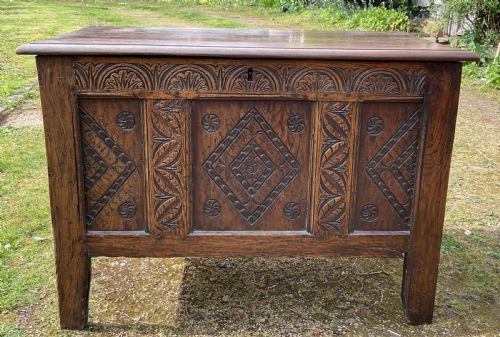
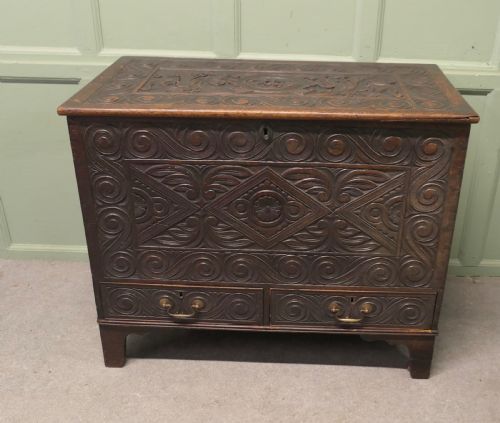
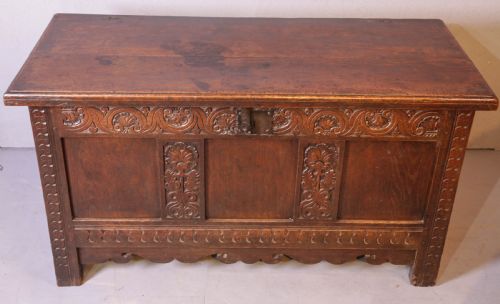


Carved Oak Dower Chest
A carved oak dower chest is a substantial timber storage piece built to hold household linens, most frequently met here in seventeenth and eighteenth century English formats.
Carved Oak Dower Chest
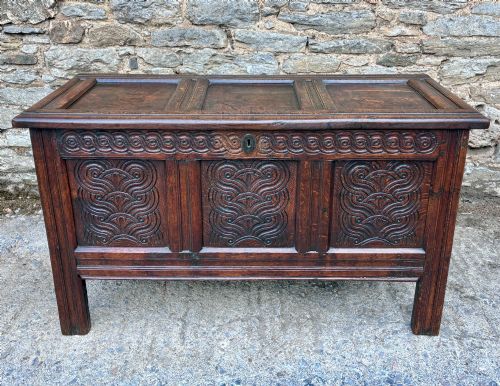
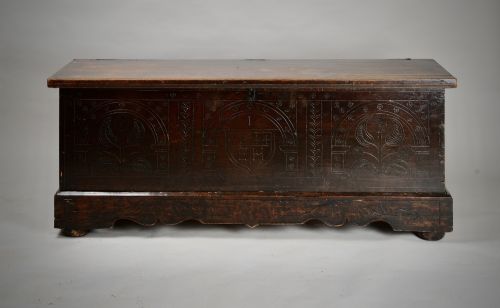
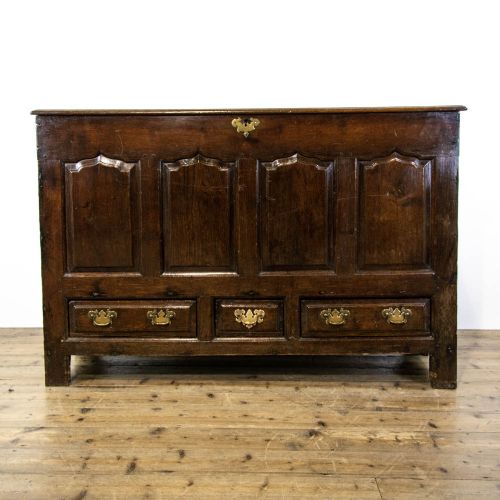
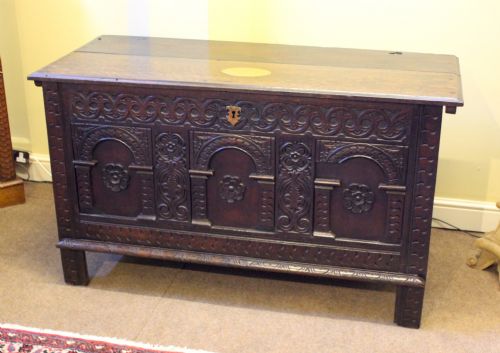
A carved oak dower chest is a heavy storage receptacle designed to hold household linen and personal valuables, often associated with marriage or family inheritance. These pieces appear in forms such as coffers, blanket chests, kists, and mule chests which incorporate one or more lower drawers beneath the main lidded compartment.
The versions most likely to be met on this page span the seventeenth and eighteenth centuries, including regional Welsh vernacular pieces, Lancashire examples, and Georgian iterations. They range from compact cottage sizes to imposing proportions, sometimes featuring geometric moulding, marquetry inlay, or carved panels.
Makers built these vessels primarily for domestic storage, utilising durable native timbers that survived centuries of daily household use. Regional variations reflect distinct woodworking traditions across England and Wales during the Jacobean, William III, and George III periods.
How they were made
Joiners constructed these pieces predominantly from solid oak, sometimes combining it with burr elm panels, fruitwood, or mahogany accents depending on the period and regional style. Construction techniques rely on pegged frame and panel joinery, which allowed the timber to expand and contract naturally without splitting.
Decoration involved chip carving, relief carving such as the Green Man motif, and geometric moulding applied directly to the woodwork. Iron and brass hardware, including strap hinges, lock plates, and carrying handles, secured the lids and drawers while adding functional contrast to the dark timber.
Carved Oak Dower Chest Retail Price Guide 2026
Typical asking prices for carved oak dower chest among the pieces listed under this phrase on Sellingantiques today, from the lower quarter to the upper quarter. They describe what is for sale here now, not the wider market.
Object forms span simple blanket chests, regional Welsh mule chests, Lancashire coffers, and coffer bach variants.
What varies in quality
The distinction between standard examples and top-tier pieces rests on the depth and crispness of the carving, the integrity of the original timber, and the presence of secondary woods like burr elm. Rich surface patination developed through centuries of polishing sets apart untouched early examples from heavily restored or later nineteenth century revival interpretations.
Structural completeness, such as retaining original brass or iron hardware, feet, and internal till boxes, elevates a piece significantly. The sophistication of regional joinery, from simple boarded constructions to intricate geometric mouldings and marquetry inlay, defines the upper range of quality.
The Carved Oak Dower Chest Glossary
- Mule chest
- A storage chest featuring one or more drawers built beneath the main lifting lid compartment. This hybrid form bridges the traditional coffer and the chest of drawers.
- Coffer
- A heavy wooden box with a hinged lid used primarily for storing valuables and textiles. Early versions were constructed using boarded or joined frame techniques.
- Kist
- A regional term, particularly used in northern Britain, for a chest or coffer. These sturdy storage boxes served practical domestic functions in rural households.
- Coffer bach
- A small Welsh chest, often featuring a drawer, traditionally made as a love token or presentation piece. The diminutive scale distinguishes it from larger blanket chests.
- Marquetry
- The art of applying pieces of veneer to a structure to form decorative patterns and pictures. In these listings, wood inlay and marquetry enrich the surface panels.
Carved Oak Dower Chest: Frequently Asked Questions
What is a carved oak dower chest used for?
These pieces served historically to store household linens, blankets, and bridal provisions accumulated for a marriage. Today they function practically as blanket boxes, coffee tables, or hallway storage.
Their robust timber construction allows them to support weight while keeping contents protected inside the main compartment or lower drawers.
How do I date a seventeenth century oak coffer?
Dating relies on examining the construction methods, tool marks, joinery style, and wood patination visible across the piece. Pegged frame and panel construction combined with hand-riven oak typically indicates seventeenth century origin.
Later nineteenth century revival pieces often display mechanical saw marks and different interior secondary timbers that distinguish them from period originals.
What is the difference between a coffer and a mule chest?
A standard coffer consists solely of a top-opening lid over a single deep storage compartment. A mule chest incorporates one or more drawers positioned underneath that main compartment.
This addition of lower drawer storage evolved during the late seventeenth and eighteenth centuries to provide easier access to smaller garments.
Where were these oak chests originally made?
Regional workshops across England and Wales produced these storage chests, with distinct styles emerging from locations like Lancashire, Lakeland, and Wales. Local vernacular traditions influenced the specific carved motifs, moulding profiles, and proportions.
Country joiners utilised locally available timbers such as oak, fruitwood, and elm to build furniture suited to rural homes.
How do I care for antique oak furniture?
Maintain antique oak by keeping it away from direct heat sources and sudden humidity changes that cause timber to split. Regular dusting with a soft cloth and occasional application of traditional beeswax preserves the natural patination.
Avoid modern silicone polishes which build up residue and dull the historic surface finish over time.