
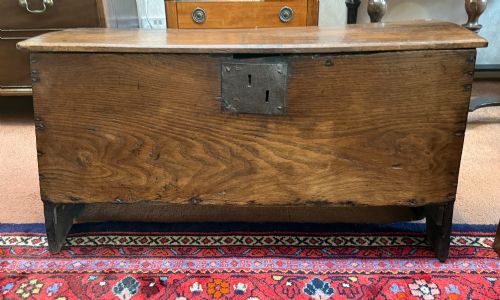
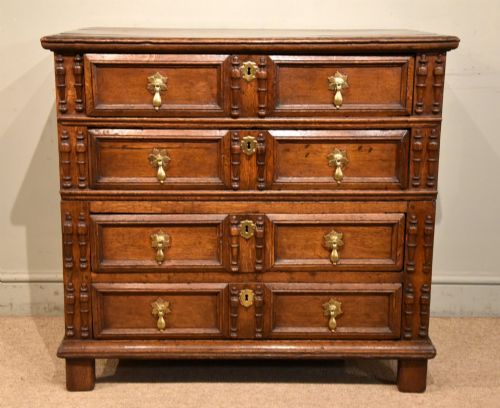
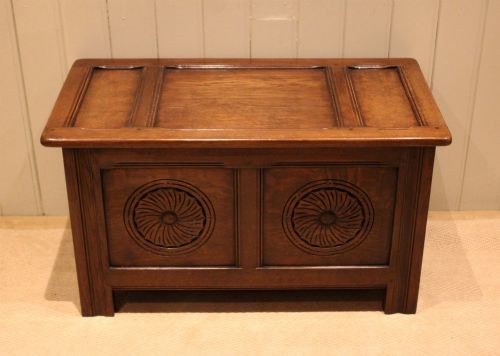
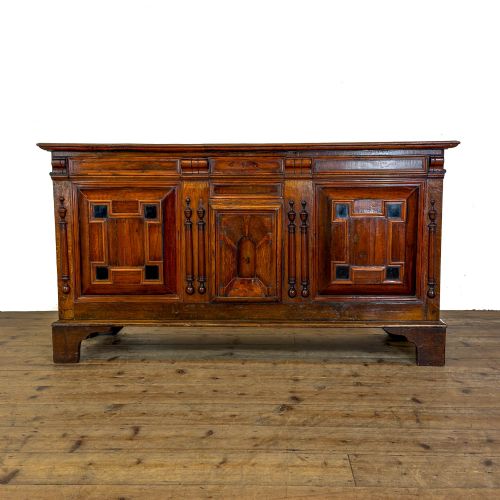


17th Century Style Coffer
A 17th century style coffer provides robust storage while bringing heavy period character into a modern interior.
17th Century Style Coffer
A 17th century style coffer is a heavy storage chest typically constructed to echo the architectural joinery and decorative carving of the Stuart era. These pieces range from authentic period examples to later revival pieces produced in the nineteenth and twentieth centuries.
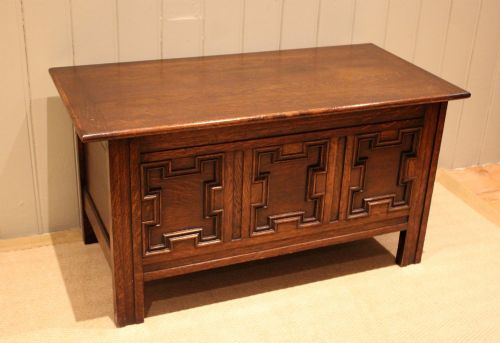
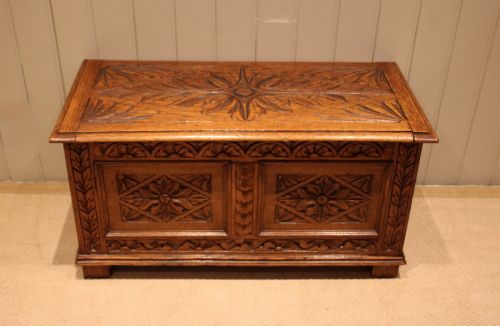
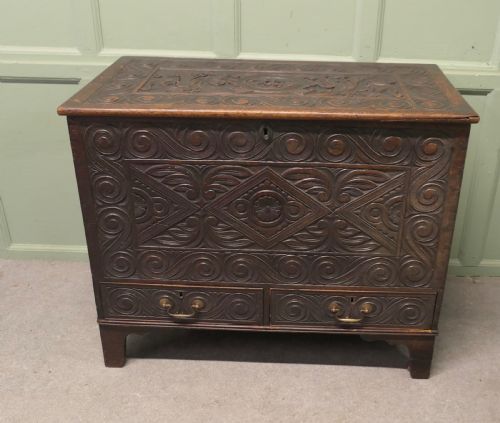
Buyers encountering this search phrase will find solid wood chests, mule chests with lower drawers, and carved blanket boxes executed in oak, chestnut, and fruitwood. Many pieces display traditional panelled construction, geometric mouldings, or figural carvings such as the Green Man motif.
The selection blends genuine seventeenth and eighteenth-century survivors with substantial revival furniture made during the nineteen-twenties and nineteen-thirties. Whether an antique vernacular box or a later Jacobean style reproduction, each piece serves as a functional storage chest with distinct historical references.
Materials and construction methods
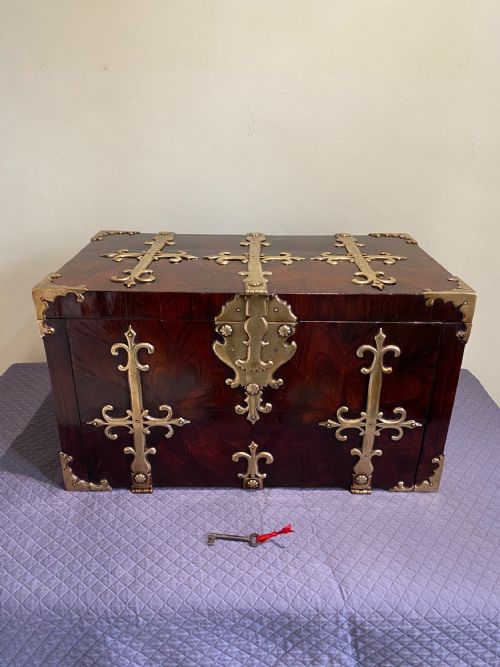
The primary material across these pieces is solid oak, frequently supplemented by regional timbers such as chestnut, fruitwood, and kingwood. Timber selection dictated the structural integrity, with dense hardwoods chosen to withstand centuries of domestic use.
Joinery techniques relied heavily on mortise and tenon frames holding floating panels, allowing the wood to expand and contract without splitting. Metalwork details, including brass hinges, iron locks, and strapwork, provided essential reinforcement to the heavy wooden lids and sides.
Several chests hide secret compartments inside, designed long ago to keep family gold safe from wandering hands.
Assessing quality in period and revival chests
Quality rests in the integrity of the timber and the depth of the carving, distinguishing between brisk vernacular work and finely detailed joinery. Authentic period construction displays the natural ageing and tool marks of early hand-tool carpentry.
The substance of the timber and the tightness of the frame joints dictate the overall durability of the chest. Revival pieces vary according to the fidelity of their historical styling and the weight of the solid wood utilised in their construction.
The 17th Century Style Coffer Glossary
- Coffer
- A large wooden chest used historically for storing valuables, textiles, or documents. These storage boxes often feature hinged lids and sturdy boarded or panelled construction.
- Jacobean Revival
- A nineteenth and twentieth-century design movement that reinterprets the heavy carved styles of the early seventeenth century. Furniture from this period adopts dark oak finishes and geometric mouldings.
- Mule chest
- A traditional storage chest featuring one or more drawers built beneath the main internal compartment. This form bridges the gap between the simple coffer and the chest of drawers.
- Lozenge design
- A diamond-shaped decorative motif frequently carved into the wooden panels of early chests. This geometric pattern is a hallmark of Renaissance and seventeenth-century joinery.
- Block front
- A cabinet-making technique where the front of a piece is divided into three vertical sections, with the exterior panels projecting forward. This creates a strong shadow and architectural depth.
17th Century Style Coffer: Frequently Asked Questions
What were coffers originally used for?
These heavy wooden chests served as secure storage containers for household valuables, silver, and important documents before fitted closets became common.
Because they were portable yet secure, people also used them to transport personal belongings during travel.
How do I tell an old coffer from a revival piece?
Examine the construction methods, tool marks on the timber, and the natural wear patterns around the feet and lid edges. Genuine early pieces display hand-riven wood and pegged joints that differ from twentieth-century machine production.
Secondary woods and historical repairs also help establish the actual age of the timber frame.
Where should I place a coffer in my home?
A sturdy wooden chest functions well at the foot of a bed for spare blankets, or as a coffee table in a living room. Their flat lids provide a convenient surface while the interior conceals everyday clutter.
Keep wooden chests away from direct heat sources and radiators to prevent the solid timber from drying out and splitting.
What is the difference between a coffer and a mule chest?
A standard coffer opens only from the top lid to access a single deep storage well. A mule chest incorporates one or more drawers at the base beneath the main compartment for easier access to smaller items.
This drawer addition developed during the seventeenth century to improve everyday usability.