


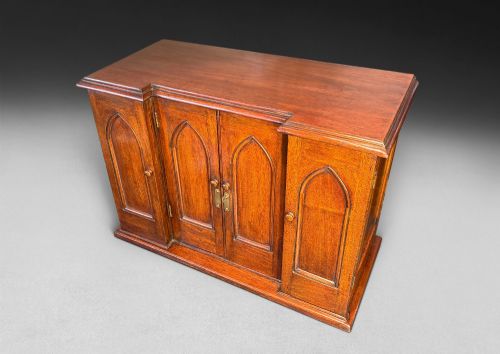
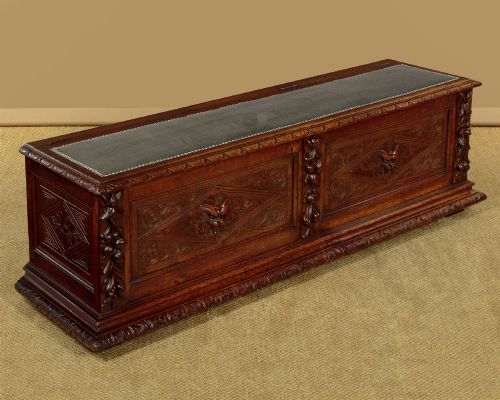
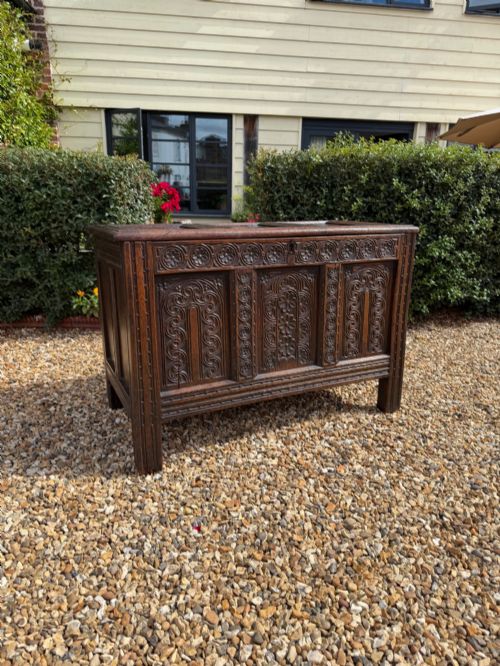
Carved Oak Box
A carved oak box brings tactile warmth and centuries of domestic history into a room, serving as a sturdy repository for documents, letters, or precious household items.
Identifying the carved oak box
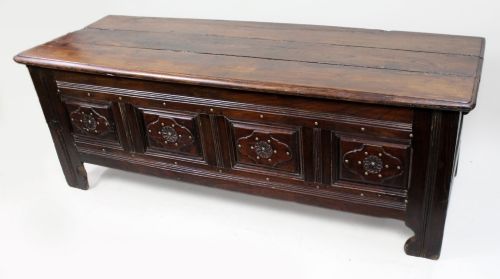
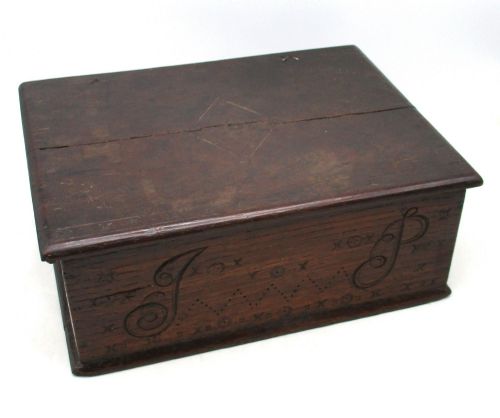
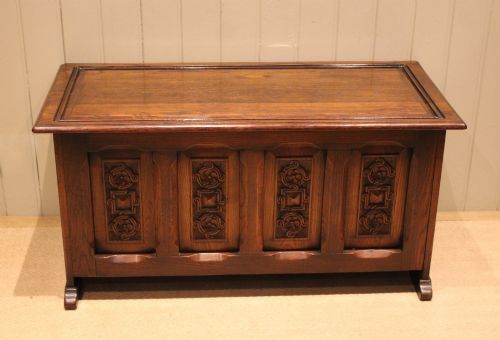
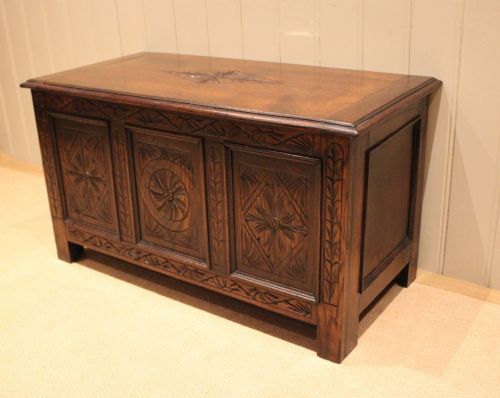
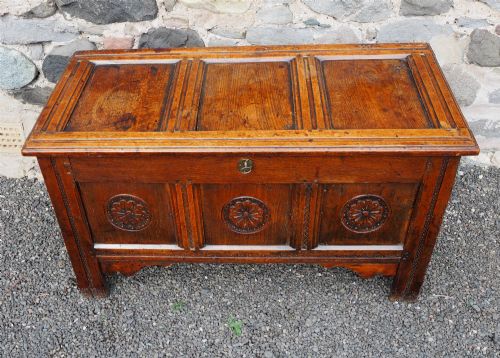
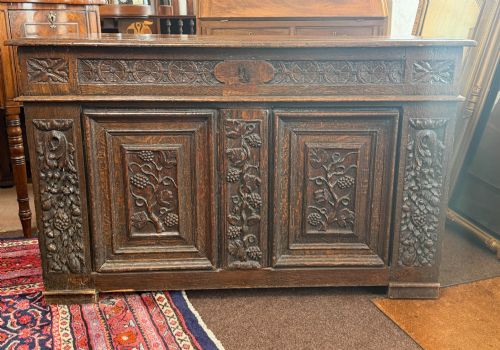
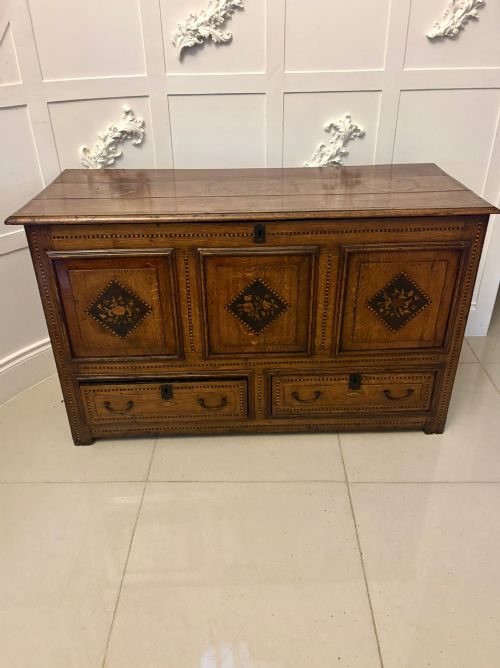
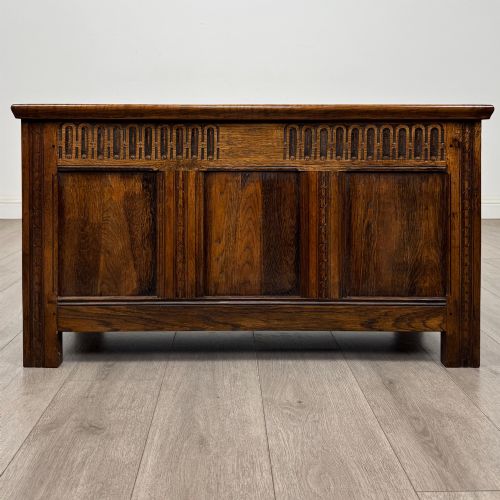
A carved oak box encompasses a variety of domestic storage vessels, ranging from compact desk and Bible boxes to large blanket chests, coffers, and box settles.
The evidence reveals pieces spanning from the seventeenth century through to the Victorian era and early twentieth century, showing sustained popularity for carved timber storage.
Buyers frequently encounter smaller desk or document formats alongside larger seating benches that incorporate concealed storage compartments beneath hinged lids.
Materials and construction
Surface ornamentation is achieved through direct incision into the timber, employing techniques such as chip carving, scratch carving, and relief panels executed by hand.
Retail Price Guide 2026
Typical UK retail prices for carved oak box, calculated from the Sellingantiques database of over a million retail prices indexed since 2003. This retail price guide relies exclusively on Sellingantiques data; no external sources or auction records are used, so the figures do not describe the wider market.
Several box seats on this page proudly feature fierce lion arm supports or watchful Greenman carvings guarding the household mail.
Distinctions in quality
The hierarchy of quality rests upon the depth, crispness, and artistic ambition of the carved decoration, separating routine commercial production from master woodworking.
Structural integrity, the retention of original iron or brass hardware, and the preservation of authentic surface patination elevate individual examples significantly.
The Carved Oak Box Glossary
- Bible box
- A small desk-like container designed originally to store sacred texts and writing implements, often featuring a sloping hinged lid.
- Coffer
- A large, heavy chest used for safekeeping valuables, typically constructed with thick oak boards and reinforced with sturdy joinery.
- Chip carved
- A method of ornamentation where small chips are removed from the surface of the timber to create geometric or linear patterns.
- Box settle
- A multi-functional seating form incorporating a hinged seat that opens to reveal a deep storage box beneath.
- Scratch carving
- A simple decorative technique executed by scraping or scoring lines directly into the surface of the oak panel.
Frequently Asked Questions
What were carved oak boxes used for?
These vessels provided secure storage for important documents, deeds, family Bibles, and small valuables in households before the widespread use of fitted furniture.
Larger variations such as settles and coffers combined daily seating or blanket storage with the security of a lockable wooden chest.
How do I date a carved oak box?
Dating relies on observing the joinery methods, the style of the carved motifs, and the type of hardware fitted to the lid and corners.
Seventeenth-century examples often display geometric chip carving and boarded construction, whereas Victorian revivals incorporate machine-assisted techniques and softer decorative relief.
How do I care for antique oak?
Maintain the timber by keeping it away from direct heat sources and sudden temperature fluctuations that can cause the oak to split.
Apply traditional beeswax sparingly to nourish the grain and preserve the natural patina built up over centuries of handling.
What is the difference between a coffer and a Bible box?
A Bible box is a compact container meant to sit upon a table or stand, frequently featuring a sloping lid suited for reading or writing.
A coffer is a much larger chest designed to rest directly on the floor for heavy household textiles and bulk storage.