


17th Century Stool
A 17th century stool offers a direct link to early domestic life, prized for robust timber construction and functional simplicity.
17th Century Stool
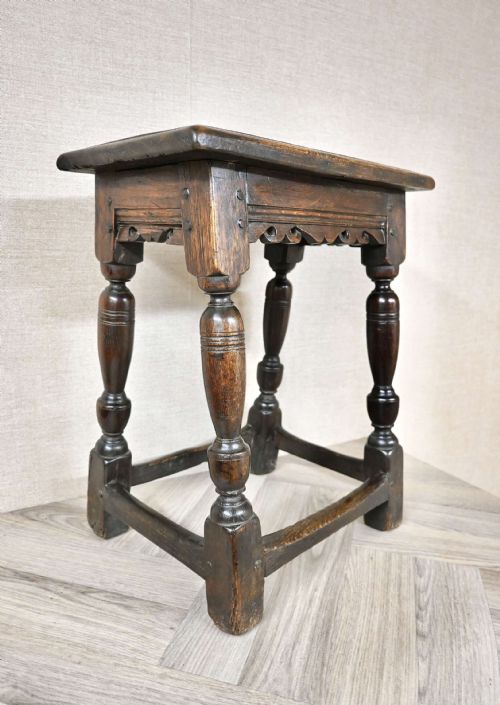
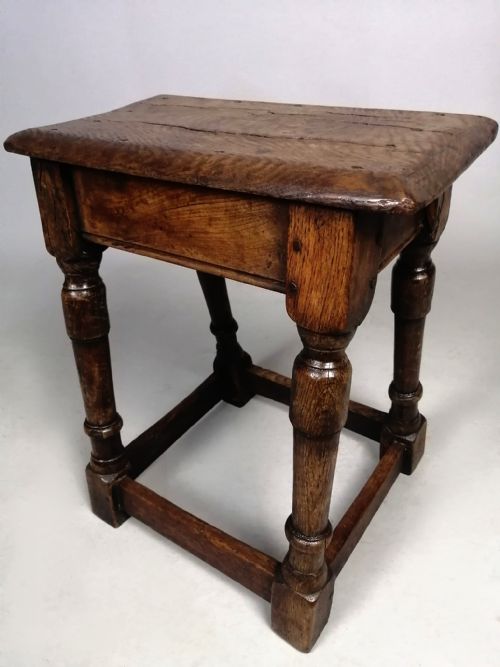
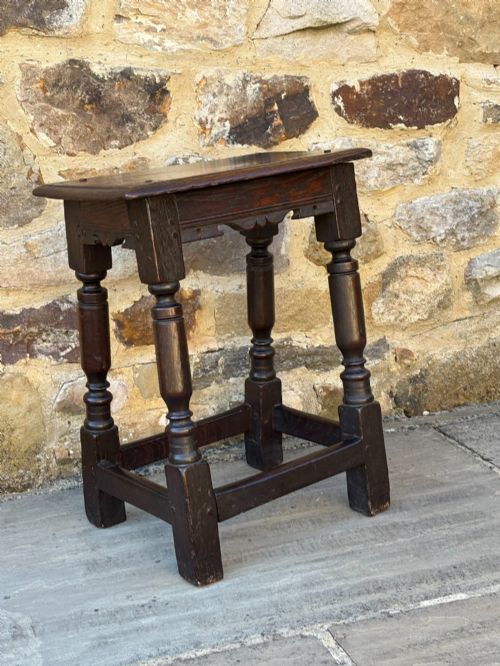
A 17th century stool primarily encompasses practical seating forms such as joint stools, box stools, and back stools used in early domestic interiors. Buyers searching this term will encounter authentic period examples alongside later revivals from the Georgian, Victorian, and early twentieth-century eras.
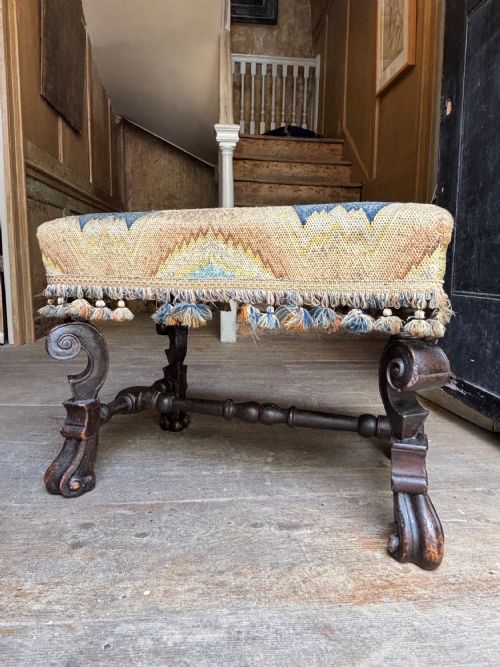
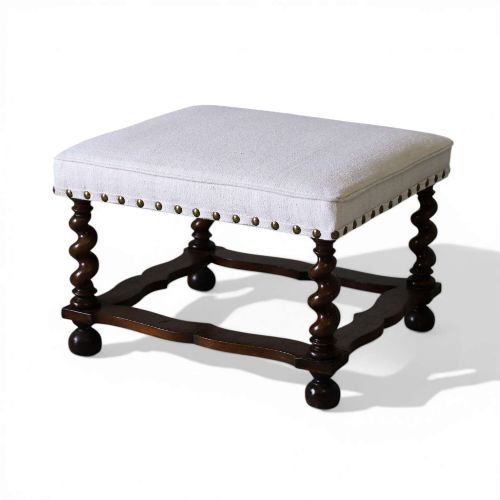
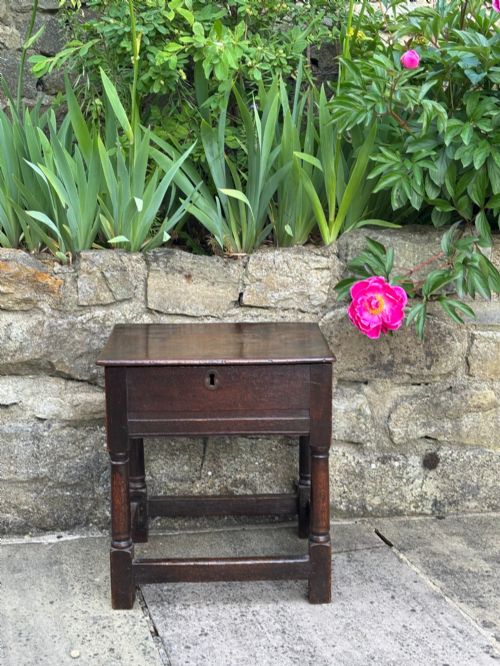
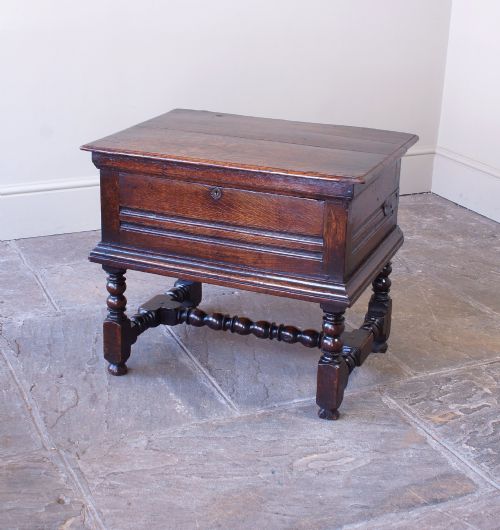
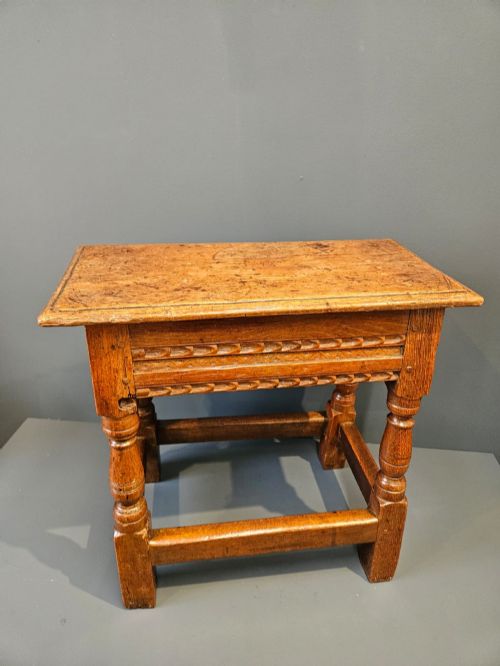
The joint stool stands out as the most common form encountered on this page, constructed with pegged mortise and tenon joints rather than simpler dowels or glue. Variations include commode stools, close stools, and low footstools incorporating upholstery or cane.
Origins trace principally to English workshops, though regional variations such as South Yorkshire and Derbyshire styles appear alongside continental influences including Carolean and baroque forms.
Materials and construction
Makers relied heavily on native hardwoods, predominantly oak and elm, selected for their strength and availability in early workshops. Walnut and secondary elements of iron and brass appear in specific decorative pieces and hardware fittings.
Construction techniques centre on heavy pegging of frame components, creating rigid rectangular bases designed to withstand heavy daily use. Turnings on legs and stretchers utilise early lathes, while surfaces display evidence of hand-adzing and sawing.
Listings feature oak as the primary material, alongside walnut and elm across several centuries.
Distinctions in quality
Quality rests upon the proportion and integrity of the timber frame, where crispness of hand-carved details and originality of the pegs dictate the tier of an example. Heavy surface wear that remains untouched indicates higher desirability than overly restored timber.
The 17th Century Stool Glossary
- Joint stool
- A sturdy wooden seat constructed using pegged mortise and tenon joinery rather than simple nailing. These items served multiple household functions, including sitting and reaching high shelves.
- Back stool
- An early form of side chair featuring a wooden backrest attached to a stool base. Such pieces provided simple upright seating at dining tables.
- Box stool
- A seat featuring a lidded compartment beneath the top board for hidden storage. These objects combined seating with practical household organisation.
- Carolean
- A decorative style spanning the reign of King Charles II characterised by rich baroque carving and turned woodwork. This aesthetic brought greater elaboration to domestic seating.
- Oyster veneer
- Slices cut transversely from small branches to create circular patterns resembling oyster shells. Craftsmen applied this decorative technique to select surfaces on later period pieces.
17th Century Stool: Frequently Asked Questions
How were 17th century stools used?
These items served primarily as flexible seating around the household table or near the hearth. Their robust construction allowed them to double as small tables or steps when needed.
In tighter domestic spaces, multiple stools tucked easily beneath trestle tables when not in use. Specialised variants like box stools provided hidden storage for small personal items.
Are these stools comfortable for daily seating?
Original period examples feature solid wooden tops designed for utility rather than modern lounging. Prolonged sitting requires adding a loose cushion or pad.
Upholstered back stools and footstools offer slightly more softness through fabric or cane surfaces. Most buyers today balance daily use with historical appreciation.
How do I spot a later revival stool?
Revival pieces often display machine-cut tool marks and uniform timber ageing rather than authentic hand-tool friction. Joinery pins in reproductions may be purely decorative rather than structurally load-bearing.
Examining the underside and interior surfaces reveals the true manufacturing methods and wood oxidation. Comparing grain patterns helps clarify the actual period of production.
What wood was most commonly used?
English oak dominates the construction of these early seats due to its abundance and durability. Elm also appears frequently for seats and structural components.
Walnut emerges more prominently in later refined forms influenced by continental styles. Secondary woods sometimes support upholstery foundations or internal framing.