



English Country Oak Stool
An english country oak stool brings honest timber, simple joinery and domestic history directly into a room.
English Country Oak Stool
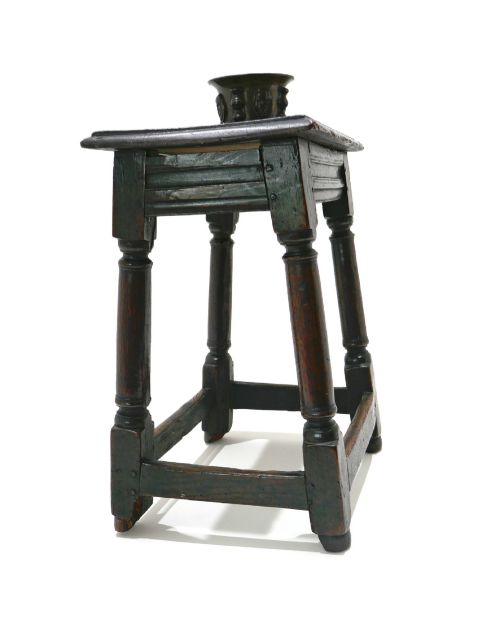
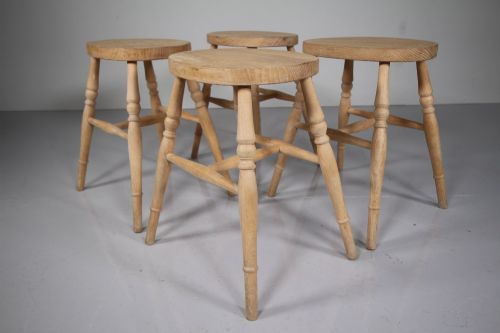
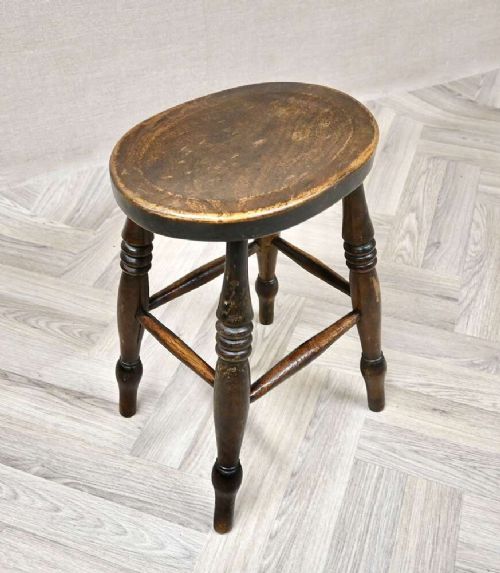
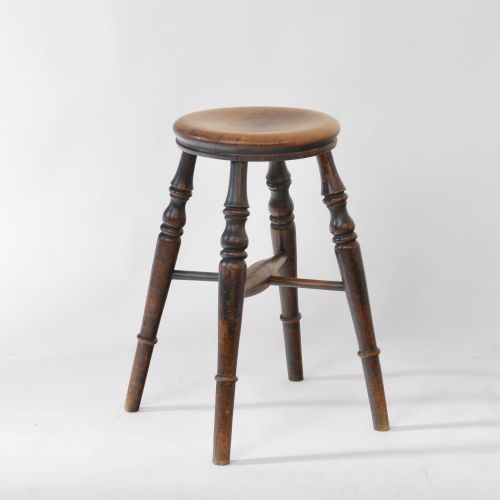
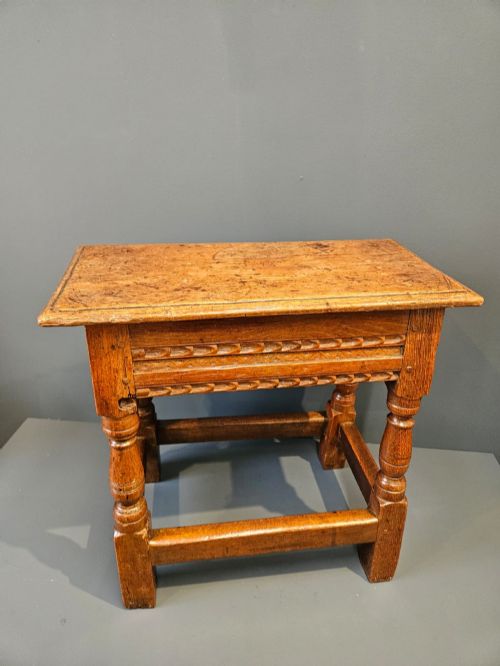
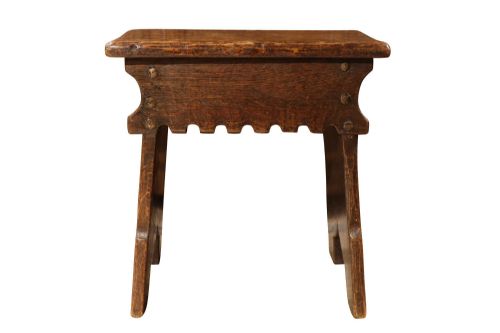
An english country oak stool is a utilitarian domestic seat shaped by regional vernacular traditions and provincial workshops. These pieces range from early jointed forms to later Windsor and farmhouse designs intended for daily use in kitchens, taverns and rural homes.
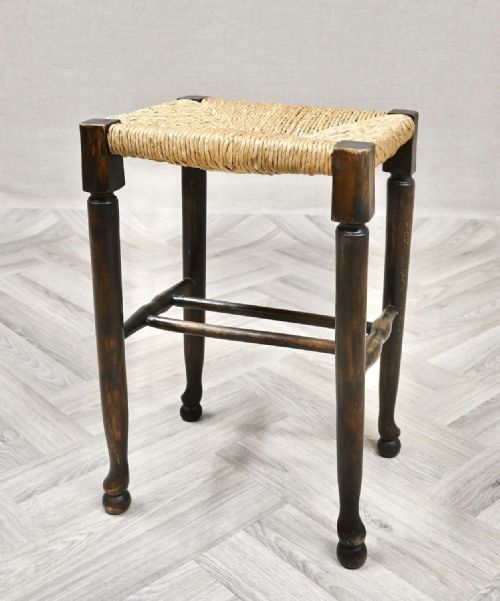
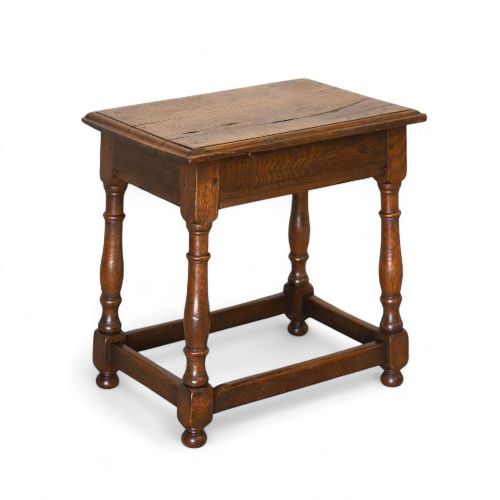
The version most commonly met on this page is the sturdy oak joint stool or provincial farmhouse seat dating from the eighteenth and nineteenth centuries. Alongside these, buyers encounter simpler rush-seated examples, turned tavern stools and low footstools made from native timbers.
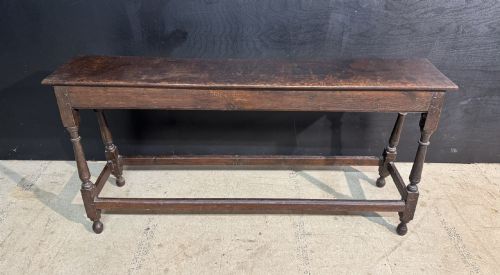
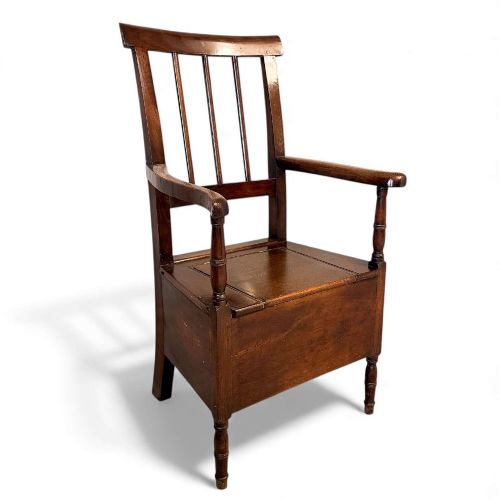
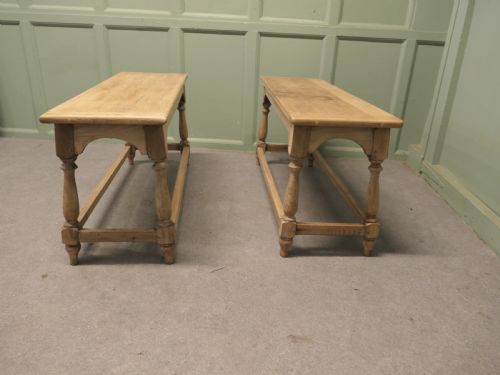
Forms extend beyond standard single seats to include long benches, pairs of dining stools, and low side tables sharing the same robust construction. Their presence reflects the enduring appeal of unpretentious domestic furniture built to withstand generations of handling.
Materials and Construction
Makers relied principally on native English hardwoods, utilising solid oak for structural frames alongside elm, sycamore and yew for shaped seats and turning. Rush found application in woven seating areas, while pegged joints and tenon construction provided the necessary rigidity without complex metal hardware.
Surfaces were often left unvarnished or finished with simple wax, allowing the natural grain and deep patination of the wood to develop through decades of use. Joinery techniques such as mortise and tenon remained standard across centuries, executed by regional carpenters using traditional hand tools.
Several examples show unmistakable signs of having served as impromptu chopping blocks or children's climbing steps.
Judging Quality
Quality rests upon the integrity of the timber and the tightness of the original construction rather than elaborate decoration. Pieces retaining their original pegged joints, untrimmed feet and untouched surface patination demonstrate superior survival through time.
Proportions and balance distinguish provincial work, where skilled carpentry creates a harmonious relationship between the thickness of the top and the rake of the legs. Excessive replacement of components or aggressive cleaning diminishes the character that collectors value in country furniture.
The English Country Oak Stool Glossary
- Joint stool
- A sturdy wooden seat constructed with mortise and tenon joints secured by wooden pegs, common in domestic interiors before the widespread use of chairs. These pieces often feature rectangular tops and straight turned legs.
- Windsor stool
- A traditional seat featuring turned legs and spindles wedged directly into a thick, often saddled wooden seat. This construction method derives from vernacular chair-making traditions.
- Rush seat
- A seating surface woven from dried marsh rushes twisted into cords and patterned across a wooden frame. This technique provides a resilient and slightly yielding surface for sitting.
- Pegged construction
- A method of joining timber where wooden dowels or pins pass through mortise and tenon joints to lock them securely in place. This avoids reliance on iron nails or screws.
- Patina
- The deep surface sheen and colour acquired by wood over centuries through handling, light exposure, and polishing with wax. It serves as an indicator of age and continuous use.
English Country Oak Stool: Frequently Asked Questions
What is an english country oak stool?
An english country oak stool is a functional wooden seat made by provincial craftsmen for everyday domestic or agricultural use. They were built using solid timbers and traditional joinery designed to last.
Over time, these pieces transitioned from utilitarian household items into collected examples of vernacular craft. Their simple lines allow them to function easily in modern interiors as small tables or occasional seating.
How were these stools used originally?
These stools served versatile roles around the farmhouse, cottage, or tavern, providing seating near hearths, dining tables, and workstations. Low versions functioned as footrests, while taller variants suited kitchen counters and public houses.
Because they were lightweight and portable, users moved them around the house wherever extra seating was required. Their robust construction ensured they could handle rough treatment on uneven flagstone floors.
How do I care for an antique oak stool?
Maintaining an antique oak stool requires keeping it away from direct heat sources and sudden humidity changes that cause timber to split. Occasional application of a traditional beeswax polish helps nourish the wood and preserve its surface.
Avoid modern liquid polishes containing silicone, which can penetrate open-grain oak and alter the natural finish. Gentle dusting with a soft cloth is sufficient for routine upkeep.
How can I tell the period of an oak stool?
Dating relies on observing tool marks, joint construction, timber selection, and the wear patterns accumulated on the feet and seat edges. Earlier pieces from the seventeenth and eighteenth centuries often display heavier proportions and hand-split or adzed surfaces.
Later nineteenth-century examples tend to show more uniformity in turning and timber preparation due to the introduction of improved workshop machinery. Comparing the construction details with dated benchmark pieces helps clarify the timeline.