



Seventeenth Century Seating
Seventeenth century seating brings solid oak wainscot chairs, high-backed settles, and walnut armchairs into modern rooms.
Seventeenth Century Seating
Seventeenth century seating comprises robust wooden furniture designed for domestic and formal halls, including sturdy wainscot chairs, high-backed settles, and functional side chairs. Buyers seeking seventeenth century seating often encounter solid oak and walnut examples originating from English, Scottish, and Italian workshops. Regional variations such as Lancashire, Cheshire, and North Country pieces appear alongside later revival interpretations from the nineteenth and early twentieth centuries.
Materials and Construction
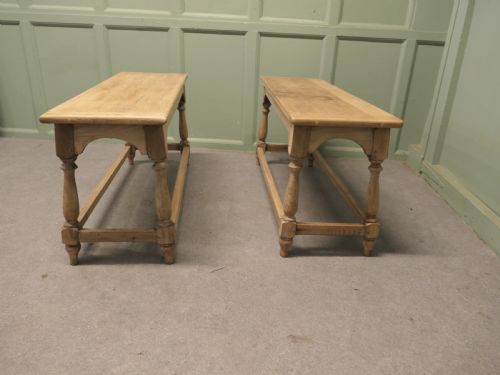
Makers utilised native hardwoods predominantly, turning to oak, walnut, elm, fruitwood, laburnum, and occasional bleached oak for structural integrity. Joinery relied on mortise and tenon frames, pegged joints, and panelled construction to support heavy daily use without metal fixings.
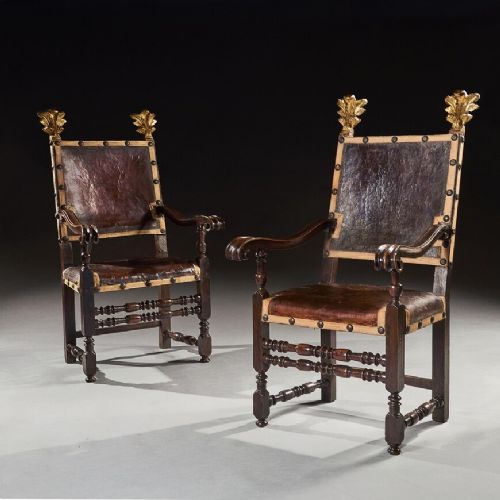
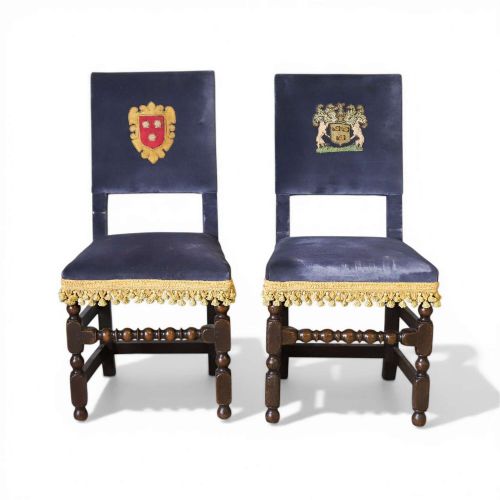
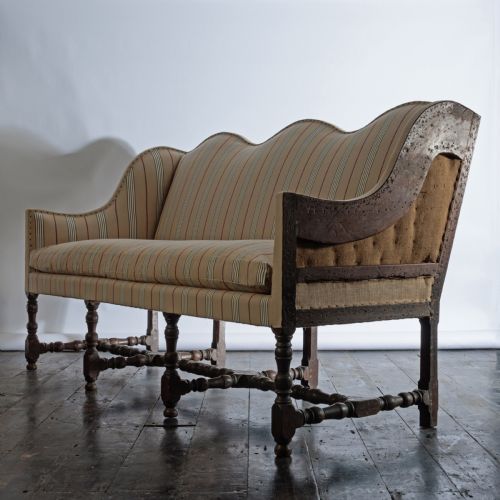
Surface details integrated natural wood grain with specialised embellishments such as parcel-gilt highlights, brass elements, and bobbin turnings. Upholstery materials like leather and velvet provided functional comfort on high-status armchairs and library chairs, fastened with exposed decorative nails.
Assessment of Quality
Integrity of timber and retention of original structural elements define the standing of a piece within seventeenth century seating. Period surfaces showing genuine age and untouched timber patination outrank examples burdened by excessive modern intervention or unsympathetic timber replacement.
The sharpness of carved crests, armorial details, and panel mouldings distinguishes superior regional craftsmanship from simpler vernacular production. Well-proportioned framing and harmonious timber selection across matched pairs or sets indicate higher workshop ambition.
Waring and Gillow
The Seventeenth Century Seating Glossary
- Wainscot chair
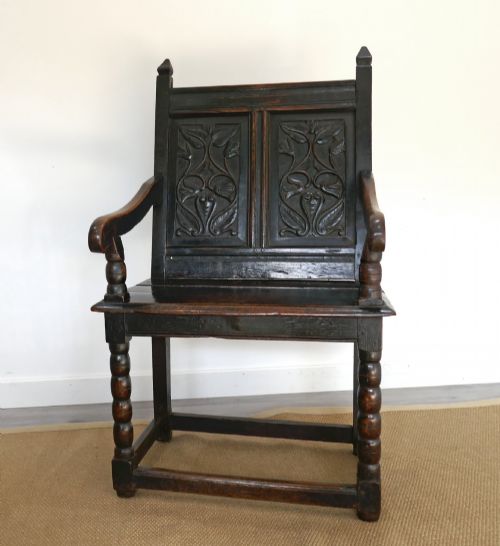
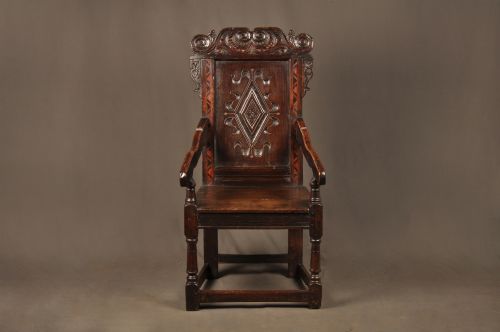
- A heavy wooden armchair constructed with panelled backrests and solid wooden seats, typical of sixteenth and seventeenth century domestic interiors. These pieces often display carved ornamentation along the top rail.
- Settle
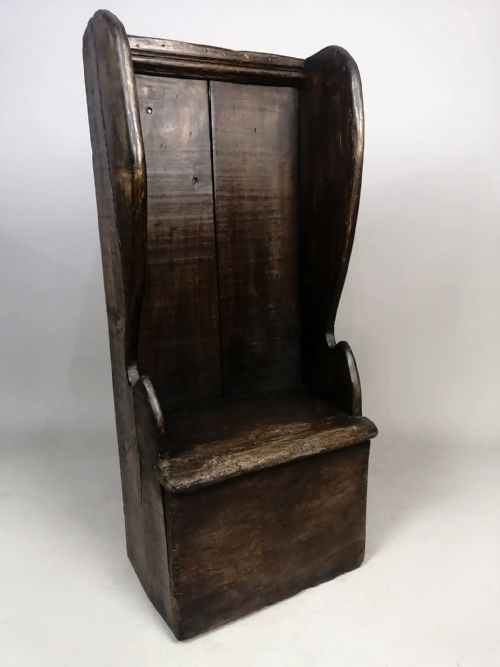
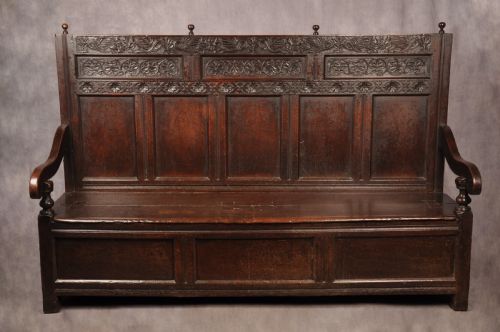
- A high-backed wooden bench featuring solid sides and a storage box beneath the seat, designed to shield occupants from draughts. Historic examples frequently utilise oak or elm construction.
- Parcel-gilt
- A decorative technique applying thin layers of gold leaf to specific carved details or highlights while leaving the underlying wood exposed. This treatment enhances formal Italian Baroque and high-status seating.
- Joint stool
- A low wooden stool constructed with pegged mortise and tenon joinery rather than turned legs driven into a seat slab. These sturdy items served multiple household functions.
Seventeenth Century Seating: Frequently Asked Questions
What is a wainscot chair?
A wainscot chair is a heavy wooden armchair constructed with panelled backrests and solid wooden seats, typical of seventeenth century domestic interiors.
These pieces were built using sturdy oak and feature pegged joinery rather than metal fixings.
Where were settle benches used?
Settle benches were placed near hearths and in entrance halls to block cold drafts from sweeping across open rooms.
Their high panelled backs and enclosed lower box compartments provided both shelter and secure household storage.
How do I identify period oak furniture?
Period oak furniture displays heavy timber construction, pegged mortise and tenon joints, and distinct medullary rays in the wood grain.
Surfaces often show deep patination accumulated over centuries of domestic handling.
What is a bacon settle?
A bacon settle is a specialised regional wooden seat featuring a high panelled back designed for curing and storing meat in the upper compartments.
These items combined domestic seating with essential food preservation practices in rural homes.