
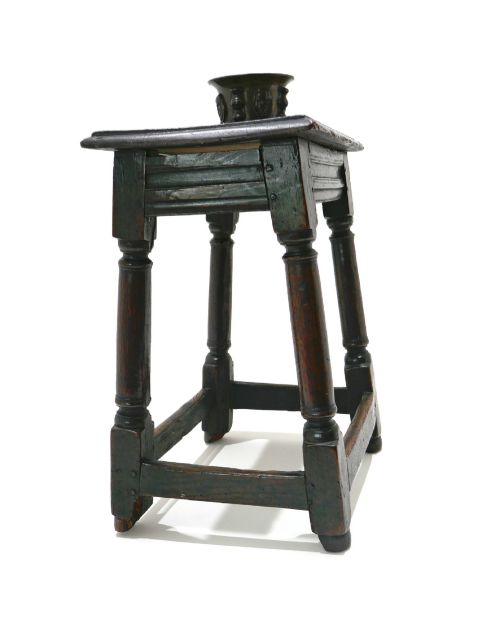
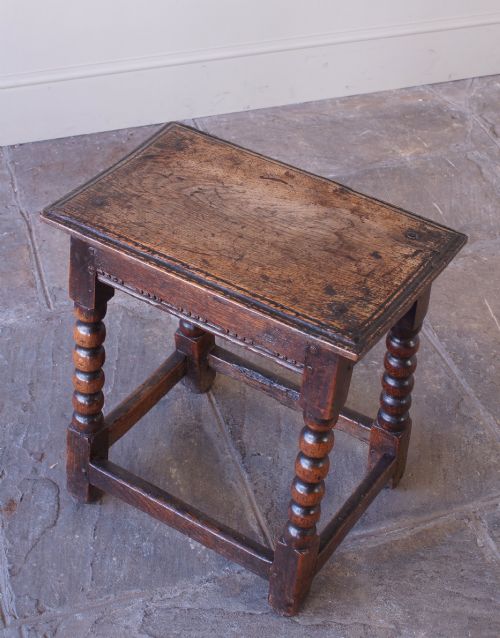
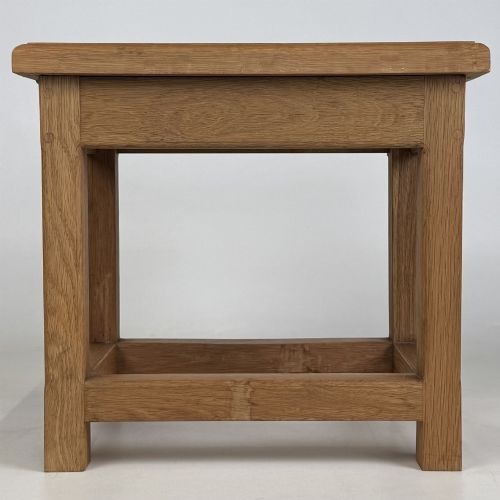
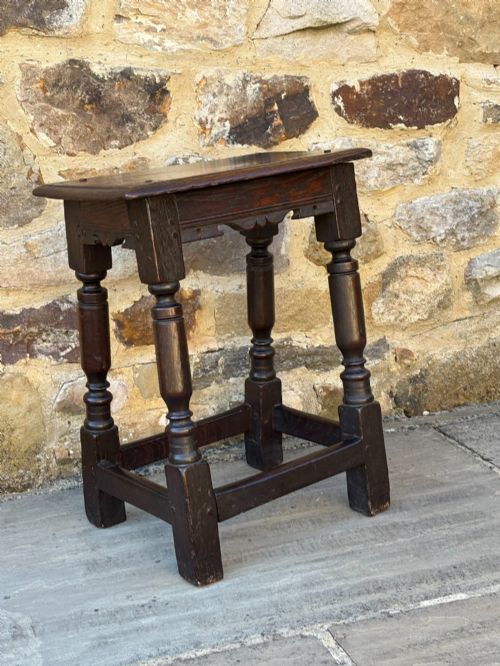

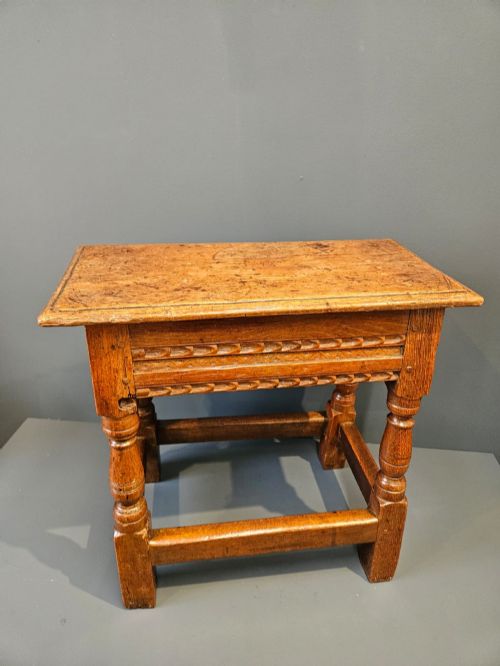
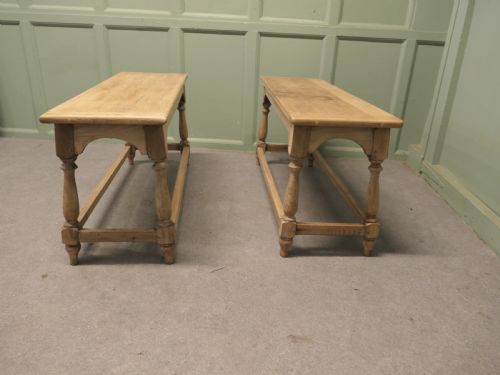

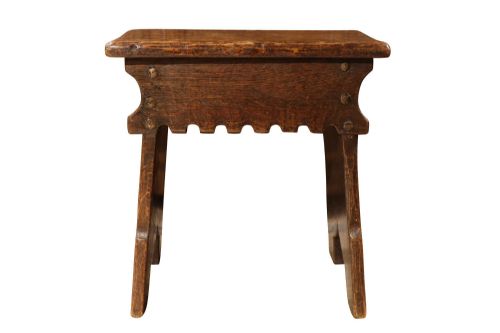


Oak Peg Joint Stool
An oak peg joint stool brings solid seventeenth-century craftsmanship directly into a modern interior.
Oak Peg Joint Stool
An oak peg joint stool is a sturdy wooden seat built with pegged construction, emerging primarily from seventeenth-century traditions but also appearing in later revivals. Buyers seeking an oak peg joint stool encounter authentic seventeenth-century period pieces alongside Edwardian, Georgian, and nineteenth-century interpretations.
The forms span individual joint stools and benches, often constructed from English oak with visible pegged joints. Most examples adhere to Jacobean, Commonwealth, or rustic country styles that emphasise utilitarian strength and simple geometric lines.
How they were made
Cabinet makers utilised solid English oak, shaping the timber into thick planks and structural framing for maximum durability. Wooden pegs secured the mortise and tenon joints firmly together without relying on metal nails or screws.
Surfaces were hand-planed and left with the natural grain of the wood exposed, sometimes subjected to later bleaching in specific decorative variants.
Every wooden peg was hand-carved to hold the stool together, outlasting centuries of shifting household fashions.
What varies in quality
The distinction between a standard piece and a finer example rests on the age of the timber and the integrity of the pegged construction. Seventeenth-century originals display the authentic tool marks and structural wear that distinguish period furniture from later revivals.
Proportion and the handling of the solid oak frame determine the visual balance, while the survival of original wooden pegs maintains the historical coherence of the piece.
The Oak Peg Joint Stool Glossary
- Joint stool
- A type of wooden stool constructed using mortise and tenon joints secured by pegs, common in early domestic interiors. These pieces served as general seating or small side tables.
- Pegged construction
- A method of joining wooden elements using hand-carved wooden pins instead of metal fasteners. This technique allows the timber to expand and contract naturally.
- Jacobean
- The stylistic period spanning the early seventeenth century, characterised by solid construction and restrained ornamentation. Furniture from this era forms the baseline for later revival pieces.
- Bleached oak
- Timber treated to lighten its natural dark brown tone, appearing on specific twentieth-century interpretations. This process alters the visual weight of the wood while retaining the underlying grain.
Oak Peg Joint Stool: Frequently Asked Questions
What is an oak peg joint stool?
An oak peg joint stool is a traditional wooden seat constructed with mortise and tenon joinery held together by wooden pegs. These pieces originate primarily from the seventeenth century, with later revivals appearing into the twentieth century.
They were designed for heavy domestic use around the home, serving as durable seats or auxiliary surfaces.
How were joint stools used historically?
Historically, joint stools functioned as versatile household items for sitting at tables or reaching high places. Their sturdy oak frames made them reliable additions to early domestic interiors.
People also utilised them to support heavy objects or as makeshift side tables when additional surface space was required.
How do I live with an oak peg joint stool?
Living with an oak peg joint stool involves placing it as an occasional seat, a bedside table, or a display surface for plants and lamps. The solid wood construction fits comfortably into both traditional and modern rooms.
Keep the timber away from extreme temperature fluctuations to protect the original oak and pegged joints.
How can I tell the period of a joint stool?
Telling the period apart relies on examining the timber characteristics, tool marks, and overall construction methods visible on the frame. Seventeenth-century originals display distinct age-related patina and joinery details compared to Edwardian or Georgian revivals.
Reference materials and stylistic markers like Jacobean or Commonwealth traits help clarify the exact age of each item.