


17th Century Settle
A 17th century settle provides high-backed wooden seating built to block draughts and anchor a hall or kitchen.
17th Century Settle
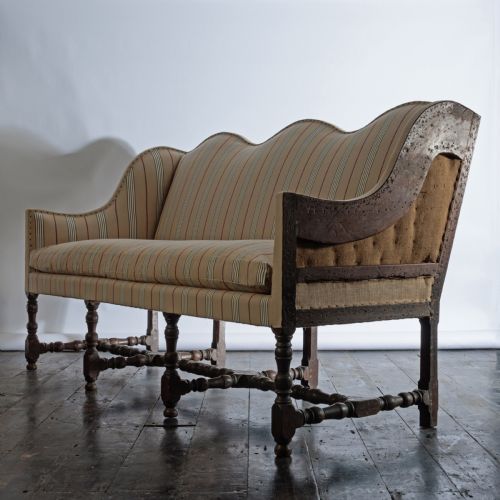
A 17th century settle is a high-backed wooden bench designed to shield occupants from cold indoor draughts. The pieces recorded here span English, Spanish, and French origins, reflecting regional domestic traditions.
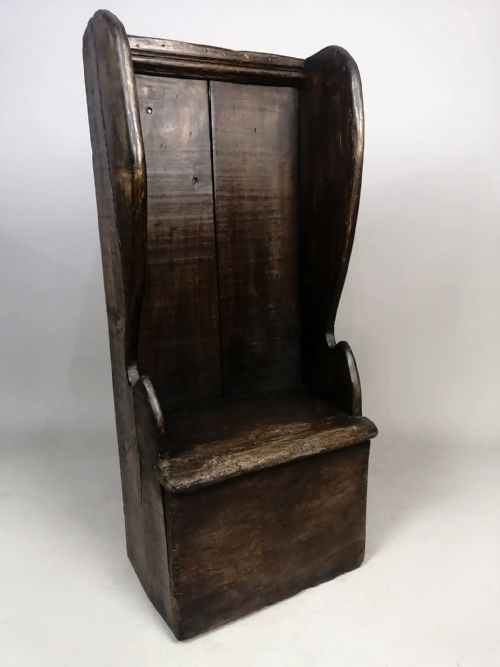
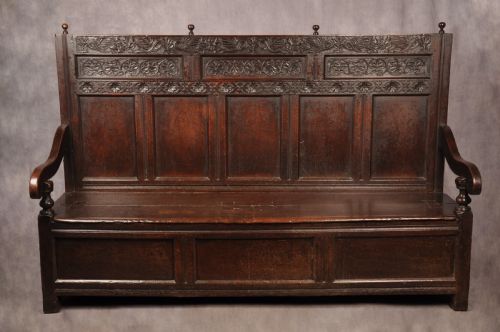
Box settles incorporate built-in storage beneath the seat, while bacon settles and high-back panelled variants offer substantial architectural presence. Smaller child sizes and lambing chairs appear alongside wide hall benches.
Materials and Construction
Makers utilised solid timbers including oak, elm, fruitwood, and walnut, shaped with hand tools and joined by pegged mortise and tenon construction. Iron hardware frequently reinforces hinges and structural joints.
Surface ornamentation relies on carved panels, moulded top rails, and occasionally barley spiral twist supports or inlaid details rather than applied veneers.
Several examples incorporate small marriage boxes intended for domestic keepsakes.
Judging Quality
The degree of original timber retention separates superior examples from those heavily rebuilt over subsequent centuries. Intact box compartments and original panel construction determine authenticity.
The crispness and depth of carved details on the crest rails and back panels indicate the maker's skill and the piece's preservation level.
The 17th Century Settle Glossary
- Settle
- A wooden bench with high back, solid arms, and often a enclosed lower storage box. It functioned as primary seating near the hearth.
- Box Settle
- A variant featuring a hinged seat lid opening to a deep storage compartment underneath. This space kept blankets and household goods dry and secure.
- Bacon Settle
- A specialised tall form incorporating integrated storage space intended for curing or storing meats. These tall structures maximised utility in rural kitchens.
- Wainscot
- A style of construction utilising panelled wooden boards framed by stiles and rails. It derives from the heavy wall panelling methods of the period.
- Lambing Chair
- A low enclosed wooden armchair designed with solid sheltering wings to block wind near open fires. They occasionally appear in diminutive child proportions.
17th Century Settle: Frequently Asked Questions
How were settle benches used?
Occupants placed them near hearths to block cold air circulating across stone floors. The high wooden back created a microclimate of warmth around the seated person.
Box variants served a dual purpose as secure storage chests for bedding, dry goods, and household provisions.
What woods are typical?
Solid oak dominates the surviving record, utilised for its strength and availability in domestic British architecture. Regional pieces also draw upon elm, fruitwood, and walnut.
Iron hardware appears in structural hinges and locking mechanisms on storage compartments.
How do box settles differ?
Box settles incorporate a hollow base beneath the seat accessed by lifting the hinged top board. Standard benches lack this enclosed storage capacity entirely.
The added compartment gives the base a heavier, more architectural proportion in the room.
Where did settles stand?
They anchored large halls, kitchens, and farmhouse interiors where heavy traffic met cold draughts. Their solid backs helped divide open rooms into functional zones.
Smaller child versions and lambing chairs sat closer to the direct hearth fire.