
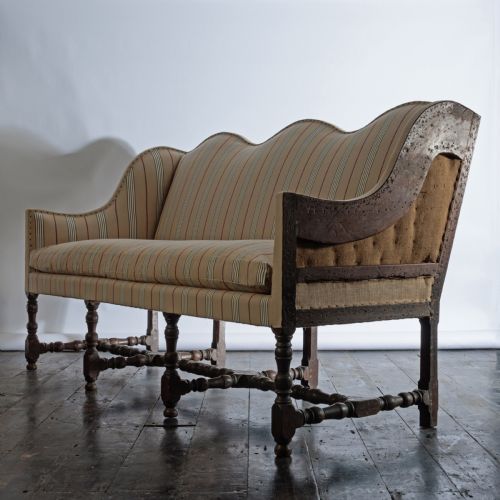


Oak Turned Leg Sofa
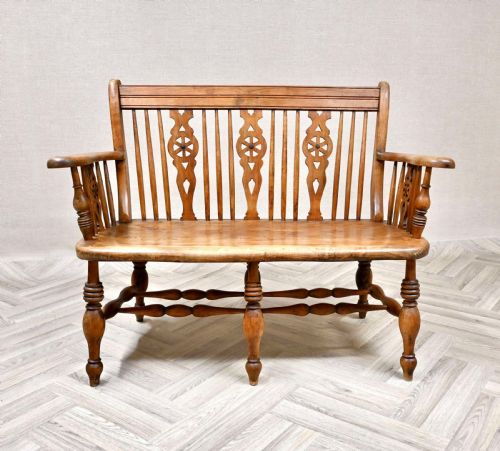
An oak turned leg sofa brings substantial timber framing and historic seating design directly into a traditional interior.
Oak Turned Leg Sofa
When you search for an oak turned leg sofa, you encounter seating built from robust timber featuring characteristic spindle-turned supports. The evidence shows pieces spanning the 17th Century and later periods, uniting substantial wooden frames with period upholstery.
The available listings demonstrate how these heavy timber seating forms connect to broader stylistic revivals, including Jacobean Revival and 17th Century Baroque aesthetics. Buyers frequently encounter pieces that adapt early framing methods for later domestic use.
Alongside formal seating, the inventory reveals related wooden forms such as benches and wingback settlement designs that share the heavy construction and turned elements typical of the genre.
Materials and construction methods
Makers utilised solid oak for the primary structural frames, taking advantage of the timber's density and strength to support deep seating compartments. Secondary materials such as brass fittings and natural textiles like cotton and jute often appear in the upholstery and hardware details.
Woodworking techniques relied heavily on lathe-turning to shape the prominent structural legs and stretchers, creating rhythmic profiles that support the heavy upper framework. Joinery was executed using traditional pegged and mortise-and-tenon methods to ensure the stability of the timber.
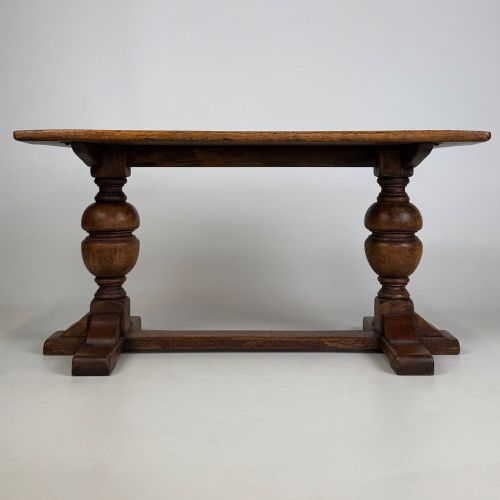
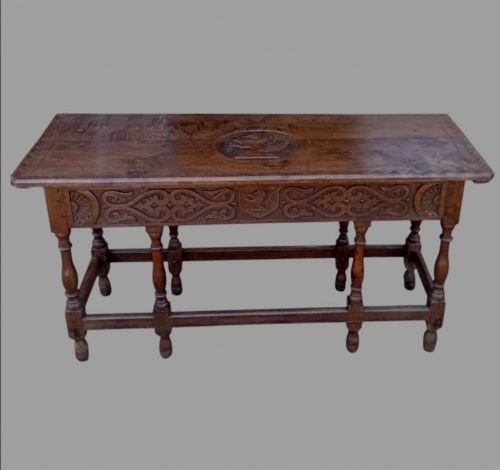
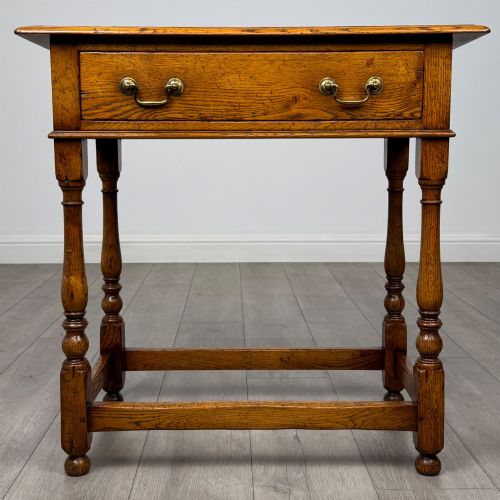
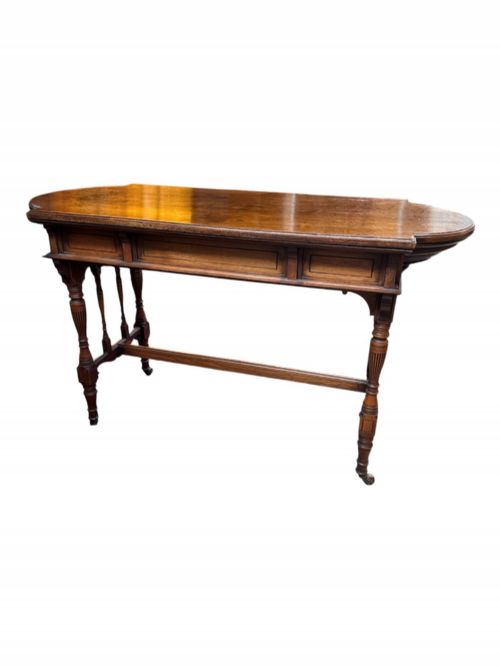
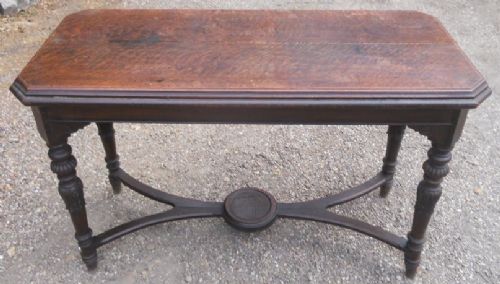
Some tables on this page were built so sturdily they could double as small indoor bridges.
Distinguishing quality in timber seating
The standard of an oak turned leg sofa rests on the crispness of the lathe work and the integrity of the original timber framing. Pieces exhibiting deeply carved ornamentation and well-proportioned turned supports demonstrate superior craftsmanship compared to simpler utilitarian builds.
Age and originality dictate the tier of a piece, with surviving 17th Century examples commanding attention for their historical fabric. The preservation of the primary oak structure without extensive timber replacement marks the higher end of the range.
The Oak Turned Leg Sofa Glossary
- Turned leg
- A support shaped on a lathe by rotating the timber against cutting tools. This technique produces symmetrical columns and spindles with decorative rings and curves.
- Jacobean Revival
- A 19th Century design movement that emulates the heavy, dark oak furniture and architectural motifs of the early 17th Century. It frequently employs geometric moulding and turned components.
- Wingback
- A seating form featuring protective side panels attached to the arms and back to block draughts. Early examples utilise heavy timber frames upholstered in dense textiles.
- Refectory
- A long, narrow table style originally designed for communal dining halls. The form translates into side and serving tables built with robust oak stretchers.
Oak Turned Leg Sofa: Frequently Asked Questions
What is an oak turned leg sofa?
An oak turned leg sofa is a heavy timber seating piece supported by lathe-turned wooden legs and stretchers. These pieces draw on 17th Century traditions and later revival styles.
The category encompasses early wingback forms and related seating built to last through generations of domestic use.
How do I date an oak sofa?
Dating relies on examining the joinery methods, timber patination, and stylistic markers present in the frame. Early pieces from the 17th Century display distinct construction traits compared to later 19th Century revivals.
Analysing the turning profiles on the legs helps distinguish original period work from subsequent stylistic copies.
What materials are used in these sofas?
Solid oak forms the primary structural framework for these historical seating pieces. Secondary elements often include brass hardware and traditional upholstery fabrics like cotton and jute.
Related pieces in the evidence also incorporate regional timbers such as elm, ash, yew, and walnut.
How should I care for historic oak furniture?
Historic oak requires a stable indoor environment away from direct sunlight and sudden temperature fluctuations. Maintaining consistent humidity prevents the solid timber from splitting or warping.
Apply traditional wax sparingly to nourish the wood surface and preserve the natural patination built up over centuries.