


Octagonal Wooden Box
An octagonal wooden box brings eight-sided geometry and timber grain together in tea caddies, cellarettes, and decorative caskets.
Octagonal Wooden Box
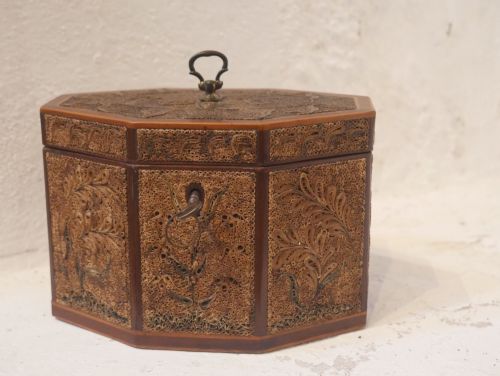
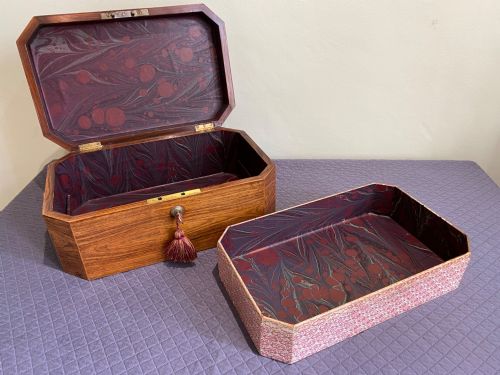
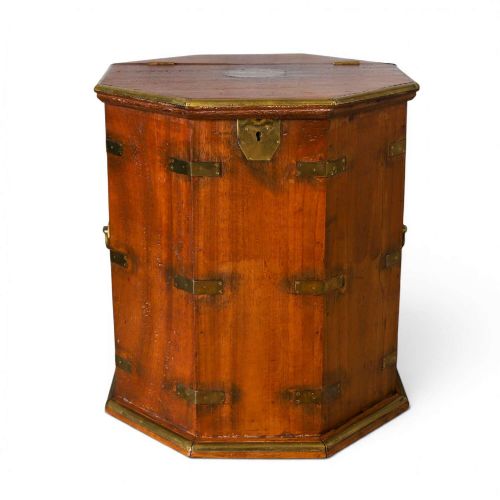
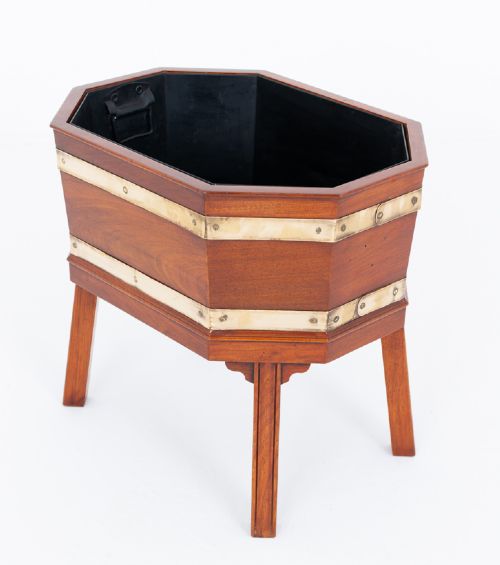
An octagonal wooden box most frequently takes the form of a tea caddy, cellarette, or sewing container dating from the eighteenth and nineteenth centuries. These pieces were constructed to hold precious dry leaves, wine bottles, or needlework supplies within symmetrical eight-sided walls.
The pieces appearing on this page span the Georgian, Regency, and Victorian eras, alongside Chinese export and Indian decorative containers. Mahogany and satinwood predominate among the timbers, supplemented by partridge wood, olivewood, and rosewood.
Tea caddies and cellarettes represent the most common manifestations of the octagonal wooden box in these listings. Collectors also encounter specialised forms such as teapoys, jewellery boxes, and wedding chests.
Materials and Construction
Cabinetmakers constructed these vessels using dense hardwoods like mahogany, satinwood, and yew, often applying contrasting veneers and stringing. Inlaid boxwood and shell motifs frequently adorn the exterior planes to create geometric patterns.
Metal elements such as brass carry out functional roles in the form of carrying handles, bandings, hinges, and lock plates. Internal compartments occasionally incorporate bone fittings alongside fitted wooden lids for tea canisters.
One late eighteenth-century partridge wood caddy weighs in with enough natural feather-like figuring to convince anyone birds had a hand in the forestry.
Execution and Detail
Quality rests upon the precision of the eight-sided joinery and the harmonious grain selection of the timber. Fine examples display seamless mitred corners and well-matched veneer panels across all eight faces.
The refinement of internal partitions and original hardware distinguishes superior pieces from simpler utilitarian containers. Elaborate Tunbridge ware decoration or detailed shell inlay marks out the upper tier of execution.
Gillows
The Octagonal Wooden Box Glossary
- Tea Caddy
- A box designed to store loose tea leaves, often featuring internal lidded compartments to separate different varieties. These containers frequently utilised locking lids to protect expensive tea from household servants.
- Cellarette
- A large freestanding or floor-standing box used for holding bottles of wine, typically bound with brass and lined for cooling purposes. Georgian examples often adopted an octagonal shape to fit beneath sideboard tables.
- Teapoy
- A small table with a box container mounted on a central pillar or legs, used for serving tea. They emerged during the Regency period and often incorporated octagonal storage compartments.
- Satinwood
- A lustrous, hard timber native to Ceylon and India, prized for its golden colour and used extensively for high-end eighteenth-century veneer work. It takes a high polish and contrasts sharply with darker woods.
- Partridge Wood
- A dense tropical timber named for the partridge-feather pattern created by its grain. Cabinetmakers valued it for decorative caddies during the Georgian era.
Octagonal Wooden Box: Frequently Asked Questions
What were octagonal wooden boxes used for?
These boxes primarily served domestic functions connected to luxury provisions like tea, wine, and sewing accessories. Their compartmentalised interiors kept valuable commodities secure and organised.
Larger octagonal vessels functioned as cellarettes or wedding chests for household storage. Smaller versions sat on tea tables or sideboards in formal reception rooms.
How do I identify a Georgian box?
Georgian boxes rely on proportion, timber selection such as mahogany or satinwood, and subtle string inlay rather than heavy carving. The joinery employs hand-cut dovetails and traditional adhesives.
Many period pieces feature brass carrying handles and escutcheons with working locks. The interior layout often includes two or three lidded canisters for tea.
What is a teapoy?
A teapoy is a lidded container mounted on a pedestal stand, designed to hold tea leaves and equipment. They became popular during the Regency period.
Unlike table-top caddies, teapoys stand independently on three or four feet. Some examples include mixing bowls and internal canisters.
How should I care for antique wood?
Keep wooden boxes away from direct sunlight and heat sources to prevent timber shrinkage and veneer lifting. Maintaining stable room humidity preserves the original polish and structure.
Apply a light microcrystalline wax occasionally if the surface appears dry. Avoid silicone polishes that penetrate the wood grain.