





Red Lacquer Box
A red lacquer box brings rich colour and layered history into a room, spanning delicate tiered vessels and substantial chests.
Red Lacquer Box
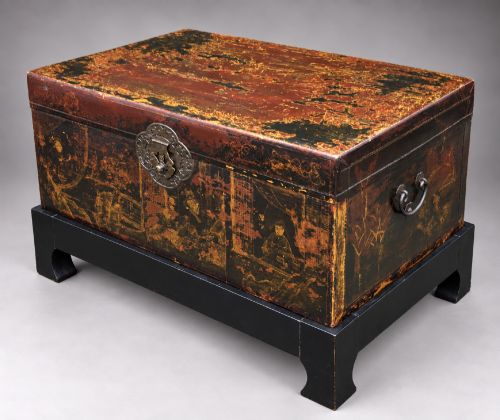
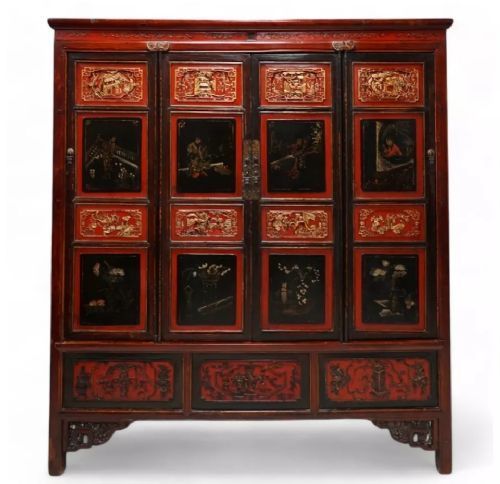
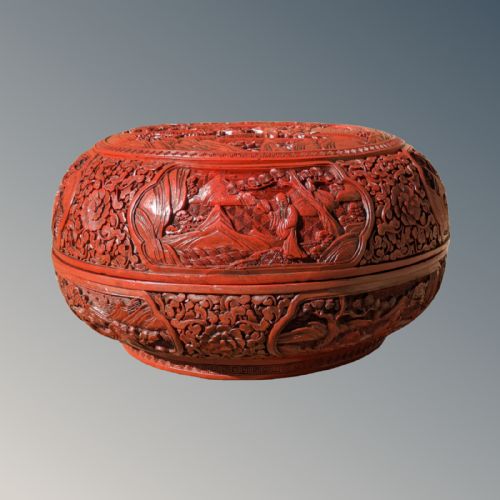
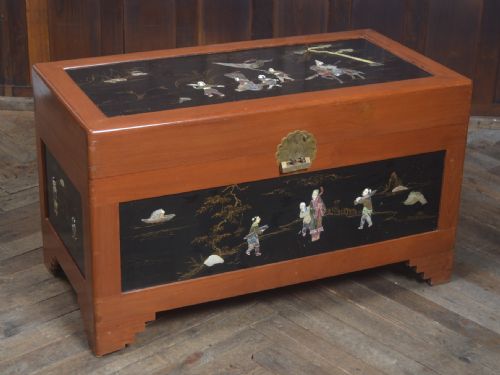
A red lacquer box spans a wide variety of forms, from small lidded trinket vessels and writing cases to large blanket chests, dowry baskets, and marriage cabinets.
The pieces appearing here originate predominantly from 19th-century China, Japan, and India, reflecting traditional craftsmanship across diverse Asian and Anglo-Indian styles.
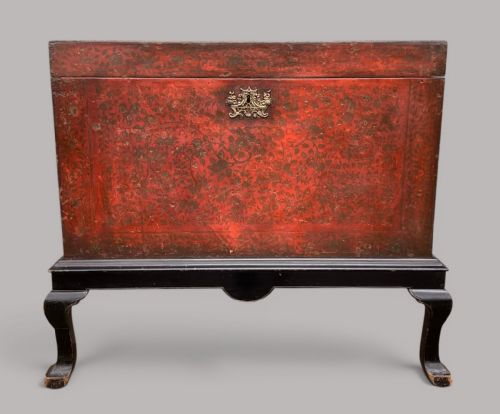
Buyers encounter everything from intricate carved cinnabar pieces and painted marriage containers to massive floor-standing storage trunks resting on stands.
How they were made
Craftsmen built the underlying carcass from timbers such as elm, camphor wood, pine, or kiri wood, providing a stable foundation for the decorative surface.
Layers of natural lacquer, pigment, and cinnabar were applied, dried, and polished, occasionally incorporating brass hardware, iron accents, or delicate gold gilt and paint details.
Some items doubled as cashiers or rice carriers, proving that even everyday errands once required a splash of bright red lacquer.
What varies in quality
The depth and complexity of the lacquer work define the upper tier of pieces, particularly where artisans carved deep relief motifs into thick layers of cinnabar.
Quality rests equally in the preservation of the painted or gilded surface and the structural integrity of the underlying wooden box, chest, or stand.
The Red Lacquer Box Glossary
- Cinnabar lacquer
- A technique involving numerous applied layers of red mercuric sulphide varnish that are carved in deep relief once hardened. This method yields substantial depth and intricate surface patterns.
- Chinoiserie
- European decorative style imitating Chinese and East Asian artistic traditions. It appears frequently on 19th-century chests and storage vessels.
- Tansu
- Traditional Japanese mobile cabinetry and storage chests. Examples often feature robust wooden construction paired with metal fittings.
- Dowry basket
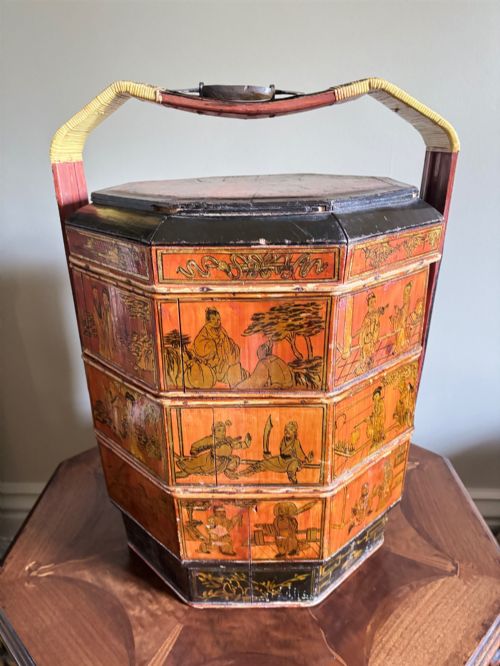
- Multi-tiered lidded vessel traditionally used in marital processions and domestic storage. These items demonstrate layered stacking construction.
- Maki-e
- Japanese lacquerware technique where designs are sprinkled with gold or silver powder while the lacquer remains wet. It represents a high level of decorative refinement.
Red Lacquer Box: Frequently Asked Questions
What were red lacquer boxes used for?
These vessels served diverse domestic purposes, ranging from holding personal jewellery, documents, and writing implements to storing wedding garments and ceremonial offerings.
Larger variations functioned as portable chests or marriage cabinets, designed to protect valuable textiles and household goods within traditional homes.
How do I live with a red lacquer box?
Place them away from direct sunlight and extreme humidity fluctuations to protect the delicate wooden carcasses and traditional finishes from drying out.
They act as striking focal points on tabletops, sideboards, or stands, adding warmth and rich colour to contemporary and traditional interiors alike.
How do I tell Chinese from Japanese pieces?
Chinese examples often feature carved cinnabar relief, painted marriage motifs, or substantial elm and camphor wood construction, reflecting dynastic styles.
Japanese pieces frequently display refined maki-e gold work, specialised writing box configurations, or distinct cabinetry forms like tansu and kiri wood storage units.
What is a dowry basket?
A dowry basket is a multi-tiered lidded container traditionally used during wedding ceremonies to transport gifts and household items.
These pieces feature stacked sections secured by overarching frames, combining structural utility with symbolic decorative painting.