






Antique Chinese Lacquerware
Antique chinese lacquerware brings depth and rich colour to a room through centuries-old methods applied to wood.
Antique Chinese Lacquerware
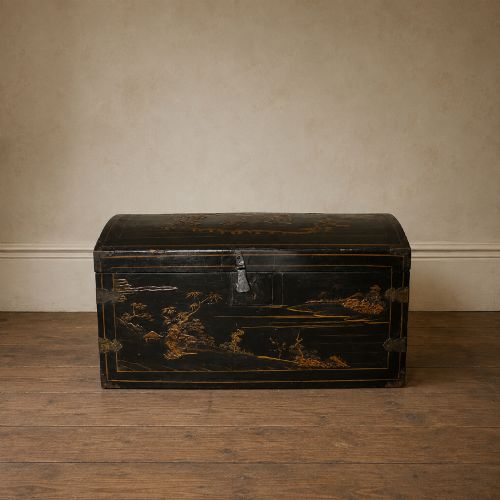
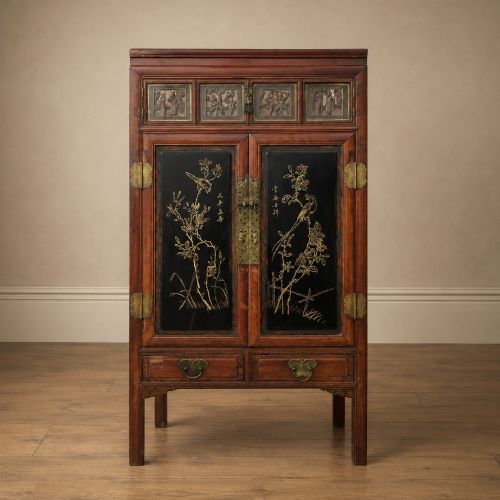
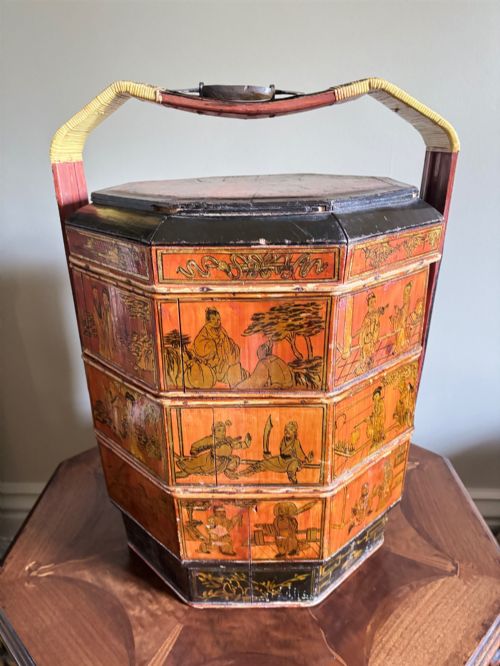
Antique chinese lacquerware encompasses a range of functional and decorative items designed for storage, display, and daily use. Buyers encounter objects such as decorative boxes, vases, trunks, cabinets, and wedding baskets.
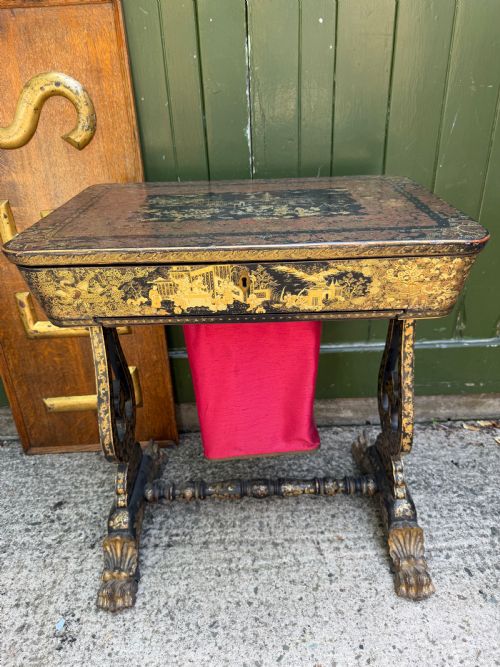
The pieces on this page originate predominantly from the nineteenth century, including examples from the Qing dynasty and Chinese export production. Forms span small tea caddies and hand fans up to monumental temple vases and large cabinets.
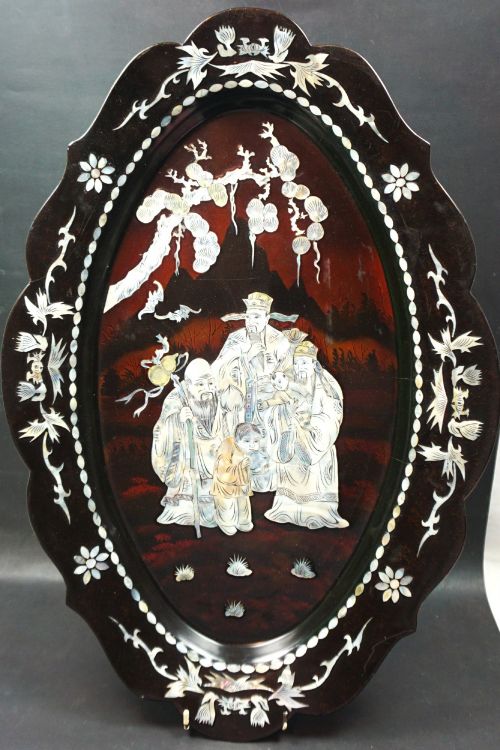
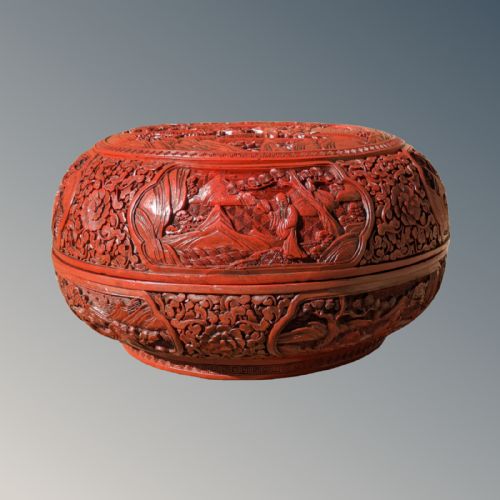
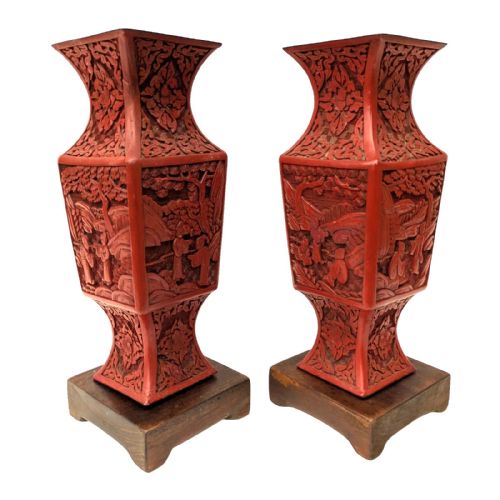
Red and black lacquer dominate the selection, often enriched with gilt decoration, gold leaf, or mother of pearl inlay. Cinnabar lacquer pieces feature deep carved surfaces depicting traditional scenes and motifs.
How antique chinese lacquerware was made
Constructed primarily from wood substrates, these items received multiple successive coats of natural tree sap lacquer. Artisans built up these layers patiently before carving, polishing, or painting the surface.
Many examples incorporate detailed surface embellishments such as gold leaf application, gilt painting, and inlaid mother of pearl. Cinnabar varieties relied on thick layers of red lacquer carved away to reveal intricate low-relief designs.
Hardware components in brass or iron provided structural support and functional closure for trunks, cabinets, and boxes.
Some nineteenth-century export fans feature a thousand tiny painted faces, each meticulously rendered by hand on delicate black lacquer.
What varies in quality
The depth and precision of carving set the standard for pieces like cinnabar vases and lidded boxes. Superior examples display crisp relief work with clear definition across intricate background patterns.
The complexity of surface decoration differentiates standard utility items from elite export and domestic goods. Finer specimens integrate meticulous gilt painting, delicate gold leaf work, or precisely cut mother of pearl inlay upon stable wood foundations.
The Antique Chinese Lacquerware Glossary
- Cinnabar lacquer
- A heavy red lacquer produced by adding mercuric sulphide to the sap, allowing artisans to carve deep patterns into the hardened layers.
- Chinese Export
- Goods manufactured in China specifically for Western markets, often blending traditional local techniques with European furniture forms.
- Gilt decoration
- The application of gold paint or thin gold leaf to highlight motifs and borders against a dark lacquer ground.
- Qing Dynasty
- The final imperial dynasty of China, spanning from sixteen-forty-four to nineteen-twelve, which produced the majority of pieces seen here.
- Chinoiserie
- European stylistic interpretations of Chinese artistic motifs and lacquer techniques popular during the nineteenth century.
Antique Chinese Lacquerware: Frequently Asked Questions
How do I clean antique lacquer?
Dust surfaces gently with a soft, dry cloth to prevent scratching the delicate finish. Avoid using chemical polishes, modern detergents, or excessive water on antique lacquer.
Maintaining stable indoor humidity levels protects the wood substrate from expanding and causing the lacquer layers to crack or lift over time.
What were dowry baskets used for?
Large multi-tiered baskets transported ceremonial gifts, food, and personal belongings during traditional wedding processions. Families repurposed them afterward for domestic storage.
Their robust construction allowed them to carry heavy loads while displaying bright red lacquer finishes symbolising good fortune.
How are nineteenth-century pieces identified?
Dating relies on stylistic markers, construction methods, and material characteristics typical of the Qing dynasty and Victorian export periods. Cabinetry joinery and brass hardware styles offer additional clues for chronological placement.
Comparing surface wear patterns with known period examples helps confirm the age of export items like work tables and tea caddies.
Where should I place lacquerware?
Position pieces away from direct sunlight and heat sources to prevent the lacquer from fading, drying out, or crazing. Stable room temperatures ensure the longevity of both wood and surface coatings.
Cabinets, tables, and lidded boxes suit low-traffic display areas where their decorative colour and gilt details can be appreciated safely.