





Chinese Lacquer Box
A Chinese lacquer box brings centuries of meticulous sap-layering, gilt painting and carved relief directly to your desk or table.
Chinese Lacquer Box
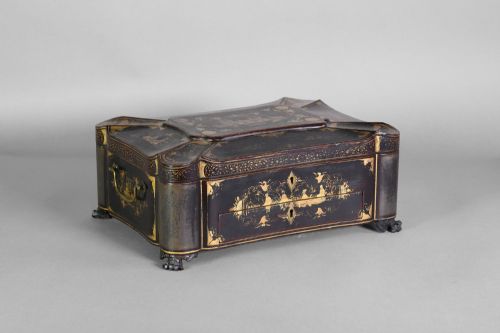
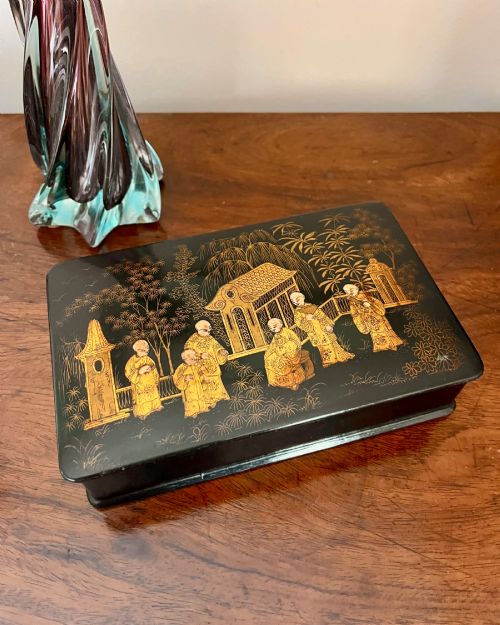
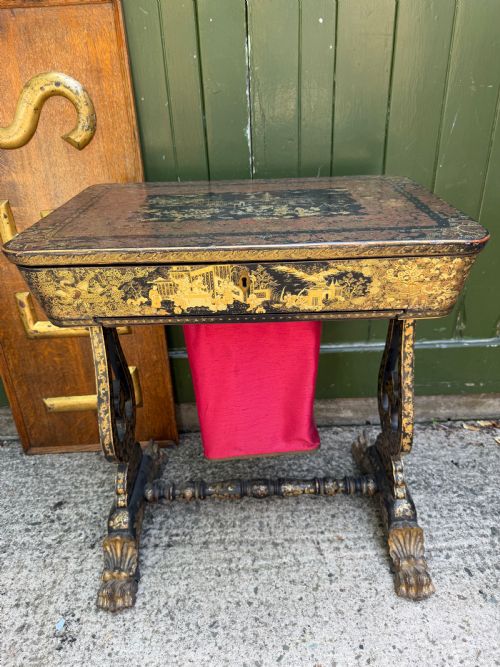
A Chinese lacquer box encompasses a wide variety of lidded containers, small chests, tea caddies, and gaming boxes created for both domestic use and export to Western markets. You will frequently encounter black and gold export pieces alongside vibrant red cinnabar examples dating from the eighteenth century through to the early twentieth century.
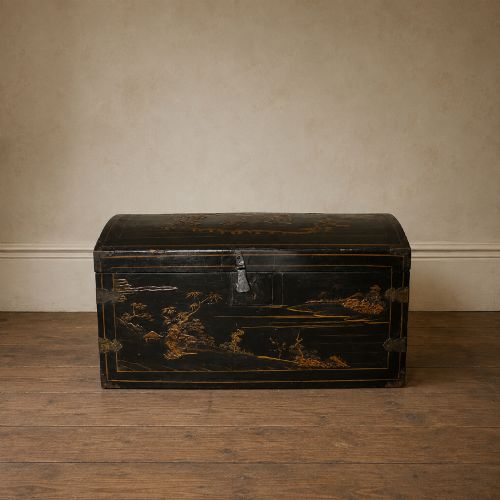
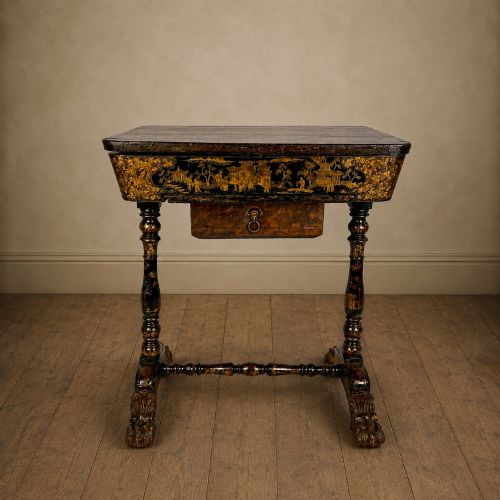
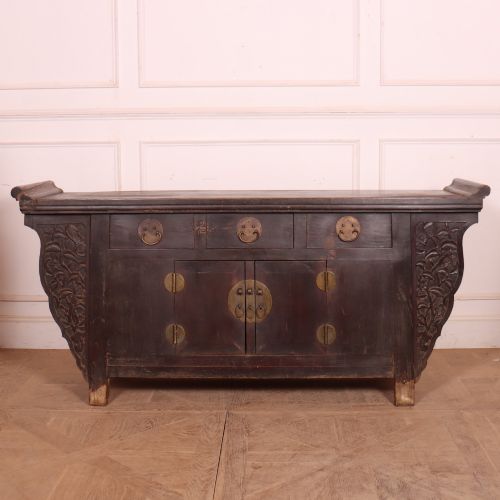
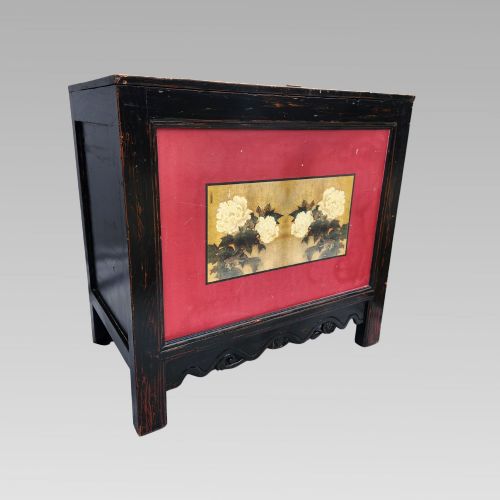
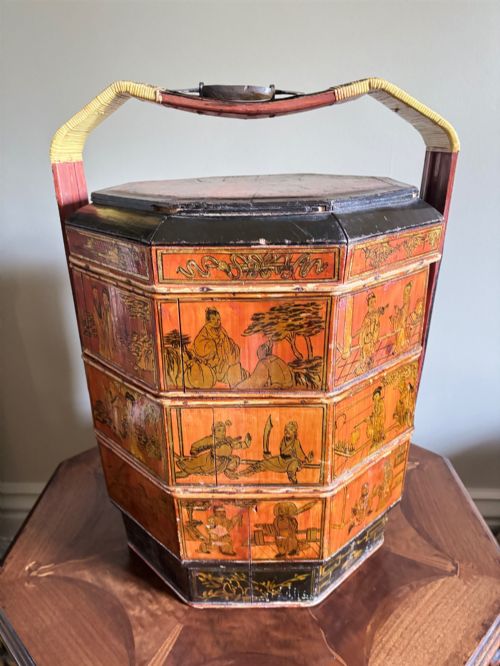
The form stretches from tiny trinket and stationery boxes to heavy marriage baskets, dowry chests, and intricate sewing tables fitted with internal compartments. These objects served practical storage roles for valuables, documents, and games, functioning as portable treasures that combined utility with ornamental display.
Most items on this page originate from the Qing dynasty and later nineteenth-century trading ports, reflecting both traditional Chinese craftsmanship and styles adapted for European interiors. The survival of these delicate surfaces demonstrates the enduring appeal of traditional Asian decorative arts in modern spaces.
How they were made
Artisans built these containers using timber carcasses such as elm, camphor wood, or bamboo, applying successive coats of processed tree sap that hardened into a durable, smooth surface. Each layer required extensive drying and polishing before further embellishment could take place.
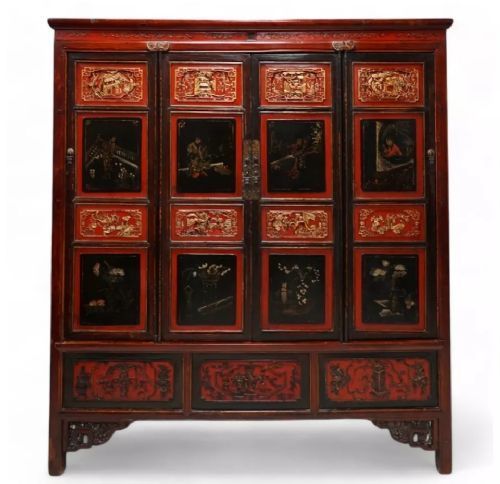
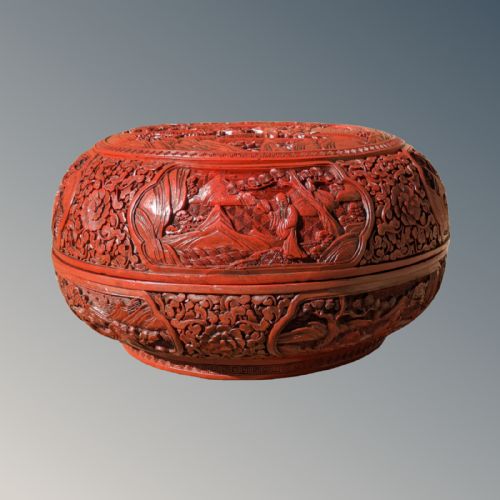
Decoration relied on hand-applied gold leaf, delicate pigment painting, and deep carving into thick layers of cinnabar lacquer to reveal intricate floral and figurative scenes. Metal fittings in brass were frequently added to corners, hinges, and lock plates to protect vulnerable edges and secure the contents.
Some nineteenth-century sewing boxes still retain their tiny carved ivory winding spools, waiting quietly for a lost project to resume.
What varies in quality
The distinction between ordinary and exceptional examples rests upon the depth of the carving and the purity of the lacquer surface. Superior pieces exhibit crisp relief work where every motif remains distinct, whereas lesser items show flattened details and muddy colouration.
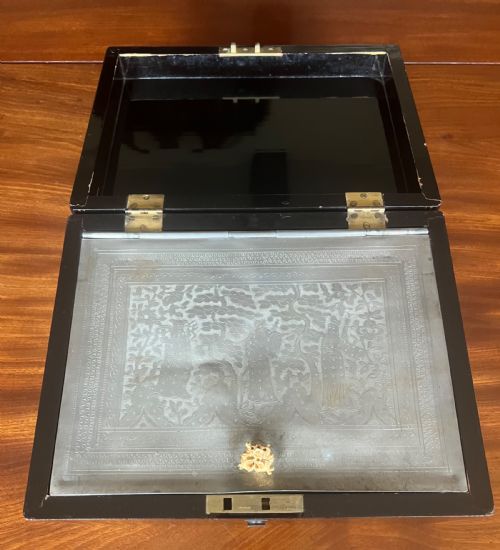
The precision of the internal fittings, such as lidded tea compartments, nesting gaming counters, and fitted work-table trays, marks out superior workshop production. Preservation of the original gilt decoration and stability of the underlying wood carcass also determine the standing of each piece.
The Chinese Lacquer Box Glossary
- Cinnabar Lacquer
- A technique where numerous layers of red lacquer are built up on a core before being deeply carved with figural or floral designs. This method demands immense patience from the artisan, as each applied layer must cure fully before carving begins.
- Chinese Export
- Objects manufactured in China specifically for European and American markets during the eighteenth and nineteenth centuries. These items often blend traditional Eastern motifs with Western furniture forms.
- Chinoiserie
- A European stylistic interpretation of Chinese artistic traditions, popular in furniture and decorative objects during the eighteenth and nineteenth centuries. It relies on whimsical depictions of landscapes, pavilions, and figures.
- Tea Caddy
- A small lidded container designed to store dry tea leaves securely away from moisture and light. In Chinese export examples, these often feature internal pewter or wooden compartments.
- Qing Dynasty
- The final imperial dynasty of China, ruling from sixteen-forty-four until nineteen-twelve. Most antique lacquer boxes encountered today date from the later decades of this period.
Chinese Lacquer Box: Frequently Asked Questions
What were Chinese lacquer boxes used for?
These containers held precious items ranging from personal jewellery and sewing implements to gaming counters, stationery, and tea.
Wealthy households utilised them for secure daily storage, while large wedding and dowry baskets transported ceremonial gifts.
How do I care for antique lacquer?
Keep these pieces away from direct sunlight, extreme heat sources, and rapid humidity changes to prevent the wood and lacquer from splitting.
Dust gently with a dry, soft microfibre cloth and avoid using chemical polishes, water, or abrasive cleaners on the delicate surface.
Are export pieces different from domestic ones?
Export items were tailored to Western tastes, frequently taking the form of sewing tables, games boards, and tea caddies adapted to European daily life.
Domestic pieces, such as marriage cabinets and dowry baskets, retained traditional regional utility and forms intended strictly for Chinese households.