


Brass Mounted Jewellery Box
A brass mounted jewellery box is a sturdy wooden or glass repository for valuables, elevated by metal straps, corners, or inlays.
Brass Mounted Jewellery Box
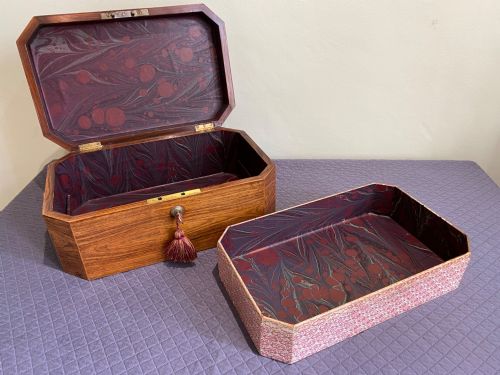
A brass mounted jewellery box is typically encountered from the nineteenth century, with Victorian examples appearing frequently alongside earlier Regency and Georgian iterations. These pieces function as secure containers for personal trinkets, rings, and keepsakes, often constructed as desktop caskets or table boxes.
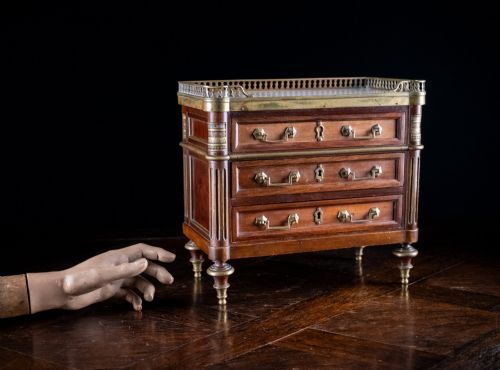
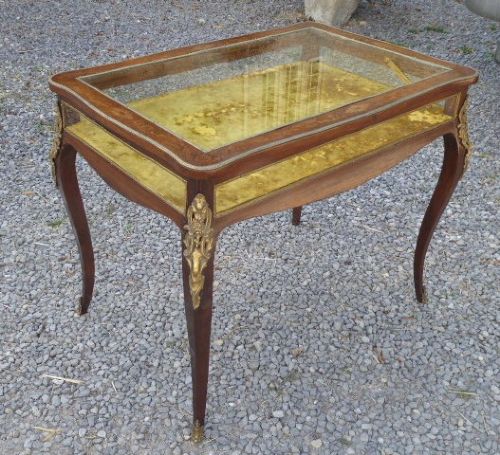
Collectors searching for a brass mounted jewellery box will also discover related forms such as bijouterie tables, tea caddies, and miniature chests. These objects share the characteristic metal mounts and fine joinery intended to protect domestic treasures.
How they were made
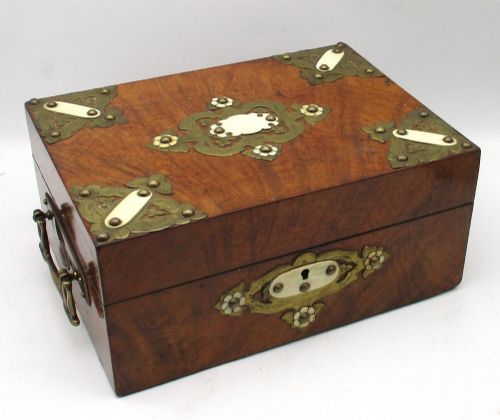
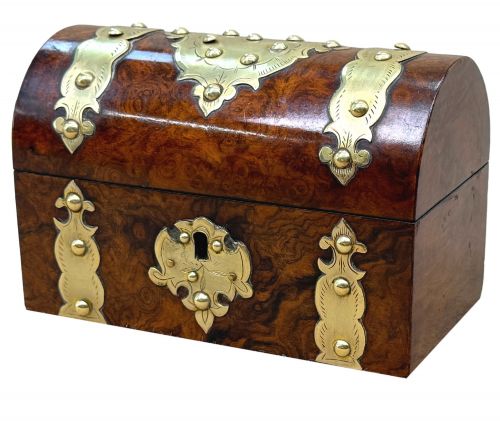
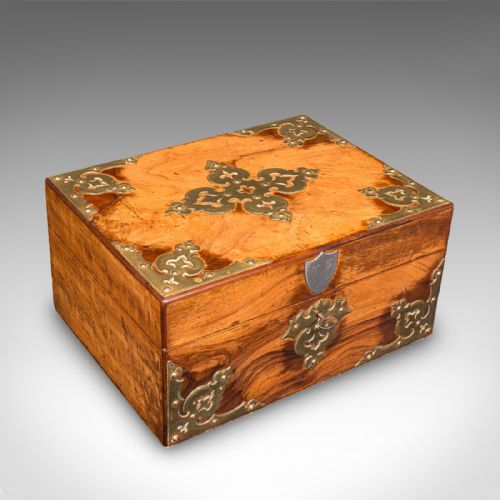
The construction relies heavily on dense hardwoods like walnut and mahogany, frequently veneered with highly figured burr walnut or exotic rosewood to create rich exterior surfaces. Artisans secured these carcases using precise dovetail joints and lined the interiors with velvet, silk, or leather.
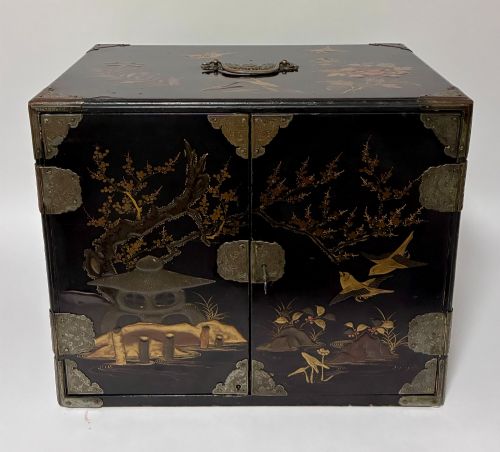
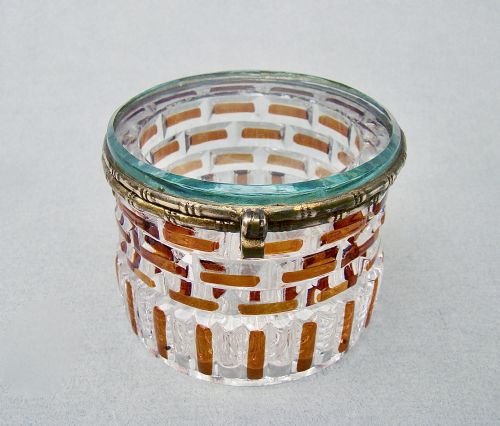
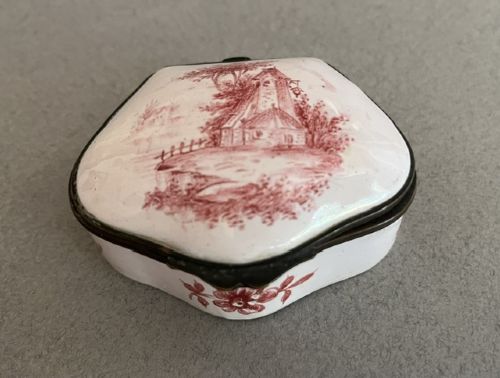
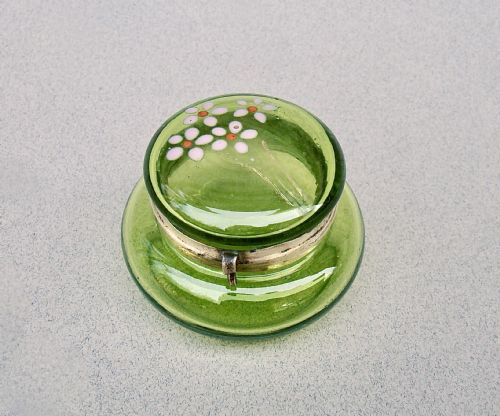
Brass mounts, straps, and corner pieces were cast or beaten and then meticulously recessed flush into the wooden surfaces or secured with small pins to reinforce the corners. In glass and porcelain examples, metal mounts serve as structural frames to hold fragile panels together securely.
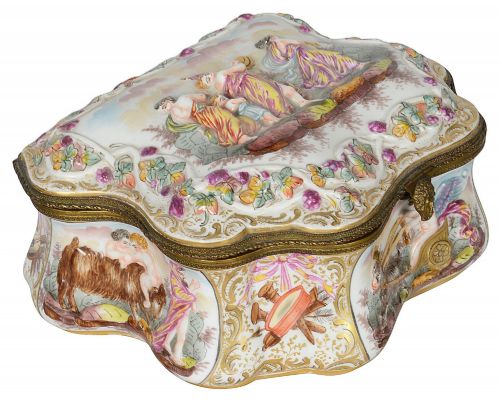
Listings feature Victorian, Regency, and Georgian periods, utilising materials such as burr walnut, rosewood, glass, and porcelain.
What varies in quality
Quality reveals itself in the selection of the wood veneer and the precision of the brass work, where superior pieces feature symmetrical burr patterns and neatly fitted metal mounts. The weight of the timber carcase and the complexity of internal compartments, such as secret drawers or fitted tray lifts, distinguish finer examples.
The integration of additional decorative elements, such as inlaid pietra dura, jasperware plaques, or malachite panels alongside the brass work, separates standard utility boxes from exceptional luxury pieces.
The Brass Mounted Jewellery Box Glossary
- Burr walnut
- A highly prized wood grain featuring swirling, knotty formations that create rich patterns across the lid and sides of a box. This timber was favoured by Victorian makers for high-end luxury pieces.
- Escutcheon
- A protective brass plate surrounding a keyhole that prevents the surrounding wood from splitting when the key is turned. It often mirrors the shape of the corner mounts.
- Pietra dura
- An artistic technique of inlaying cut and fitted polished coloured stones to form pictures or geometric designs. It appears on select nineteenth-century boxes alongside brass mounts.
- Bijouterie table
- A glass-topped display table designed to showcase small decorative items and jewellery rather than concealing them inside a solid box. These pieces often feature gilded bronze or brass framing.
- Campaign case
- A portable box or chest constructed for travel, typically fitted with flush brass handles and reinforced corners to withstand frequent movement.
Brass Mounted Jewellery Box: Frequently Asked Questions
How do I date a brass mounted jewellery box?
Dating relies on observing the timber species, construction methods, and style of the brass mounts. Regency and Georgian examples often feature simpler rosewood or mahogany carcases with linear brass stringing.
Victorian pieces frequently display heavier burr walnut veneers combined with cast brass corners and strapwork. Examining the interior linings and lock mechanisms also helps narrow down the period of manufacture.
What woods were commonly used?
Cabinet makers predominantly utilised dense tropical and domestic hardwoods to build the structural carcase of these caskets. Walnut, burr walnut, and rosewood appear most frequently in nineteenth-century examples.
Mahogany and satinwood feature across earlier Regency and Georgian pieces. Exotic woods like coromandel and kingwood were reserved for higher-status luxury boxes.
Are all these boxes made in England?
While many examples originate from English workshops, a significant number hail from continental Europe. French makers produced numerous glass trinket boxes and marquetry bijouterie cabinets during the nineteenth century.
Items finished with specialised techniques like Japanese lacquer or Italian porcelain plaques demonstrate the international nature of the trade. The style of the brass mounts often points to the country of origin.
How should I clean the brass mounts?
Maintenance requires gentle dusting and cleaning without abrasive agents that could strip the historical patina from the metal. Care must be taken to prevent metal polishes from coming into contact with fragile wood veneers, leather, or velvet linings.
Applying a soft dry cloth is usually sufficient for regular upkeep. Preserving the natural ageing of the brass maintains the integrity of the antique.