


Vintage Walnut Vanity Box
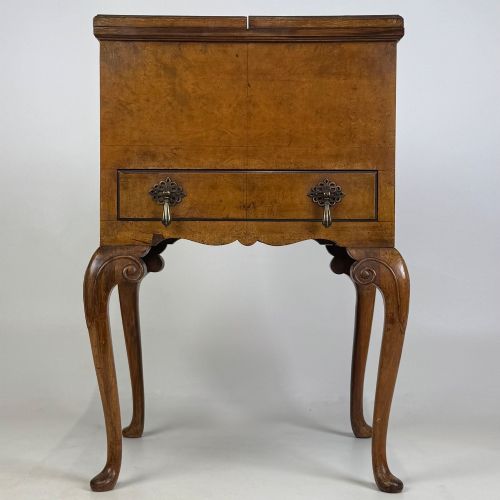
A vintage walnut vanity box brings warm timber figures and clever internal fittings to the dressing table.
Vintage Walnut Vanity Box
A vintage walnut vanity box spans dressing table mirrors, fitted travel cases, and multi-drawer jewellery chests from the eighteenth century to the twentieth century. These pieces serve to organise personal accessories and cosmetics within compartments lined in velvet or silk.
The versions most commonly met on this page range from Georgian toilet mirrors to Victorian burr walnut cabinets and Edwardian receptacles. Makers utilised rich veneers like burr walnut and laburnum to create small furniture pieces for the home.
Objects catalogued under this search phrase include jewellery boxes, sewing workboxes, and brass-bound travelling cases alongside bureau mirrors. Each piece reflects the domestic habits of its period, from Georgian toilet mirrors to Art Deco razor sets.
How they were made
Cabinet makers constructed these boxes using solid walnut or applied burr walnut veneers over secondary timbers, often incorporating marquetry patterns or pearl inlay. Exterior surfaces received French polish or wax finishes to highlight the natural grain.
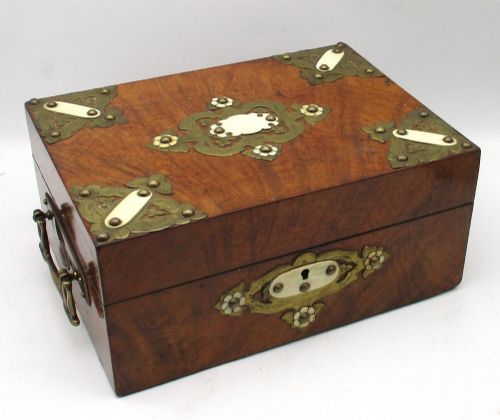
Hardware elements such as hinges, escutcheons, and carrying handles were cast in brass, frequently paired with fitted mirror glass inside the lids. Interior compartments utilised velvet or silk linings to protect jewellery and grooming instruments.
Periods represented span the eighteenth century, Georgian, George III, Victorian, Edwardian, and Art Deco eras.
What varies in quality
The distinction between tiers rests upon the selection of timber veneers, where highly figured burr walnut commands greater visual presence than plain grain. Superior examples exhibit precise dovetail joinery and intact internal fitments rather than replaced hardware.
Execution of decorative details like pearl inlay, marquetry, and brass binding separates standard utility boxes from more ambitious workshop productions. The retention of original glass, silk, or velvet linings substantially influences the character of the piece.
The Vintage Walnut Vanity Box Glossary
- Burr walnut
- A highly figured timber veneer derived from the growth excrescences of walnut trees, prized for its swirling patterns. Cabinet makers selected these sections for the principal exterior surfaces of better boxes.
- Toilet mirror
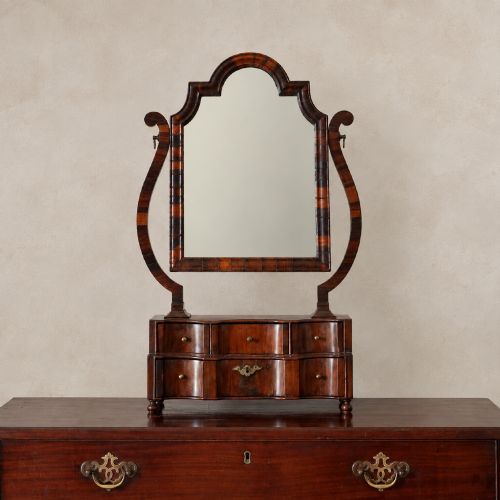
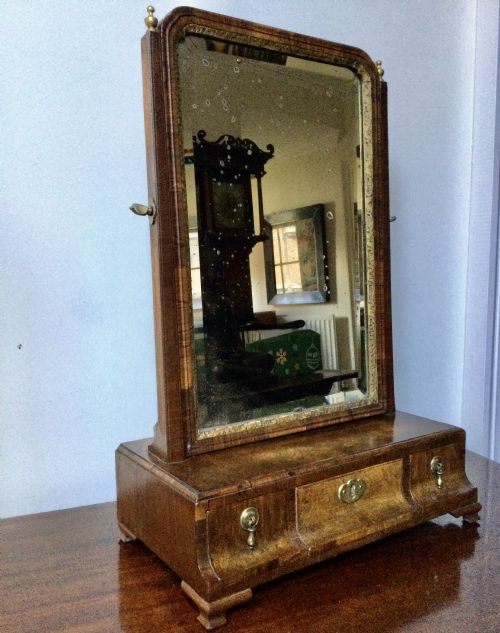
- A small swing mirror mounted on a box base or small bureau stand, designed for placement on a dressing table. These pieces date from the eighteenth and nineteenth centuries.
- Marquetry
- The art of applying pieces of veneer to a structure to form decorative patterns or pictorial designs. This technique appears on Victorian and Georgian boxes.
- Escutcheon
- A protective plate surrounding a keyhole, usually cast in brass on these boxes. It prevents the surrounding timber from wearing during daily use.
- Tunbridge Ware
- Small wooden decorative items adorned with mosaic designs made from many tiny wood segments. This technique appears on specific nineteenth-century boxes.
Vintage Walnut Vanity Box: Frequently Asked Questions
How do I date a walnut box?
Dating relies upon construction methods, hardware styles, and timber choice as observed across different eras. Eighteenth-century pieces typically show different joinery and mirror plate bevels compared to Victorian examples.
Mouldings, feet, and interior layouts shifted from plain Georgian utility toward more elaborate Victorian and Edwardian compartmentalisation. Comparing the secondary timbers and lining materials helps confirm the period of manufacture.
What is the difference between a vanity box and a jewellery box?
A vanity box often includes spaces for grooming implements, bottles, and travel items alongside storage for personal ornaments. These frequently feature brass carrying handles for travel.
Jewellery boxes focus more specifically on ring slots, small drawers, and lined trays designed strictly to hold precious items. Both forms utilise walnut and burr walnut veneers across the periods represented.
Are toilet mirrors and dressing table mirrors the same thing?
These terms often describe the same portable table mirror format where a swing glass sits above small drawers or a box base. Eighteenth and nineteenth-century examples sat upon larger chests of drawers or dedicated dressing tables.
Such mirrors allowed users to adjust the angle of the glass for grooming before full-length cheval mirrors became common. Their miniature drawer bases provided storage for small accessories.
How should I care for walnut veneer?
Maintenance requires keeping wooden boxes away from direct sunlight and stable relative humidity to prevent veneer lifting or timber splitting. Regular gentle dusting with a dry cloth preserves the polished surface.
Harsh chemical cleaners or excessive moisture must be avoided, as they damage the French polish and delicate silk or velvet interiors. Periodic light waxing maintains the lustre of the walnut grain.