
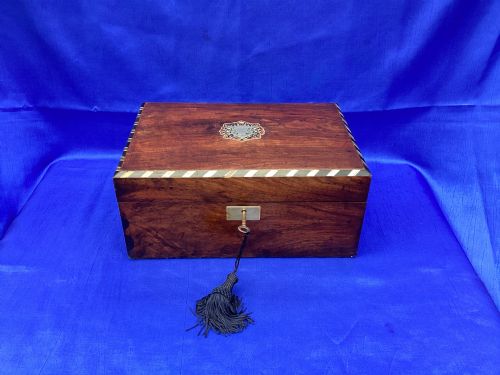
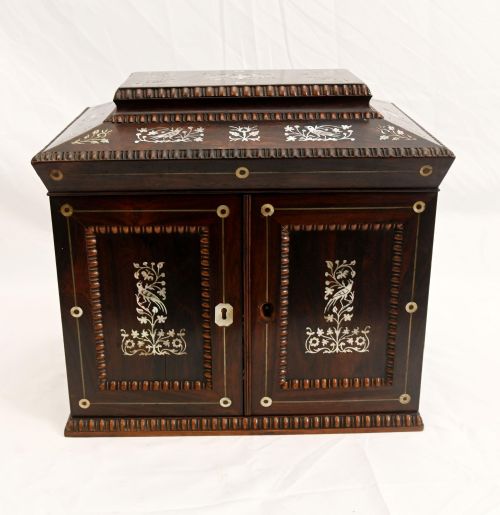

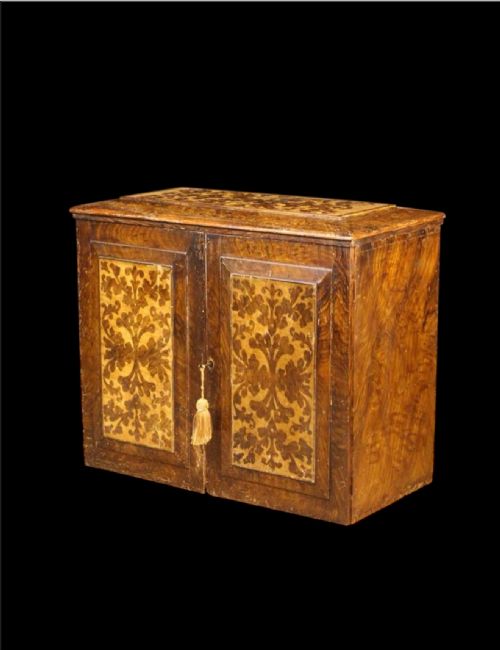


Victorian Lockable Jewellery Chest
A victorian lockable jewellery chest safeguards precious keepsakes behind secure brass hardware.
Victorian Lockable Jewellery Chest
A victorian lockable jewellery chest is a secure tabletop repository designed for safekeeping valuables during the nineteenth century. These pieces combine functional security with refined cabinetry, taking the form of jewellery chests, collectors cabinets, and strong boxes.
The versions most commonly met on this page span the Victorian era, alongside related nineteenth-century examples and Regency pieces. They utilise robust timbers and are fitted with working locks to protect contents from prying eyes.
Materials and construction
Cabinet makers utilised dense hardwoods including rosewood, mahogany, walnut, and burr walnut as the primary carcasses for these chests. Surfaces were frequently embellished with mother of pearl inlay or reinforced with brass mounts and banding.
Interiors were lined with tactile materials such as velvet to cushion delicate items, while functional hardware like brass locks and secret compartments demonstrate practical ingenuity.
Distinctions in quality
The upper tier of these chests is distinguished by superior timber selection, particularly figured burr walnut or richly grained rosewood, matched with precision brass inlay and flush mounts. Finer examples integrate elaborate interior compartments and fully operational locks with original keys.
Lesser pieces rely on simpler construction methods and plainer timbers without decorative enrichment, showing less attention to the refinement of interior linings and hardware detail.
The Victorian Lockable Jewellery Chest Glossary
- Burr walnut
- A highly prized wood veneer showing intricate swirling grain patterns formed from tree growths. This material was selected for high-status cabinets.
- Mother of pearl
- An iridescent inner shell layer utilised for decorative inlay in geometric or floral motifs. It catches the light across nineteenth-century box lids.
- Strong box
- A heavily fortified metal or timber container built for maximum security. These incorporate robust locking mechanisms.
- Secret letter
- A concealed compartment built into a cabinet to hide private correspondence or small valuables. Finding these hidden spaces requires manipulating internal catches.
Victorian Lockable Jewellery Chest: Frequently Asked Questions
How do I use a lockable jewellery chest?
These chests sit upon tables or dressers to organise and secure rings, brooches, and keepsakes. The fitted compartments keep delicate items separated and protected.
Working locks ensure your valuables remain private, though care should be taken with antique keys and mechanisms during daily use.
What woods were used for these chests?
Cabinet makers predominantly worked with dense timbers such as mahogany, rosewood, and walnut. Burr walnut was also utilised for its decorative grain.
These durable materials provided a stable foundation for intricate brass mounts and mother of pearl inlay.
Are keys usually included with the locks?
Many surviving chests retain their original working keys, though some are sold without functional keys. Locksmiths can often supply replacement keys for working nineteenth-century locks.
The presence of an operational lock adds considerable practical utility to the piece.
How do I date a Victorian jewellery chest?
Dating relies upon timber choices, construction techniques, and decorative styles characteristic of the nineteenth century. Makers shifted from Regency influences towards heavier Victorian proportions over time.
Secondary woods and lining materials further help place the piece within the broader Victorian period.