


Edwardian Jewellery Chest
An edwardian jewellery chest organises precious trinkets with compact proportion and refined period craftsmanship.
Edwardian Jewellery Chest
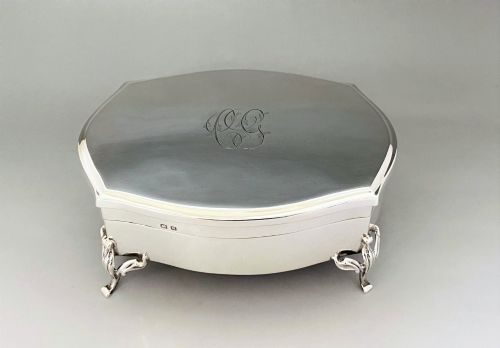
An edwardian jewellery chest encompasses small decorative caskets, miniature case furniture, and fitted silver boxes designed to secure personal treasures. These pieces originate predominantly from the late nineteenth and early twentieth centuries, spanning Victorian, Edwardian, and Art Nouveau periods.
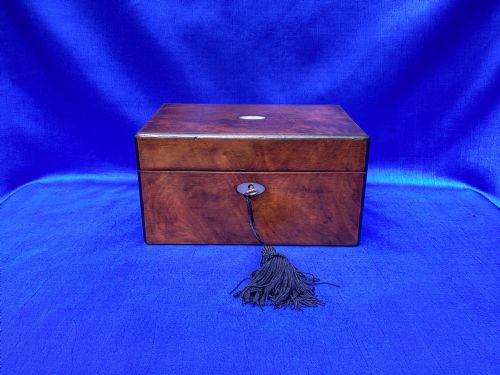
The selections on this page appear in various timber forms, including mahogany, walnut, and laburnum, alongside sterling silver and brass mounts. Buyers frequently encounter tabletop cabinets, miniature chests of drawers, and velvet-lined caskets reflecting domestic storage traditions.
How they were made
Cabinetmakers utilised dense hardwoods like mahogany and walnut, frequently incorporating marquetry inlay, mother-of-pearl, or tortoiseshell veneers onto solid carcases. Joints were typically hand-dovetailed on miniature drawers, while internal compartments relied on fitted wooden dividers and plush velvet or silk linings.
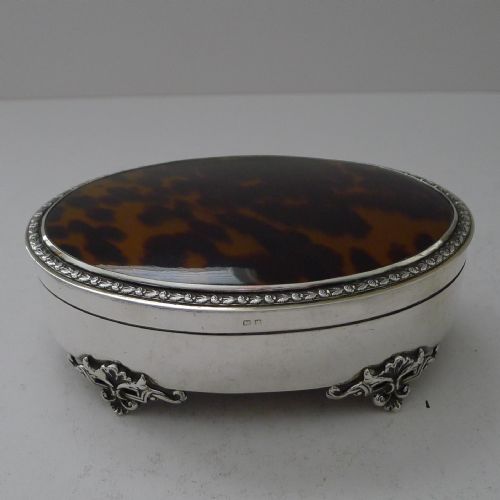
Metal components involved cast brass, copper, and sterling silver, sometimes enhanced with guilloché enamel or tortoiseshell panels. Silver boxes often featured hallmarks indicating provincial assay offices such as Chester alongside specific maker marks.
Listings feature items spanning the Victorian era through the 1920s, constructed in mahogany, walnut, sterling silver, and brass.
What varies in quality
Quality rests upon the precision of internal fittings, such as intact velvet linings, functional brass locks with original keys, and well-executed joinery on miniature drawers. Superior examples display intricate surface ornamentation, including crisp silver hallmarks, detailed marquetry, or undamaged tortoiseshell panels.
The integrity of secondary materials dictates overall value, noting that shrinkage cracks in dense timbers or losses to mother-of-pearl inlay diminish the piece. Finer items retain original bevelled glass doors, working hinges, and structurally sound carcases without replacement elements.
Edwards and Roberts·C E Turner·J and R Attenborough·Thomas Bradbury and Sons
The Edwardian Jewellery Chest Glossary
- Guilloché enamel
- A decorative technique involving precise mechanical engraving beneath translucent enamel layers. This finish appears frequently on early twentieth-century silver boxes.
- Marquetry
- The art of applying thin veneer pieces to form decorative geometric or floral patterns on a wooden surface. Craftsmen used contrasting timbers to achieve tonal depth.
- Apprentice piece
- A miniature furniture item created by a trainee craftsman to demonstrate mastery of joinery techniques. These small chests often replicate full-scale proportions.
- Tortoiseshell
- The patterned carapace material utilised for decorative panels on silver-mounted boxes. It provides a rich, mottled amber and brown backdrop.
- Compactum
- A multi-compartment wardrobe or fitted cabinet designed for efficient storage. Miniature versions replicate this internal division for smaller valuables.
Edwardian Jewellery Chest: Frequently Asked Questions
How were silver jewellery boxes marked?
Silver boxes usually carry standard British hallmarks stamped directly onto the metal surface or inner rim. These marks identify the assay office, such as Chester, alongside the year letter and silversmith mark.
Such stamps provide precise dating evidence for pieces produced around the Edwardian period. Maker marks often point to specialised silversmith workshops of the era.
How do I care for wooden jewellery boxes?
Wooden jewellery boxes require stable indoor humidity to prevent timber shrinkage and veneer lifting. Gentle dusting with a dry cloth preserves polished mahogany and walnut surfaces.
Original velvet interiors benefit from minimal moisture exposure to protect delicate fabrics. Maintaining consistent room temperatures safeguards old adhesives and delicate tortoiseshell mounts.
What materials are used in these chests?
Materials include dense hardwoods like mahogany, walnut, and laburnum alongside decorative elements such as mother-of-pearl and tortoiseshell. Metal components feature sterling silver, brass, and copper.
Interiors are typically lined with velvet or silk to cushion jewellery items. Glass panels and mirrors also appear in dressing table caskets and cabinet doors.