

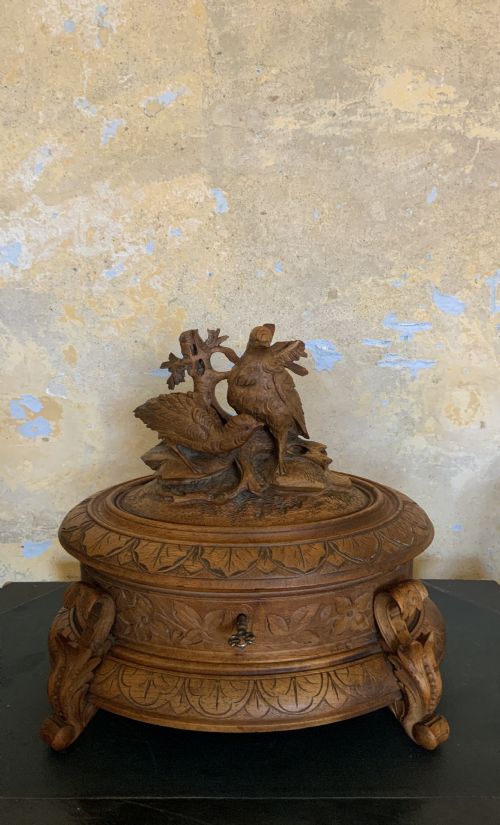


Carved Walnut Jewellery Box
A carved walnut jewellery box keeps keepsakes secure while bringing rich timber grain and intricate relief work to a dressing table or desk.
Carved Walnut Jewellery Box
A carved walnut jewellery box is a small lidded chest designed for personal ornaments, combining dense dark timber with relief carving or marquetry. The pieces found here span several distinct aesthetics, from the naturalistic animals and foliage of the Black Forest tradition to the geometric floral patterns of late seventeenth-century marquetry.
Victorian examples dominate the selection, often taking the form of figured burr walnut boxes with fitted interiors designed for rings and brooches. Earlier Spanish and English specimens appear alongside twentieth-century Anglo-Indian sandalwood caskets, offering a range of scales from compact table boxes to large sarcophagus-shaped caskets.
The materials recorded in these pieces rely heavily on walnut and hardwood, frequently accented with brass hardware, wrought iron mounts, and linden wood. Each regional workshop brought distinct decorative vocabulary to the basic form, whether through deep sculptural carving or precise wood inlay.
Materials and construction methods
Makers selected walnut for its dense grain and capacity to hold crisp, deep relief work without splintering. Artisans often utilised burr walnut veneers on exterior surfaces to create swirling, organic patterns across the lid and front panels.
Marquetry inlay involved cutting contrasting woods into floral or geometric motifs, which were then set flush into the primary timber ground. Carved elements, particularly those from the Black Forest or Spanish Baroque traditions, required hand chiselling to achieve high relief foliage and figures.
Carved Walnut Jewellery Box Retail Price Guide 2026
Typical asking prices for carved walnut jewellery box among the pieces listed under this phrase on Sellingantiques today, from the lower quarter to the upper quarter. They describe what is for sale here now, not the wider market.
A carving of a small forest bear peers out from beneath several Victorian lids, keeping watch over centuries of lost earrings.
Factors that separate the finest examples
Quality rests upon the depth and precision of the carving, where sharp undercuts and expressive detailing distinguish superior relief work from mechanical or hasty chiselling. The choice of timber also dictates visual weight, with highly figured burr walnut or deep-grained hardwood creating far greater contrast and depth.
Internal fitting and hardware preservation elevate certain pieces above standard utility boxes. Original brass hinges, intact silk or velvet linings, and well-executed marquetry panels indicate a higher standard of workshop production.
The Carved Walnut Jewellery Box Glossary
- Burr walnut
- A type of timber veneer taken from the growth wart of a walnut tree, prized for its swirling and knotty grain patterns. It forms the primary decorative surface on many nineteenth-century chests.
- Black Forest
- A nineteenth-century carving style originating in central Europe, characterised by realistic depictions of animals, leaves, and rustic scenes. These boxes often feature three-dimensional bears or deeply carved oak foliage.
- Marquetry
- A technique where thin veneers of various coloured woods are assembled into pictorial or geometric designs. This decoration is glued onto the carcase of the box to form a flat, patterned surface.
- Sarcophagus-shaped
- A box design featuring a steep, sloping lid and flared base reminiscent of ancient stone coffins. This grand architectural form appeared frequently in larger nineteenth-century caskets.
- Work box
- A compartmentalised chest originally intended for sewing implements, threads, and small accessories. Many examples share identical internal dimensions and tray layouts with jewellery chests.
Carved Walnut Jewellery Box: Frequently Asked Questions
How do I date a walnut box?
Dating relies on construction methods, hinges, and the style of decoration applied to the exterior. Eighteenth-century pieces typically show hand-cut dovetails and simpler internal arrangements compared to Victorian variants.
Later nineteenth-century examples often incorporate machine-sawn elements alongside factory-made brass escutcheons and fitted velvet trays. Examining the secondary woods inside the carcass also clarifies the period of manufacture.
What is Black Forest carving?
Black Forest carving refers to deeply sculptural woodwork originating from Swiss and German forest regions during the nineteenth century. These items feature lifelike animals, such as bears and birds, rendered in high relief upon the lid.
The style prioritises naturalism and tactile texture, transforming standard lidded containers into miniature wildlife tableaus.
Are these boxes lined with original fabric?
Some pieces retain their period silk, satin, or paper linings, though many nineteenth-century examples have been re-lined due to natural wear and tear. Original fitted trays often show staining from old pomades and perfumes.
Replacement interiors are common in antique storage chests and do not diminish the decorative utility of the exterior cabinetwork.
How should I maintain the wood surface?
Maintenance requires keeping walnut away from direct sunlight and extreme temperature fluctuations to prevent the timber from splitting or warping. Occasional light application of appropriate wax helps preserve the sheen of the French polish or bare grain.
Avoid using modern silicone sprays, which can penetrate porous historical finishes and damage the underlying patina.