




Chinese Lacquer Trunk
A chinese lacquer trunk brings rich texture and enduring storage to a room, offering deep history in every polished surface.
Chinese Lacquer Trunk
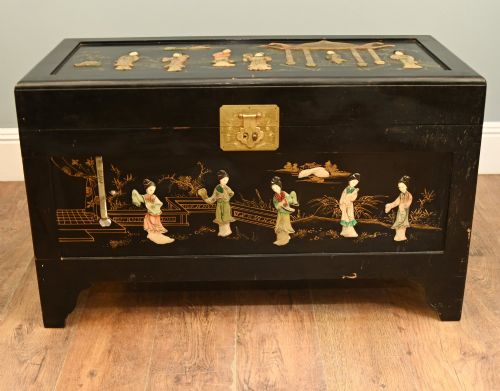
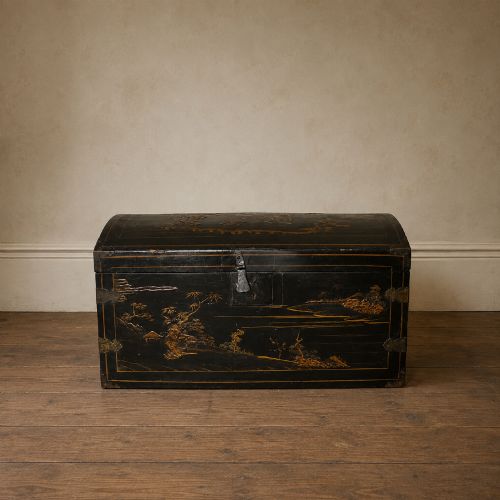
A chinese lacquer trunk provides substantial storage in the form of domed chests, coffers, and blanket boxes built for travel or domestic service. These pieces emerge from periods spanning the eighteenth century through to the early decades of the twentieth century, reflecting both traditional domestic craft and export production.
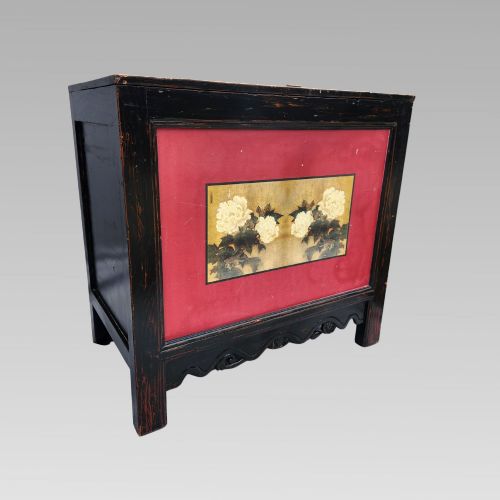
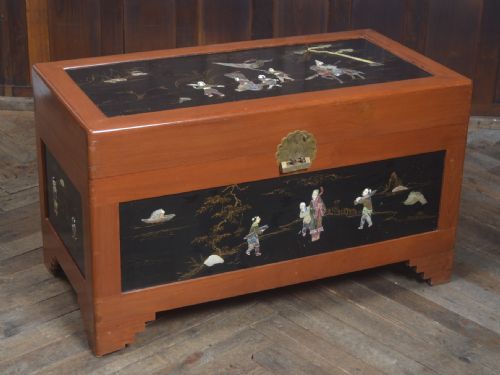
The most frequent encounter on this page is the nineteenth century black lacquer trunk, often finished with gilt decoration or floral chinoiserie. Alongside these stand camphor wood boxes and leather covered shipping chests, offering variety in both finish and internal utility.
How they were made
Makers built these pieces using timber and camphor wood, applying multiple coats of lacquer to create a durable and lustrous exterior skin. Pigment and gilt decoration added intricate detail, transforming plain wooden containers into highly ornamental furnishings.
Hardware played a practical role in construction, with brass and iron mounts reinforcing corners, edges, and lids for travel. Leather also appears as a primary covering on specific chests, providing a tough exterior suited to shipping and transit.
Chinese Lacquer Trunk Retail Price Guide 2026
Typical asking prices for chinese lacquer trunk among the pieces listed under this phrase on Sellingantiques today, from the lower quarter to the upper quarter. They describe what is for sale here now, not the wider market.
Camphor wood was chosen because insects detested the smell, meaning your blankets get a fragrant, bug free sleep.
What varies in quality
The refinement of the surface decoration sets individual examples apart, particularly the precision of the gilt work and the depth of the lacquer layers. Pieces adorned with detailed floral chinoiserie or pictorial scenes demand greater skill from the artisan than plain surfaces.
Structural integrity and the condition of original hardware influence the overall merit of a piece. Well preserved brass and iron mounts, combined with sound timber construction, distinguish finer storage chests from more utilitarian examples.
The Chinese Lacquer Trunk Glossary
- Lacquer
- A durable glossy finish applied in successive layers to wood, derived from natural tree sap. It provides both protection and a deep decorative surface.
- Chinoiserie
- European interpretations and adaptations of traditional Chinese artistic styles and motifs, frequently seen in surface decoration. This style gained immense popularity during the export periods.
- Coffer
- A chest or box traditionally used for holding valuables, often distinguished by a more robust construction and domed lid. These pieces served both domestic and travel purposes.
- Camphor wood
- An aromatic timber frequently utilised for internal linings and box construction to deter insects. Its distinctive scent helps protect stored textiles.
Chinese Lacquer Trunk: Frequently Asked Questions
What were chinese lacquer trunks used for?
These pieces served primarily for storage and the safe transport of personal belongings, garments, and valuables during travel. Their robust construction and secure lids made them ideal for shipping goods across long distances.
In the home, they functioned as blanket boxes, chests, and travelling cases, keeping textiles and precious items protected from dust and moisture.
How do I care for a chinese lacquer trunk?
Keep the surface clean by dusting gently with a soft, dry cloth, avoiding harsh chemical cleaners or abrasive polishes that can damage the finish. Maintain stable room humidity and keep the piece away from direct sunlight to prevent the lacquer from cracking.
Treat wooden and leather elements with care, allowing natural materials to breathe while avoiding excessive moisture.
How do I date a chinese lacquer trunk?
Dating relies on observing construction methods, timber types, and the style of decorative motifs like giltwork and floral chinoiserie. Eighteenth century pieces often display distinct export characteristics, while nineteenth century examples show broader variations in form.
Hardware such as brass and iron mounts also provides clues, as manufacturing techniques evolved from earlier hand forged styles to later industrial methods.
Are these trunks suitable for daily storage?
These chests offer generous internal capacity, making them practical for storing blankets, linens, and everyday household items. Camphor wood lined variants provide natural protection for textiles.
Ensure the interior is clean and dry before storing delicate fabrics, and utilise the sturdy lid to keep contents secure.