

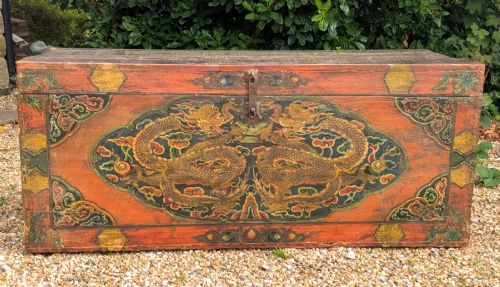
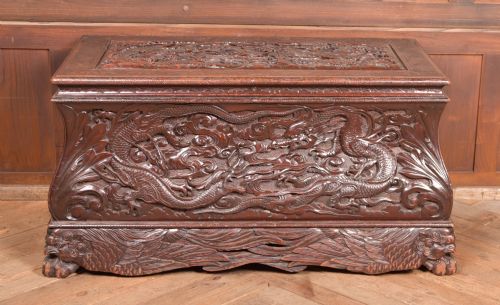


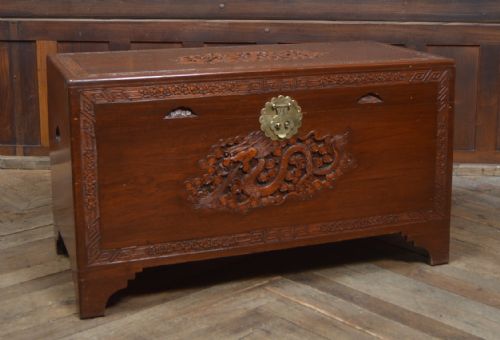


Carved Dragon Box
A carved dragon box brings ancient myth into the home, and you will find pieces fashioned from camphor wood, oak, and silver.
Carved Dragon Box
A carved dragon box is a vessel for storage or display, encompassing items such as blanket chests, cigarette boxes, and wedding boxes. When you search for a carved dragon box, you encounter pieces originating from Chinese export workshops, the Qing dynasty, the Republic period, and British cabinet makers.
The versions you are most likely to meet on this page range from nineteenth-century camphor wood trunks to early twentieth-century hardwood boxes inlaid with mother of pearl. Early forms include sixteenth-century Welsh Elizabethan oak chests, alongside items from the nineteen-twenties and nineteen-thirties reflecting Art Deco influence.
These objects serve practical storage needs while displaying intricate relief work depicting dragons. The selection bridges Eastern export traditions and British domestic furniture, uniting diverse periods through the motif of the carved dragon.
How they were made
Makers utilised solid timbers such as camphor wood, oak, and hardwood to construct the body of each vessel, often applying limed finishes or relying on the natural aromatic qualities of the wood. Metalwork also appears, seen in heavy silver construction.
Decoration relies on deep carving to render the dragon motifs in relief, sometimes enhanced by the addition of mother of pearl inlay set into the timber surface.
Carved Dragon Box Retail Price Guide 2026
Typical asking prices for carved dragon box among the pieces listed under this phrase on Sellingantiques today, from the lower quarter to the upper quarter. They describe what is for sale here now, not the wider market.
Camphor wood boxes retain their distinct forest scent across the centuries, greeting every new owner with a whiff of antique timber.
What varies in quality
Quality rests upon the depth and precision of the carving, distinguishing crisp, spirited dragon reliefs from shallow or mechanical surface work. The choice of materials dictates the standing of a piece, with solid silver or well-figured camphor wood and limed oak holding greater presence than standard utility timber.
The integration of decorative elements, such as mother of pearl inlay and the execution of structural joints in chests and trunks, separates standard workshop production from exceptional maker output.
Wang Hing & Co.
The Carved Dragon Box Glossary
- Camphor wood
- A fragrant timber native to Asia, frequently utilised for nineteenth-century storage chests and blanket boxes due to its insect-repellent properties.
- Chinese Export
- Goods manufactured in China specifically for Western markets, spanning decorative boxes and silver items produced during the Qing dynasty and Republic period.
- Mother of pearl
- The iridescent inner layer of mollusc shells, employed by craftsmen to create inlaid decorative patterns upon hardwood box surfaces.
- Qing Dynasty
- The final imperial dynasty of China, lasting from sixteen-forty-four to nineteen-twelve, known for producing intricate export carvings.
- Elizabethan
- Pertaining to the reign of Queen Elizabeth the First in England during the sixteenth century, associated with heavy carved oak furniture.
Carved Dragon Box: Frequently Asked Questions
What is a carved dragon box used for?
These boxes function as storage vessels for garments, blankets, and small personal effects such as cigarettes. Larger examples double as low tables or coffee tables in a room.
Their substantial construction makes them practical for everyday containment while displaying intricate mythological carvings.
How do I tell Chinese export pieces apart?
Chinese export pieces often feature characteristic camphor wood or hardwood construction paired with traditional motifs like dragons and wedding symbols. Examining the specific carving style and materials helps distinguish them from domestic British furniture.
Makers working for the export market combined regional timber traditions with forms suited to Western households.
How do I live with a camphor wood chest?
Camphor wood chests suit bedrooms and living spaces alike, where their natural aroma protects stored textiles from moths. They integrate well into modern interiors when used as standalone coffee tables or blanket storage.
Keeping them away from direct heat sources preserves the natural oils and the integrity of the carved exterior.
How do I date a carved wooden chest?
Dating relies on identifying the timber species, the style of the hardware, and the depth of the dragon carving. Nineteenth-century examples often utilise aromatic camphor wood, while sixteenth-century pieces display heavy English oak construction.
Documented periods such as the Republic era or the Elizabethan age provide clear chronological markers for attribution.