






Red Chinese Box
A red chinese box brings vibrant lacquerwork, leather and carved detail into a room, offering both decorative colour and practical storage.
Red Chinese Box
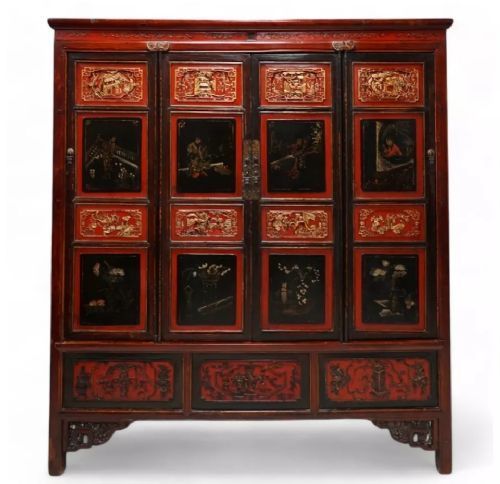
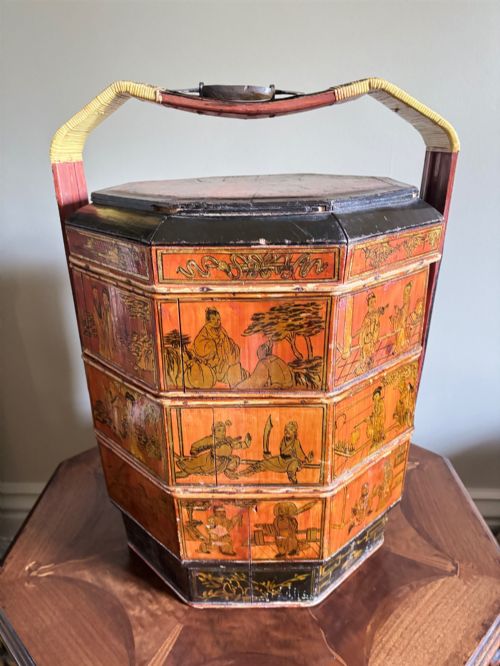
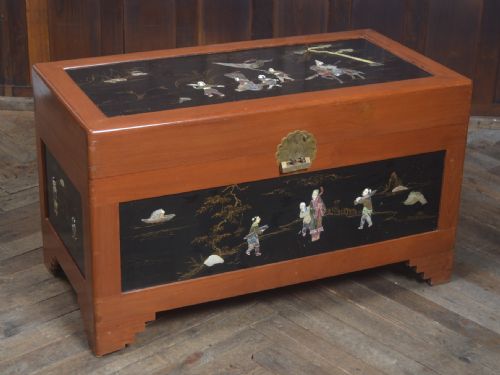
When you search for a red chinese box, you encounter pieces that span portable trinket cases, stationary chests and large blanket trunks. The selection ranges from small lidded containers to marriage cabinets and multi-tiered dowry baskets.
Most examples originate from the nineteenth century, with roots in the Qing dynasty and Chinese export trade. You will also find eighteenth-century cinnabar pieces alongside later camphor wood storage items.
These vessels served traditional domestic functions, from holding jewellery and documents to transporting wedding goods. Today, they operate primarily as striking accent pieces that introduce rich red pigment into an interior.
How They Were Made
The construction relies heavily on wood bases such as elm and camphor wood, shaped into boxes, trunks and cabinets. Artisans applied layers of lacquer or pigment to create the distinct red surfaces visible across the pieces.
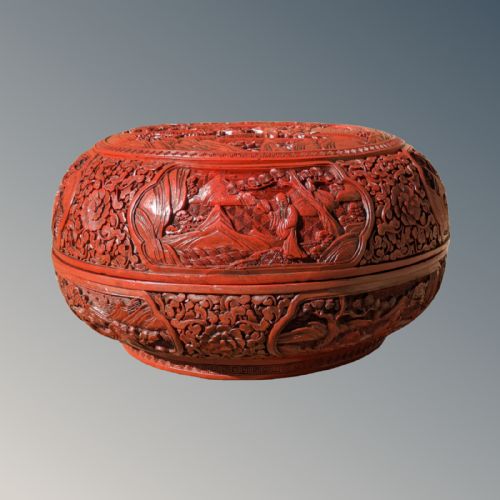
Many items incorporate carved cinnabar lacquer, building up dense coats that carvers then cut into intricate relief patterns. Others utilise brass mounts, leather coverings, hand-painted details and gilding to finish the exterior.
Listings feature wood, lacquer, brass, cinnabar lacquer, leather, camphor wood, pigment and elm across nineteenth-century and Victorian periods.
What Varies in Quality
The depth and precision of the carved relief work distinguish finer cinnabar pieces from simpler painted surfaces. Crisp detailing in the lacquer indicates a higher level of workshop skill during production.
The integrity of the underlying wood and the retention of original pigment or lacquer layers affect the overall standing of a piece. Finer examples maintain their structural joinery and surface decoration with minimal modern intervention.
The Red Chinese Box Glossary
- Cinnabar Lacquer
- A technique involving multiple coats of red lacquer carved in relief over a core. This method produces deep, tactile patterns depicting figures, landscapes or floral motifs.
- Chinese Export
- Goods produced in China specifically for Western markets from the eighteenth century onwards. These items often combine traditional local techniques with forms suited to European tastes.
- Camphor Wood
- A fragrant timber utilised for storage trunks and chests due to its natural insect-repellent properties. It provides a stable and aromatic interior for textiles and garments.
- Qing Dynasty
- The final imperial dynasty of China, spanning the seventeenth to early twentieth centuries. Pieces from this era frequently define the carved and lacquered styles seen in export works.
- Dowry Basket
- A multi-tiered vessel traditionally used to carry gifts or household goods during marriage processions. These stacked containers were often finished in red lacquer and pigment.
Red Chinese Box: Frequently Asked Questions
What were red Chinese boxes used for?
These boxes served various domestic and ceremonial purposes, from storing documents, sewing equipment and jewellery to transporting wedding gifts.
Larger versions functioned as blanket chests, marriage cabinets or tiered baskets for carrying goods during important family events.
How do I care for a lacquered box?
Keep the piece away from direct sunlight and extreme humidity fluctuations to protect the wooden substrate and surface lacquer.
Dust gently with a soft, dry cloth and avoid applying modern chemical polishes or cleaning agents to the red finish.
How can I tell the age of a box?
Dating relies on material characteristics, construction methods and stylistic indicators associated with periods like the Qing dynasty or the nineteenth century.
Examine the type of wood, the wear patterns on the lacquer and any historical brass hardware to help determine the manufacturing era.
What is cinnabar lacquer?
Cinnabar lacquer is created by applying numerous layers of red lacquer onto a base material until a thick coating is formed.
Artisans then carve intricate designs directly into this hardened surface, revealing the depth and texture of the red pigment.