



Chinese Lacquerware Box
A Chinese lacquerware box brings rich texture and intricate gilding to a surface, offering both historic utility and striking visual depth.
Chinese Lacquerware Box
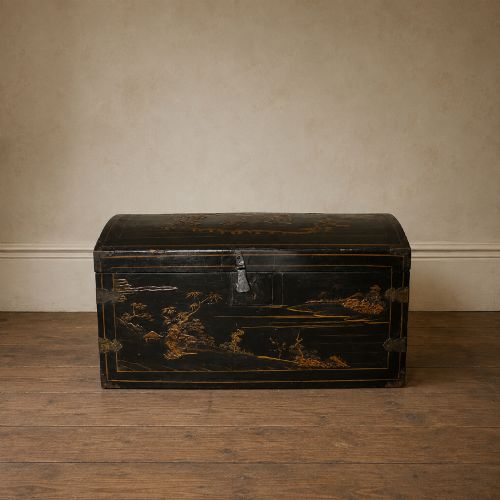
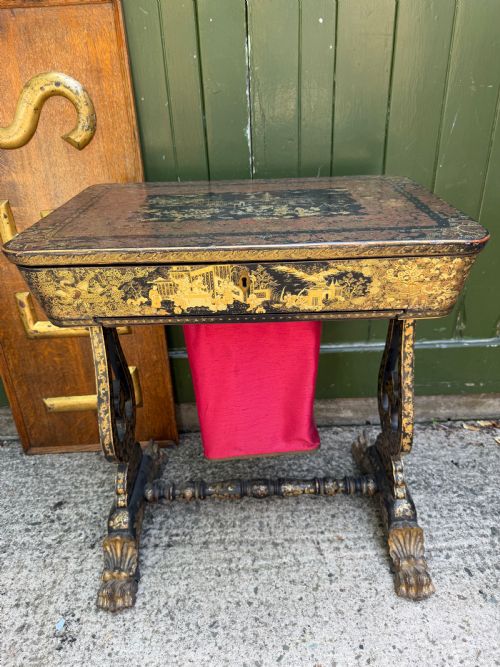
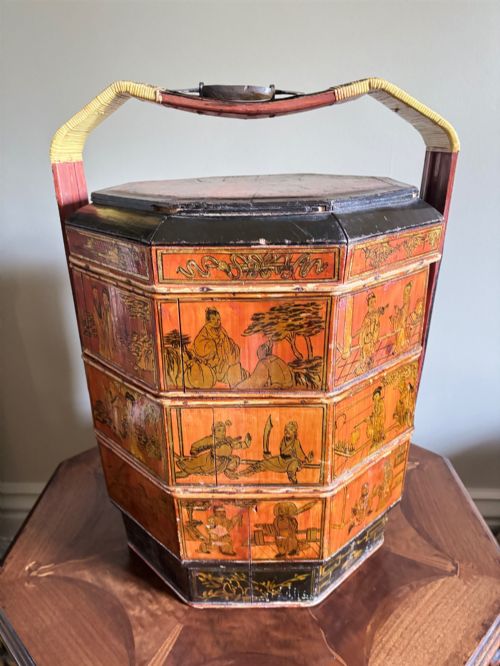
A Chinese lacquerware box encompasses a variety of forms designed for holding tea, sewing equipment, jewellery, or household documents. The pieces seen here range from small trinket containers and tea caddies to large domed chests, wedding baskets, and table cabinets.
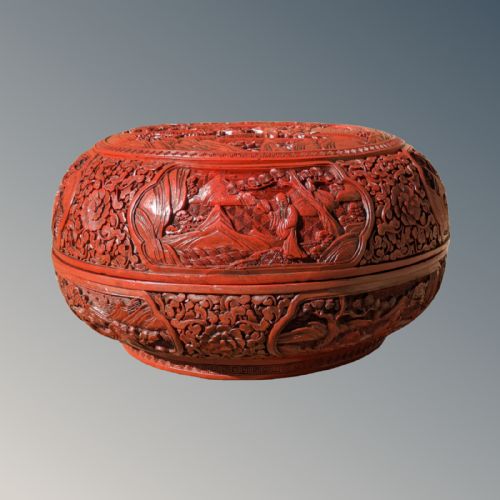
Buyers will most frequently encounter nineteenth-century examples produced for export, alongside traditional cinnabar pieces and multi-tiered dowry baskets. These objects bridge decorative arts and practical storage, reflecting the craftsmanship of the Qing Dynasty and later Victorian periods.
The assortment includes specialised forms such as campaign cases and sewing tables alongside simpler lidded boxes. Each piece utilises traditional lacquering methods applied to wood bases, frequently accented with metallic decoration or carved motifs.
Materials and Construction
These pieces are built upon wooden structures coated in successive layers of natural lacquer, creating a durable and lustrous surface. Artisans often enhanced the dark or red lacquer grounds using gold leaf and gilt decoration to depict detailed scenes.
Certain examples incorporate carved cinnabar lacquer, building up thick red layers that allow for deep, intricate relief carving. Additional elements such as brass mounts, iron hardware, and cane details appear across trunks and baskets to reinforce their structure.
Objects span the eighteenth century, the nineteenth century, the Victorian era, and the early twentieth century.
Quality and Execution
The standard of a piece depends on the depth and stability of the lacquer layers and the precision of the surface carving. Finer examples display crisp, well-preserved gilding and detailed pictorial work that remains intact across complex forms.
Structural integrity of the underlying wood and the retention of original hardware, such as brass fittings and fastenings, distinguish superior items. The complexity of the object, from a simple lidded container to a multi-tiered dowry basket or fitted table cabinet, also influences its standing.
The Chinese Lacquerware Box Glossary
- Lacquer
- A durable finish derived from tree sap, applied in multiple layers to a wooden core. It cures into a hard, water-resistant coating.
- Cinnabar Lacquer
- A technique using thick layers of red lacquer coloured with mercuric sulphide, carved deeply with intricate patterns and motifs.
- Chinese Export
- Goods manufactured in China specifically for Western markets, often blending traditional Eastern techniques with European furniture forms.
- Gilt
- A thin application of gold leaf or gold powder used to highlight surface decoration and carved details against a dark or red lacquer background.
- Tea Caddy
- A specialised container originally designed for storing loose tea leaves, often featuring internal compartments and secure lidded sections.
Chinese Lacquerware Box: Frequently Asked Questions
What were these boxes used for originally?
These boxes served practical storage purposes in domestic and trade settings, holding valuable items like tea, documents, jewellery, or sewing accessories. Larger trunks and wedding baskets transported personal belongings or ceremonial goods.
Over time, many of these containers became decorative display pieces in Western homes, valued for their exotic materials and detailed craftsmanship.
How do I care for antique lacquerware?
Keep lacquerware away from direct sunlight and sources of extreme heat or humidity to prevent the wood and lacquer from drying out and cracking. Dust gently with a soft, dry cloth without applying modern chemical polishes.
Handle lidded pieces carefully by their main bodies rather than relying on delicate applied hardware or decorative knobs.
How can I tell the difference between periods?
Nineteenth-century export pieces often feature black lacquer grounds with extensive gilt decoration tailored for Western tastes. Mid-Qing and earlier cinnabar examples rely on deep, carved red layers with intricate floral or figurative motifs.
Construction methods and hardware styles, such as brass Campaign mounts or Victorian framing details, help narrow down the date of manufacture.
Can these boxes still be used for storage?
Many lidded boxes, tea caddies, and small cabinets remain entirely suitable for holding modern trinkets, letters, or dry accessories. However, fragile surfaces and historical hinges mean they require gentle handling during daily use.
Larger trunks and baskets work well as static decorative focal points while offering practical enclosed space.