
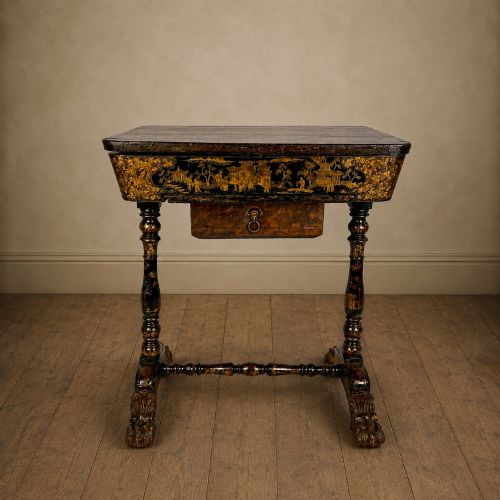
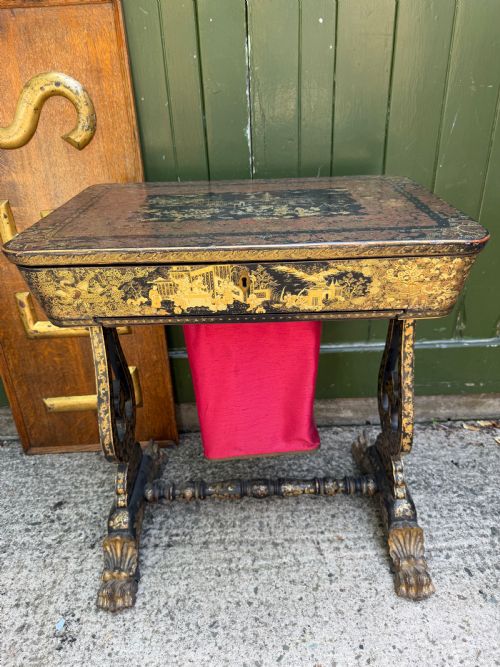
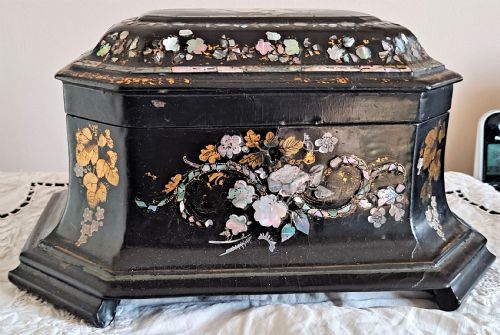


Gilt Lacquer Box
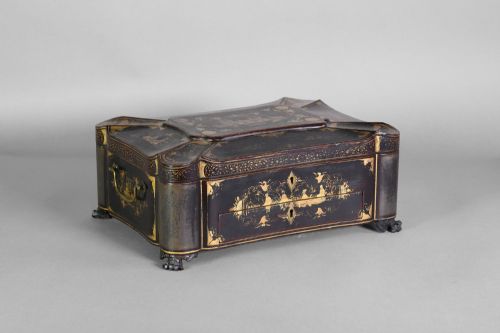
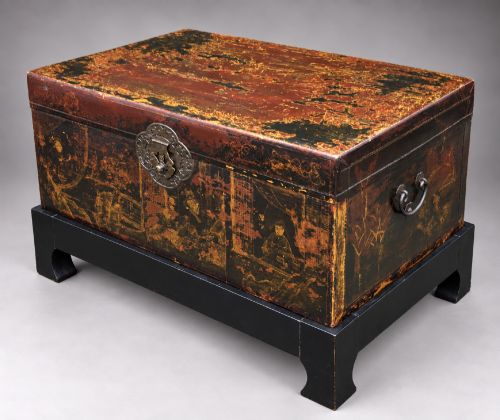
These gilt lacquer box examples bring together centuries of export and domestic craftsmanship, offering functional storage decorated with metallic sheen.
Gilt Lacquer Box
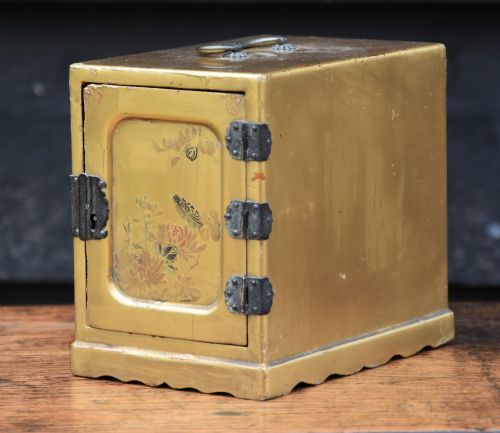
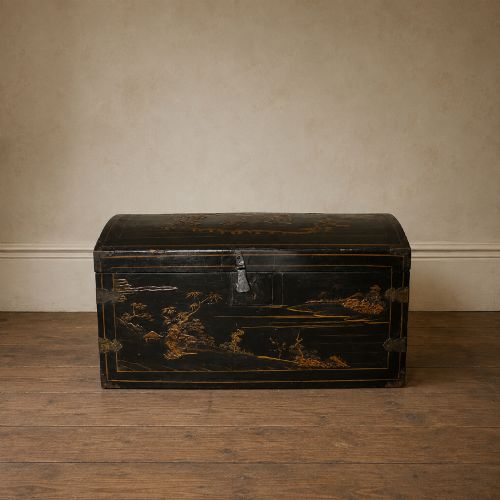
A gilt lacquer box brings together diverse global traditions, spanning Chinese Export wares, Japanese Meiji pieces, and English Victorian interpretations. Buyers encounter everything from small tea caddies and jewellery boxes to larger trunks, coffers, and table cabinets.
The 19th Century forms the core of what appears on this page, alongside 18th-century pieces and early 20th-century variants. Chinese Export and Chinoiserie styles dominate, frequently finished in black lacquer with detailed gilded decoration.
Domestic English pieces also emerge in the selection, utilising papier-mâché alongside wood structures. These containers served specific domestic rituals, housing tea, letters, sewing implements, or personal keepsakes.
Distinctions in quality
The refinement of the gilt decoration dictates much of the visual success, separating dense, carefully delineated gilding from simpler surface applications. Artisanal skill appears in the crispness of the Chinoiserie motifs and the depth of the lacquered finish.
Structural integrity also separates individual examples, particularly in how well the wooden or papier-mâché carcases withstand movement over centuries. The survival of original stands, internal compartments, and brass or mother-of-pearl fittings adds significantly to the completeness of a piece.
Materials recorded across the inventory include wood, papier-mâché, gold leaf, brass, and mother of pearl.
The Gilt Lacquer Box Glossary
- Lacquer
- A durable resin finish applied to wooden or papier-mâché objects. It hardens into a smooth, glossy surface capable of holding intricate gilt decoration.
- Chinoiserie
- European artistic styles reflecting Chinese artistic influences. This aesthetic appears frequently on 19th-century export boxes and furniture.
- Tea Caddy
- A container designed to store dry tea leaves securely. Many examples feature internal lidded compartments and fine exterior gilding.
- Papier-mâché
- A composite material made from paper pulp or layers of paper bound with glue. It provided a lightweight, mouldable base for Victorian boxes and wall pockets.
- Kodansu
- A small Japanese table cabinet or chest with multiple internal drawers. These pieces often showcase fine lacquerwork and metal mountings.
Gilt Lacquer Box: Frequently Asked Questions
What were these boxes used for?
These containers served specific domestic and social functions, ranging from storing loose tea leaves to holding sewing implements, letters, or precious jewellery. Their sturdy construction protected valuable goods from moisture and light.
Larger variants, such as trunks and coffers, accommodated garments or household linens, while tabletop cabinets organised smaller keepsakes and personal documents.
How do I date a lacquer box?
Dating relies on examining the core materials, structural joinery, and stylistic markers such as export origin or Victorian papier-mâché construction. Regional traits, such as Meiji period signatures or Regency furniture forms, narrow the decade of production.
Comparative analysis with documented archive pieces helps place the object within the eighteenth, nineteenth, or early twentieth century.
How should I care for lacquer furniture?
Maintenance requires keeping pieces away from direct sunlight and extreme humidity fluctuations to prevent the lacquer from cracking or lifting. Gentle dusting with a soft, dry cloth preserves the delicate gilt surface without abrading the finish.
Avoid chemical polishes and moisture, as historical lacquer surfaces react poorly to modern cleaning agents.