




Antique Penwork Box
These antique penwork box examples bring delicate ink-drawn decoration and period charm straight to your desk.
Antique Penwork Box
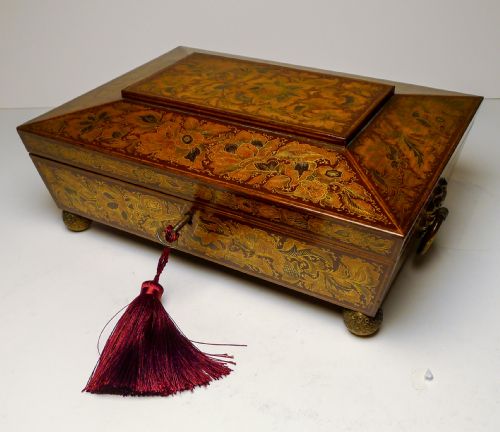
An antique penwork box is a functional container adorned with fine ink ornamentation, typically originating from the Regency and Georgian eras. These pieces serve various domestic purposes, functioning as tea caddies, sewing boxes, games boxes, and snuff boxes.
The versions met most frequently on this page date from around 1800 through the Regency period. They take forms ranging from small pocket snuff boxes to large table cabinets and double compartment tea caddies.
Makers utilised wood as the primary substrate, applying meticulous ink work to simulate more expensive inlay or lacquer. Collectors search for these boxes to secure tangible examples of early nineteenth-century domestic artistry.
How they were made
The construction relies on wooden carcases prepared as surfaces for detailed ink drawing, often finished with varnish or lacquer. Artisans applied black and coloured inks by hand to render intricate motifs directly onto the wood.
Some examples incorporate bone, paint, and brass fittings such as figural gilt mounts or handles. Pokerwork techniques occasionally appear alongside ink work to burn designs into the timber before colouring.
Antique Penwork Box Retail Price Guide 2026
Typical asking prices for penwork box among the pieces listed under this phrase on Sellingantiques today, from the lower quarter to the upper quarter. They describe what is for sale here now, not the wider market.
The listings show pieces spanning the Georgian and Regency periods, predominantly constructed from wood with ink, varnish, and bone.
What varies in quality
Quality rests upon the precision and complexity of the penwork decoration itself. Pieces featuring detailed chinoiserie scenes, figural elements, or architectural Brighton chain pier motifs demonstrate superior handwork compared to simpler geometric borders.
The condition of the original varnish and the preservation of the ink lines determine the visual appeal of the box. Superior examples retain their crisp details without excessive fading or loss to the underlying wooden surfaces.
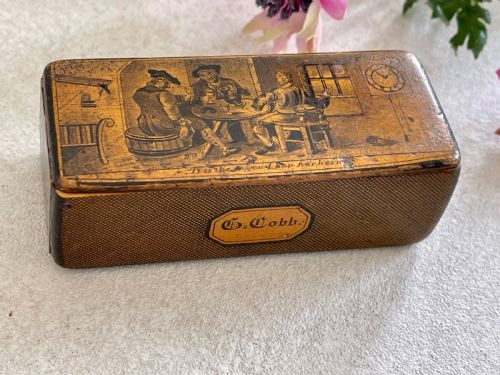
G Cobb
The Antique Penwork Box Glossary
- Penwork
- A decorative technique using ink applied with a pen to wooden objects to create fine line drawings and pictorial scenes. This method mimics the appearance of costly marquetry or inlaid ivory.
- Chinoiserie
- A European artistic style reflecting Chinese motifs and imaginary landscapes, frequently rendered in penwork on Regency boxes. It captures the eighteenth and nineteenth century fascination with Eastern aesthetics.
- Treen
- Small handmade wooden objects for domestic use, encompassing items such as wooden snuff boxes. The term derives from the old word for tree.
- Pokerwork
- The art of decorating wood by burning designs into the surface with heated metal tools. It often accompanies ink penwork on nineteenth century boxes.
- Snuff box
- A small lidded container designed to hold powdered tobacco. These pocket-sized pieces frequently display miniature penwork decoration on the lid.
Antique Penwork Box: Frequently Asked Questions
What were antique penwork boxes used for?
These boxes served specialised domestic functions in the Georgian and Regency home. Owners stored precious tea leaves, sewing implements, playing cards, or snuff inside them.
Larger variations functioned as table cabinets or jewellery storage on dressing tables. Their decorative exteriors ensured they remained on display in principal rooms.
How do I date an antique penwork box?
Dating relies on the stylistic cues of the Regency and Georgian periods, alongside construction methods and material choices. Pieces often date from around 1800 to 1820.
Form and motif also assist with chronology, as specific architectural subjects like the Brighton chain pier point to precise decades. Examining the interior compartments and hinges provides further clues to the manufacturing era.
Are all penwork boxes made of wood?
Wood serves as the primary material for the structural carcase of almost every box listed. Artisans prepared timber surfaces by smoothing and priming them before applying ink.
Additional elements such as bone or brass mounts appear alongside the wooden structure. The core substrate, however, remains timber across tea caddies, games boxes, and sewing panniers.
How do I care for a penwork surface?
Protect the delicate ink drawing and varnish by keeping the box away from direct sunlight and moisture. Environmental stability prevents the wood from warping and the varnish from crazing.
Dust the surface gently with a soft, dry cloth without applying modern polishes or cleaning agents. Preserving the original finish maintains the historical integrity of the piece.