


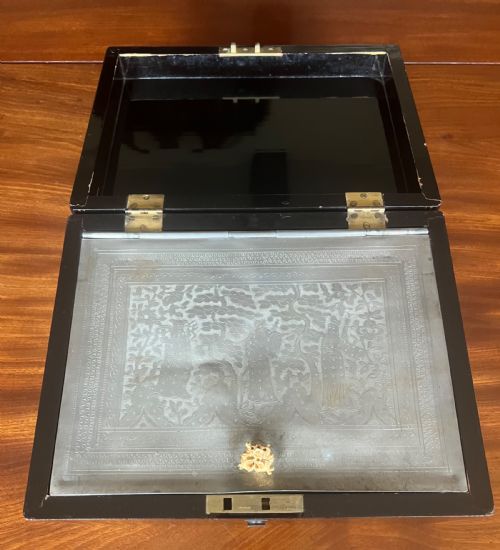


Early 19th Century Caddy
An early 19th century caddy is a small wooden or decorated box designed for storing leaf tea, prized for its intricate veneers and fine cabinet work.
Early 19th Century Caddy
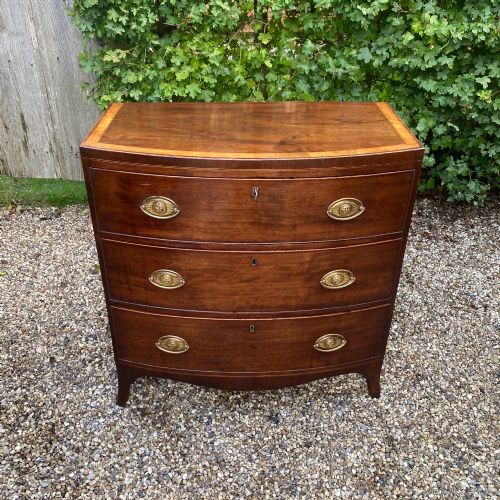
When searching for an early 19th century caddy, collectors encounter tea caddies, teapoys, and decorative boxes originating from the Georgian, Regency, and Victorian periods. Mahogany and rosewood form the core of the available selection, often enhanced with satinwood, boxwood, or brass inlay.
The objects take diverse geometric and figurative shapes, ranging from sarcophagus forms and bow fronts to barrels, cubes, and fruit-shaped pieces. Alongside standard domestic tea caddies, the selection includes Chinese export examples and occasional Welsh vernacular items.
What varies in quality
The standard of an early 19th century caddy rests upon the crispness of its cabinet work and the fidelity of its timber selection. Pieces displaying highly figured burr yew, finely executed brass inlay, or delicate penwork represent the upper echelon of period craftsmanship.
Proportion and structural integrity distinguish finer examples from standard utility boxes. Surviving internal fitments and original escutcheons elevate a piece beyond those altered or stripped of their compartments over time.
Listings feature woods including mahogany, rosewood, satinwood, boxwood, and yew-wood alongside brass and lacquer.
Matthew Linwood
The Early 19th Century Caddy Glossary
- Teapoy
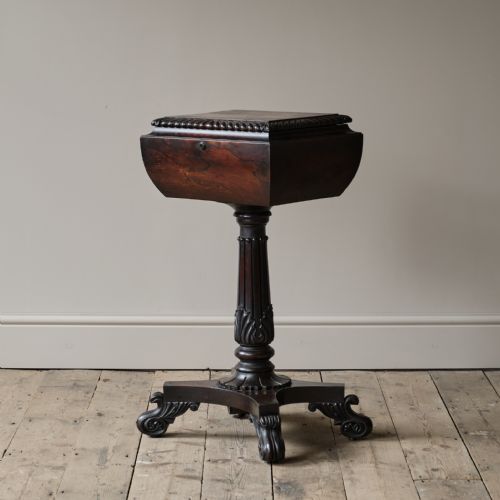
- A pedestal table or large standalone box designed to hold tea canisters and a mixing bowl. They often stand on a single column with carved paw feet.
- Sarcophagus
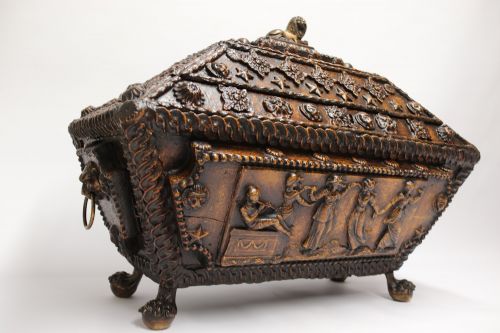
- A coffin-like shape with a domed lid and tapered sides, popular for high-end tea caddies and cellarettes during the Regency period.
- Penwork
- A surface decoration technique using India ink applied by pen to create intricate Chinoiserie or floral motifs on light wood.
- Cellarette
- A large subterranean or freestanding box used for cooling wine bottles, sharing similar architectural forms with larger tea receptacles.
- Treen
- Small handmade wooden household objects valued for their tactile qualities and simple domestic utility.
Early 19th Century Caddy: Frequently Asked Questions
What is an early 19th century caddy?
An early 19th century caddy is a lidded wooden box built to store valuable loose tea leaves securely under lock and key. These containers reflect the high status of tea in Georgian and Regency households.
Interior compartments usually divided the space to separate black and green teas from a central sugar bowl. Makers utilised exotic timbers and decorative veneers to display wealth in the drawing room.
How do I identify a Regency period tea caddy?
Regency tea caddies typically feature architectural forms such as sarcophagus shapes, brass inlay, and bold rosewood or mahogany grains. They often stand on small brass or wooden feet and display crisp geometric stringing.
Cabinet makers of this era favoured classical revival motifs and contrasting light and dark wood veneers. Inside, fitted lids often conceal small glass or wooden mixing bowls.
What is the difference between a caddy and a teapoy?
A tea caddy is a table-top box designed to be lifted and moved, whereas a teapoy is a larger freestanding piece on a pillar or legs. Teapoys often incorporate storage space for multiple tea varieties alongside a mixing bowl.
While both served the same fundamental function in the tea service, teapoys functioned as permanent furniture items within the parlour.
How should I care for a wooden tea caddy?
Wooden tea caddies require stable room temperatures away from direct sunlight and heat sources to prevent timber shrinkage and veneer lifting. Maintaining a consistent indoor climate protects fragile boxwood stringing and delicate internal elements.
Occasional dusting with a soft, dry cloth preserves the polished surface without stripping historic wax finishes. Avoid using liquid polishes or modern chemical sprays on antique wood.