




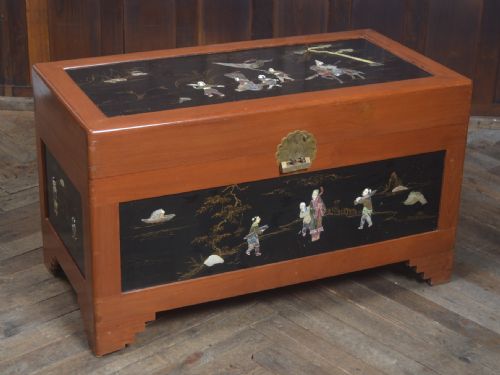


Chinoiserie Storage Box
These chinoiserie storage box pieces bring hand-painted lacquer and gilded imagery into a room, offering both practical depth and centuries of decorative craft.
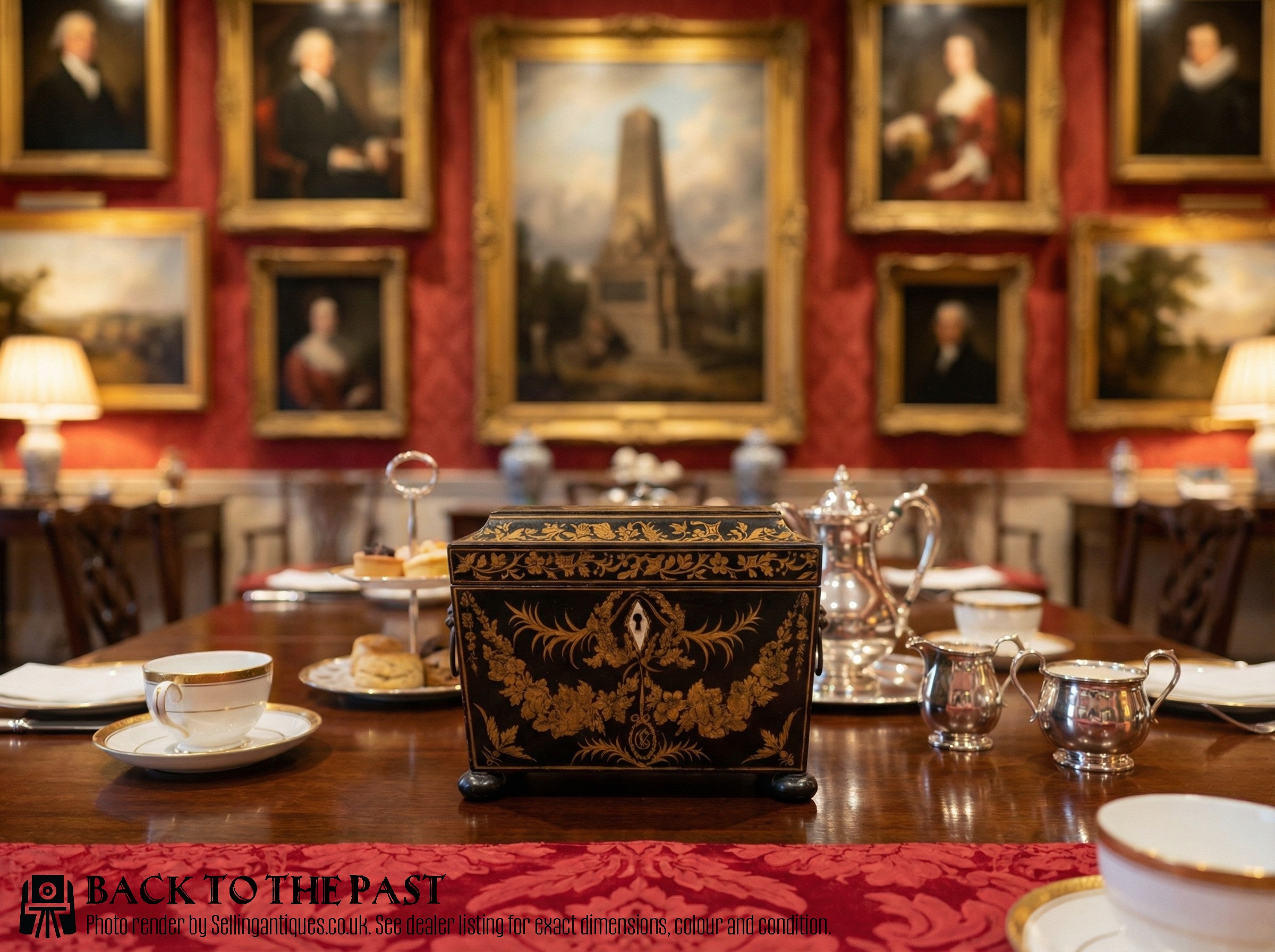
Chinoiserie Storage Box
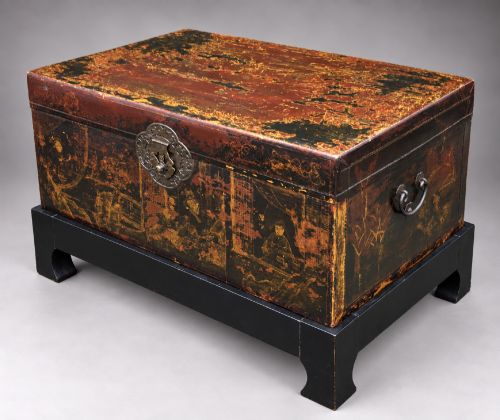
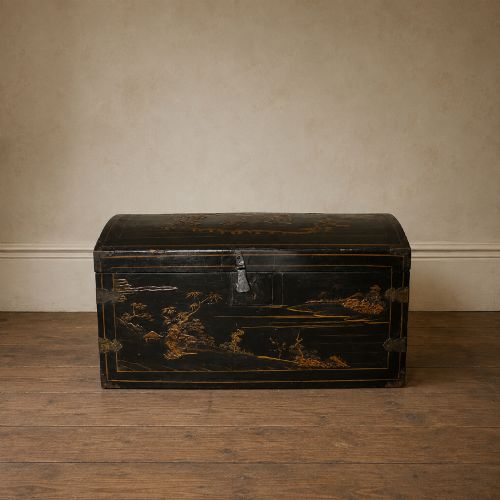
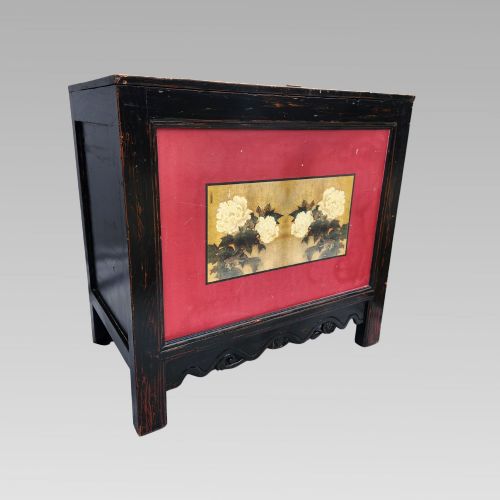
A chinoiserie storage box spans everything from small tea caddies to large blanket chests and coffers, designed to keep valuables or textiles secure while adding striking visual interest to an interior. The pieces available here draw heavily on 18th-century, 19th-century, and early 20th-century traditions, reflecting centuries of global trade and artistic exchange.
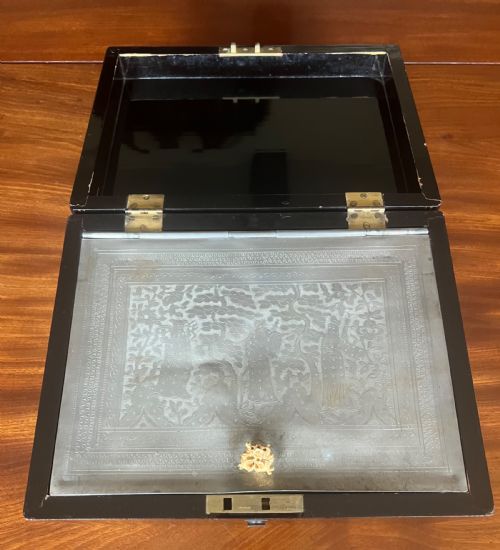
Buyers will most frequently encounter black lacquer trunks and chests decorated with gilt details, alongside smaller tea caddies and cabinet forms from Chinese export, Japanese, and Regency periods. Camphor wood and traditional timber form the structural core of many larger storage chests, while specialist work surfaces incorporate penwork, brass coverings, and toleware.
Regional variations extend from traditional Chinese export workshops to Anglo-Indian and Japanese Meiji interpretations, demonstrating how different cultures adapted European demand for oriental motifs. Each format serves as both a functional container and a significant decorative focal point within a room.
Materials and construction
Makers built the structural carcases using solid timbers such as camphor wood and general wood substrates, providing sturdy foundations that could withstand long sea voyages and daily domestic use. Lacquer was applied in successive layers to create smooth, durable surfaces capable of holding intricate painted designs.
Decoration relied heavily on gold leaf, pigment, and gilt application to build up pictorial scenes of figures, landscapes, and floral motifs against dark grounds. Brass fittings, including corner braces, hinges, and carrying handles, were integrated to reinforce joints and add functional contrast to the finished pieces.
Assessing craftsmanship and finish
Quality rests on the depth and preservation of the lacquer and gilt work, where finer examples display crisp, intricate brushwork and rich layering rather than flat or faded decoration. The integrity of the underlying timber and the precision of the joinery determine the overall durability and structural success of the box.
Hardware details such as original brass mounts, working locks, and intact interior trays elevate a piece, showing that it retains its original functional components. The sophistication of the pictorial composition and the harmony between the decorative surface and the structural form separate standard utility items from exceptional examples.
The Chinoiserie Storage Box Glossary
- Chinoiserie
- European artistic interpretation of Chinese and East Asian decorative styles, popular across furniture and decorative objects. This aesthetic relies on whimsical landscapes, figures, and pavilions rendered in gilt and pigment.
- Lacquer
- A durable resin finish applied in multiple coats to wood surfaces, providing a deep, glossy sheen. It serves as the primary canvas for painted and gilded ornamentation.
- Tea caddy
- A small box or container originally manufactured to store loose tea leaves securely. These examples often feature internal compartments and fine decorative treatments.
- Gilt
- A thin layer of gold or gold-coloured material applied to a surface for decoration. It catches the light and highlights the intricate details of the painted scenes.
- Coffer
- A large box or chest traditionally used for storing valuable items, documents, or textiles. They typically feature sturdy construction and hinged lids.
Chinoiserie Storage Box: Frequently Asked Questions
What were these boxes originally used for?
These containers served specific domestic purposes, from housing luxury commodities like tea leaves to safeguarding garments, documents, and precious household goods.
Larger coffers and blanket chests sat in reception rooms or bedrooms for heavy textiles, while smaller caddies stayed close to tea tables.
How do I care for an antique lacquer surface?
Keep these pieces away from direct sunlight, extreme temperature shifts, and excessive moisture to prevent the lacquer from cracking or lifting.
Dust gently with a dry, soft cloth and avoid chemical polishes or modern cleaning agents that can damage the delicate gilt decoration.
How can I tell an 18th-century box from a 19th-century one?
Dating relies on examining the timber preparation, the composition of the lacquer, and the specific style of the painted motifs.
Earlier pieces often exhibit hand-carved structural nuances and distinct export painting styles, whereas later 19th-century and Regency examples show shifts in hardware and decorative techniques.
Are these chests suitable for modern storage?
These boxes function effectively for storing dry linens, accessories, or keepsakes while acting as statement furniture pieces.
Ensure that camphor wood interiors remain well-ventilated and avoid overloading delicate historical hinges or locking mechanisms.