



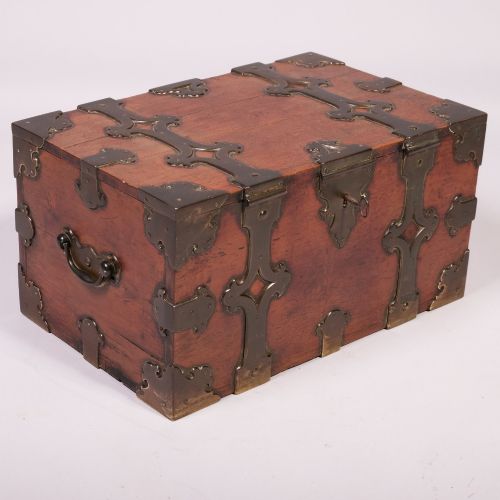
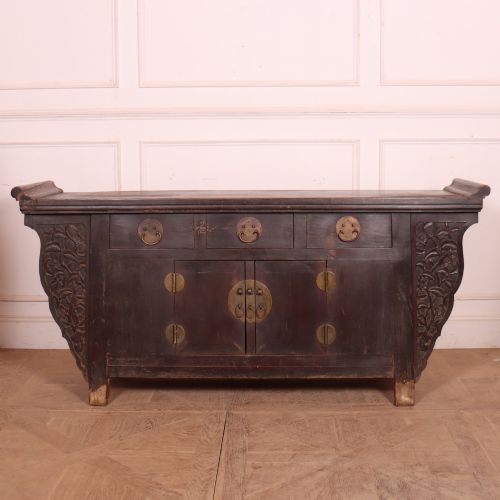
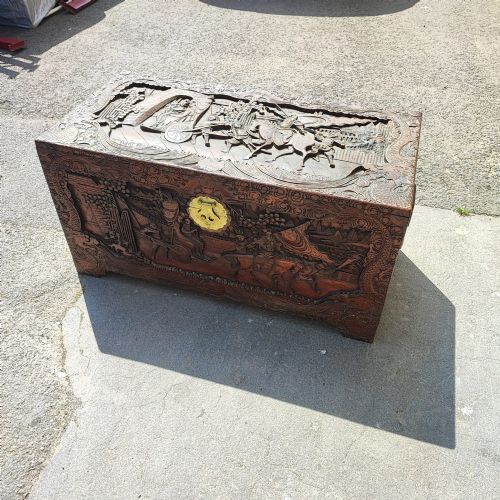
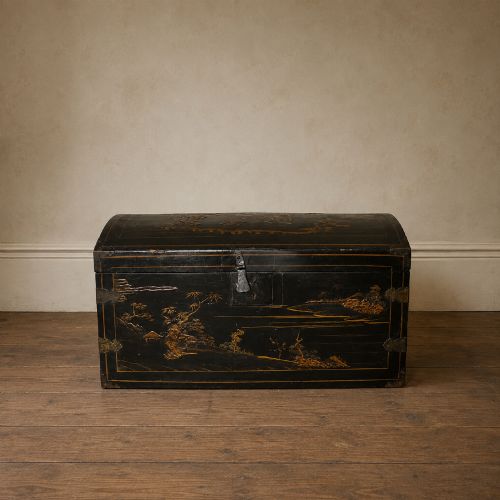


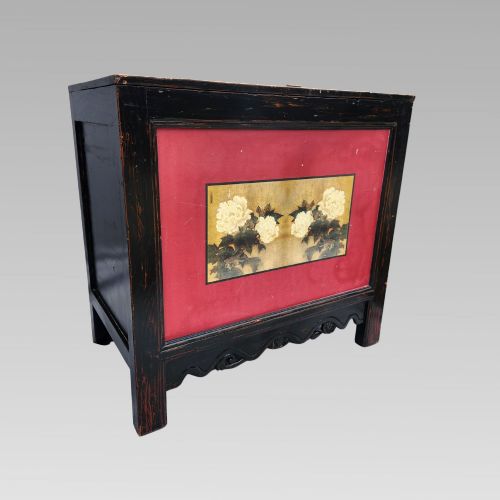


Chinese Coffer Chest
A Chinese coffer chest brings centuries of practical storage and rich surface texture into a room.
Chinese Coffer Chest
When you search for a Chinese coffer chest, you encounter sturdy storage forms designed for travel and domestic use. The pieces appearing here span from the eighteenth century through the early twentieth century, encompassing various utilitarian and export designs.
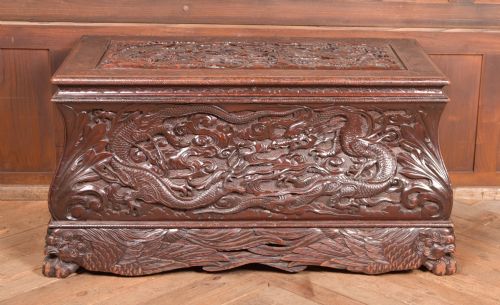
Camphor wood forms the backbone of these listings, often appearing as carved trunks, blanket boxes, and coffer chests. Export lacquer and leather-bound travel pieces also surface frequently alongside occasional sideboards and cabinets.
Origins stretch from traditional domestic workshops to China Trade production centres catering to Western markets. You meet standard blanket boxes alongside brass-mounted caskets and domed trunks.
How they were made
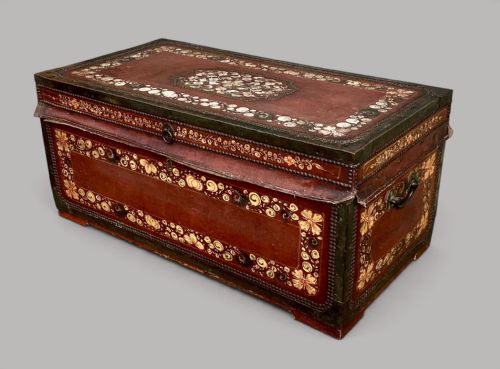
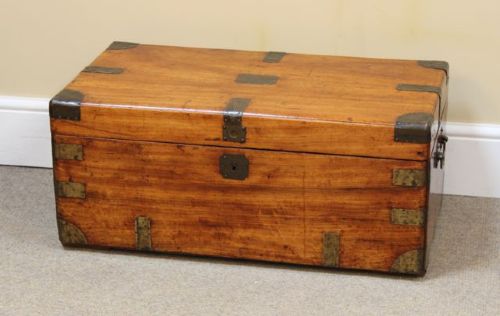
Joiners built these pieces primarily using solid camphor wood, elm, and diverse hardwoods, valued for their durability and aromatic qualities. Metal reinforcement came via brass mountings, hinges, and corner plates designed to withstand long journeys.
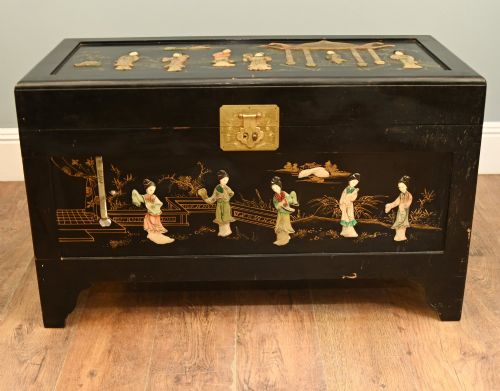
Surface finishes relied on multiple applications of black or red lacquer, sometimes enriched with gilt decoration, floral chinoiserie, or polychrome painted details on leather. Carving was executed by hand directly into the timber panels, depicting traditional motifs and scenes.
Chinese Coffer Chest Retail Price Guide 2026
Typical asking prices for chinese coffer chest among the pieces listed under this phrase on Sellingantiques today, from the lower quarter to the upper quarter. They describe what is for sale here now, not the wider market.
The inventory spans the eighteenth century through to the art deco period of the 1930s.
What varies in quality
The standard of execution separates everyday utility items from superior export pieces commissioned for international trade. Depth and precision in hand carving dictate the visual weight of the surface.
Original hardware integrity also defines the tier of a piece, with heavy brass mountings and functional locking mechanisms retaining more interest than replaced fastenings. The preservation of early lacquer and painted leather surfaces determines collector appeal.
The Chinese Coffer Chest Glossary
- Coffer chest
- A heavy storage box traditionally used for valuables or linens. These pieces often feature hinged lids and robust timber construction.
- Camphor wood
- An aromatic timber native to Asia, prized for insect-repellent properties. It forms the primary material for the majority of these trunks.
- Chinese Export
- Goods manufactured in China specifically for Western markets from the eighteenth century onwards. This style blends traditional Asian forms with European tastes.
- Chinoiserie
- European interpretation and imitation of Chinese artistic traditions and motifs. It appears on lacquer surfaces in decorative painted schemes.
- Campaign case
- Portable furniture designed for military or civilian travel. These trunks feature recessed brass handles and reinforced corners for transport.
Chinese Coffer Chest: Frequently Asked Questions
What were Chinese coffer chests used for?
These chests served primarily for storing garments, blankets, and valuable personal possessions at home or during maritime travel. The natural aroma of the timber helped protect textiles from moths and dampness.
Over time, many owners adapted them to serve double duty as coffee tables or low hallway storage units. Their robust construction made them suitable for long-distance transport as luggage.
How do I identify eighteenth century pieces?
Early examples from the eighteenth century typically exhibit restrained proportions and substantial brass mountings rather than heavy overall carving. Construction details like hand-cut dovetails and older timber patina assist in dating.
Export pieces from this era frequently display specific lacquer techniques and trade-related decorative motifs. Comparing hardware styles to dated campaign items confirms the period.
Where should I place a camphor chest?
These chests suit living rooms acting as coffee tables with internal storage, or bedrooms functioning as blanket boxes. Keep them away from direct heat sources to prevent timber splitting.
Ensure adequate ventilation around lacquer and leather surfaces to preserve the finish over time. Their substantial scale makes them effective anchor pieces in hallways.
How do I care for lacquer finishes?
Maintain lacquer surfaces by dusting gently with a dry, soft cloth without applying modern chemical polishes. Avoid placing damp items directly onto antique lacquer tops.
Protect the finish from prolonged direct sunlight to prevent fading of gilt and painted details. Stable room humidity prevents the underlying wood from expanding and cracking the lacquer.