





Chinese Blanket Box
A chinese blanket box brings aromatic wood and substantial storage into a room, fashioned for travel or domestic service.
Chinese Blanket Box
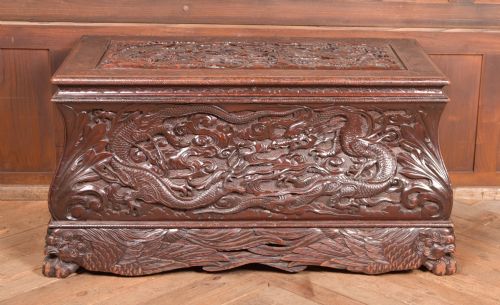
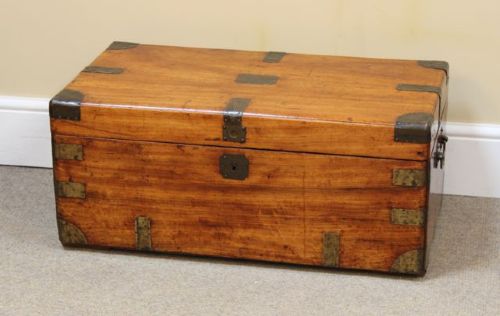
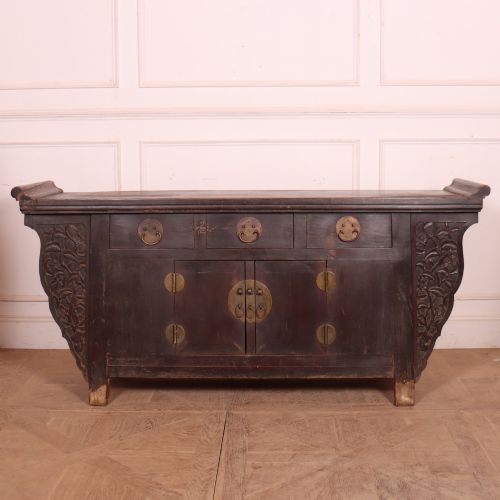
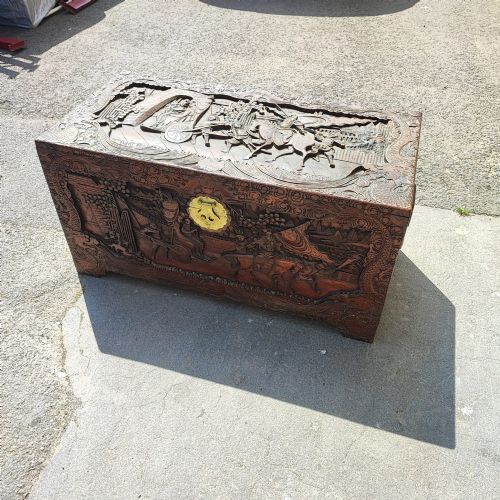
A chinese blanket box is primarily encountered as a camphor wood chest dating from the nineteenth and early twentieth centuries, designed originally for household storage or long-distance shipping. These pieces range from plainly finished campaign trunks with robust brass hardware to heavily carved examples depicting traditional motifs.
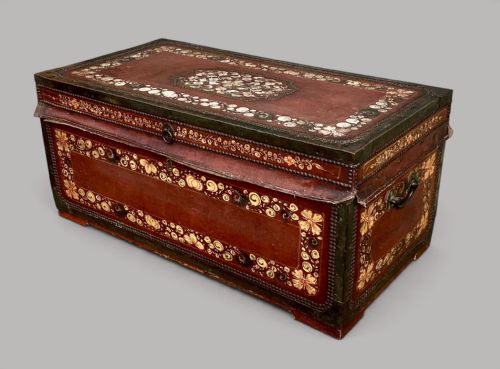
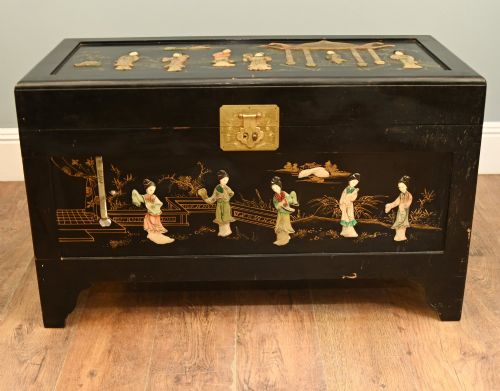
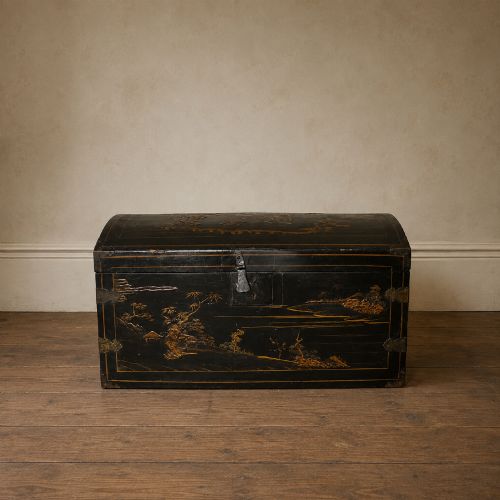
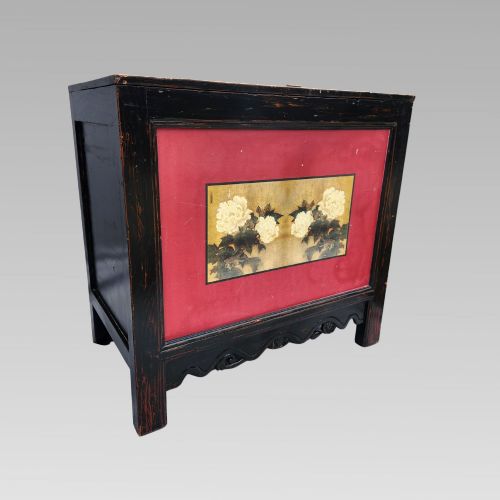
Beyond plain camphor, the selection includes black lacquer chests with gilt decoration, painted leather trunks from the China trade, and hardwood coffers originating from the eighteenth century. Such variations reflect the diverse workshop traditions that produced heavy luggage and stationary storage for both domestic and export markets.
How they were made
Makers utilised aromatic camphor wood, dense hardwoods, and softwoods, frequently applying black lacquer, pigment, or leather coverings over the primary timber structure. Brass corners, straps, and lock plates reinforced the corners and joints against the rigours of maritime transit.
Carving techniques varied from deep relief panels depicting figures and foliage to smooth, unadorned surfaces designed to highlight the natural grain of the wood. Metal components were secured with numerous small tacks or pins, while lids and interior trays relied on traditional box joinery.
Chinese Blanket Box Retail Price Guide 2026
Typical asking prices for chinese blanket box among the pieces listed under this phrase on Sellingantiques today, from the lower quarter to the upper quarter. They describe what is for sale here now, not the wider market.
Recorded materials span camphor wood, lacquer, brass, iron, leather, and pigment across periods ranging from the eighteenth century to the 1930s.
What varies in quality
The distinction between standard utility luggage and finer decorative pieces rests on the depth and crispness of the carving, the quality of the lacquer or painted finish, and the weight of the brass hardware. Early eighteenth-century coffers and finely preserved export lacquer chests demonstrate superior craftsmanship compared to mass-produced twentieth-century counterparts.
Proportion and scale also dictate the standing of a chest, with larger scale campaign trunks and matching pairs commanding greater presence. The integrity of the original wood and the retention of decorative pigment or gilt detail separate utilitarian containers from exceptional examples.
The Chinese Blanket Box Glossary
- Camphorwood
- An aromatic timber prized for its insect-repellent properties, commonly used for the interior and exterior construction of blanket boxes.
- China Trade
- Commerce between China and Western nations, encompassing goods specifically manufactured or decorated for export during the eighteenth and nineteenth centuries.
- Coffer
- A heavy wooden chest, typically box-shaped with a hinged lid, used historically for storing valuables, linens, or documents.
- Campaign trunk
- Sturdy luggage fitted with brass corners and carrying handles, built for transport during military or civil travel.
Chinese Blanket Box: Frequently Asked Questions
What were Chinese blanket boxes used for?
These chests served primarily for storing garments, household linens, and valuable textiles, protecting contents from moisture and insects through the natural properties of camphor wood.
Many examples also doubled as travel luggage or shipping trunks for merchants and officials operating within the China trade.
How do I identify an 18th-century chest?
Eighteenth-century examples typically display heavier hardwood construction, simpler structural lines, and characteristic patina associated with early export lacquer or coffer forms.
They lack the heavy mechanical carving and standardised brass fittings commonly found on later nineteenth and twentieth-century production.
Are the carved chests made of camphor?
Most of the heavily carved storage boxes encountered are indeed fashioned from camphor wood, chosen for its stability and responsiveness to deep relief carving.
Alternative materials such as elm, leather-covered pig skin, and various dense hardwoods also appear in the record.
How do I live with a camphor chest?
These versatile pieces function effectively as coffee tables, end-of-bed storage, or freestanding focal points in living spaces while maintaining their original utility.
Placement away from direct heat sources helps preserve the timber, lacquer finishes, and traditional brass hardware.