


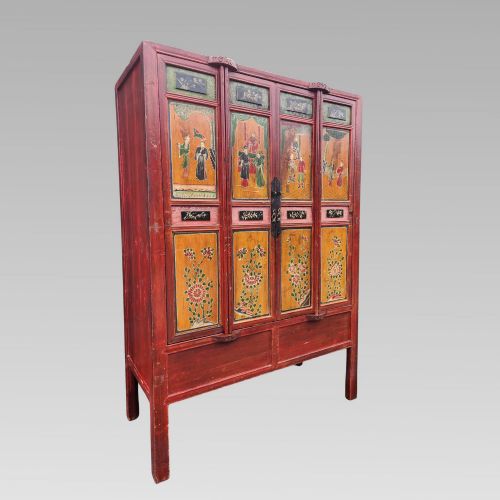


Qing Dynasty Sideboard
These qing dynasty sideboard options bring traditional Chinese craftsmanship and versatile storage to a room through centuries-old timber and striking lacquer finishes.
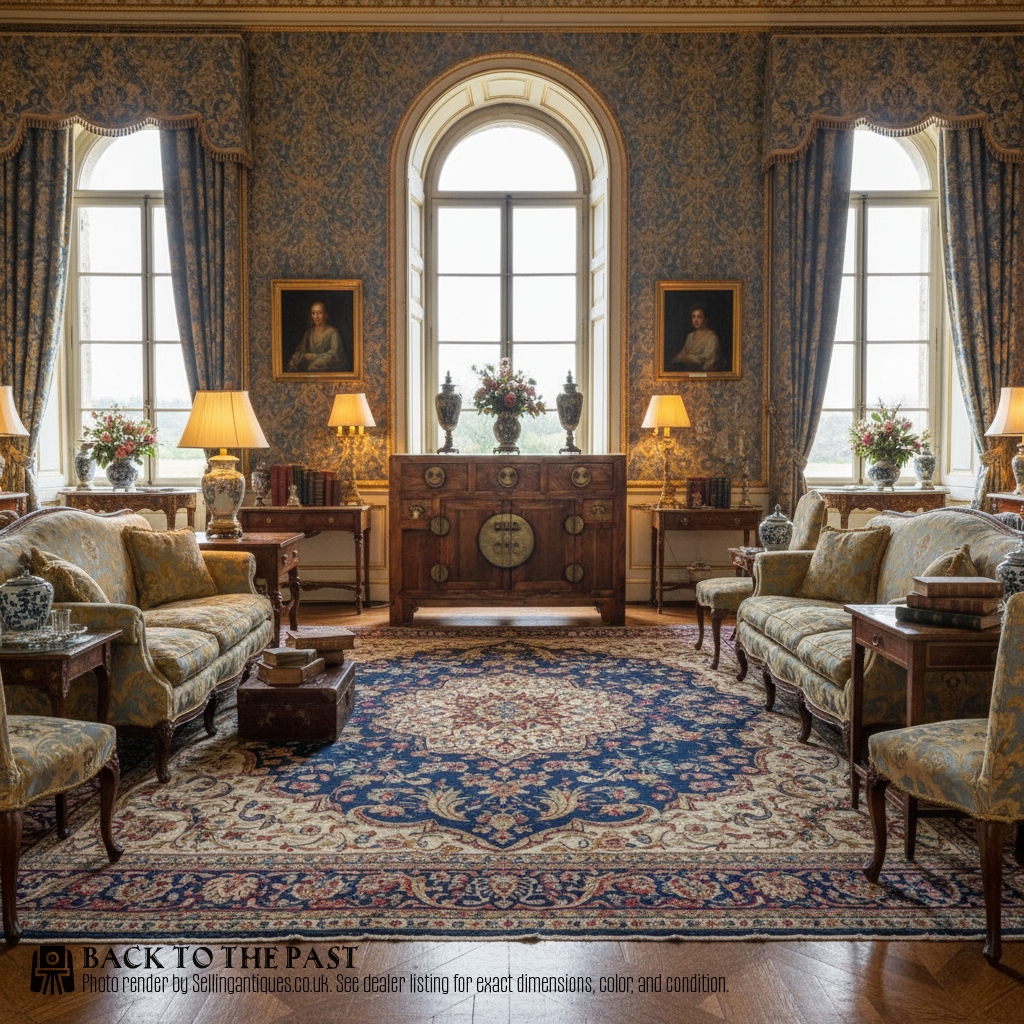
Qing Dynasty Sideboard
A qing dynasty sideboard covers a diverse group of low storage furniture, side cabinets, dressers, and console tables originating from China during the nineteenth century. Buyers searching this phrase look for practical storage combined with authentic period character, ranging from rustic provincial pieces to more formal reception furniture.
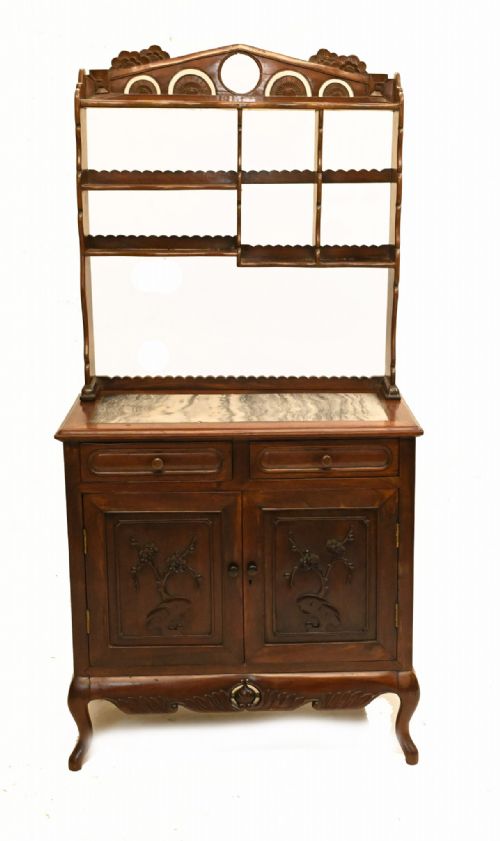
The selections available run predominantly through the nineteenth century, including pieces dated across the 1850s, 1870s, 1880s, and 1900. Forms vary from low sideboards and side cabinets to tall dresser bookcases and storage marriage cabinets, reflecting the broad range of domestic utility in historical Chinese households.
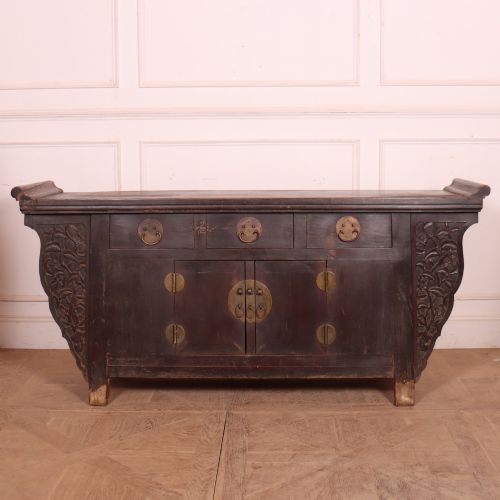
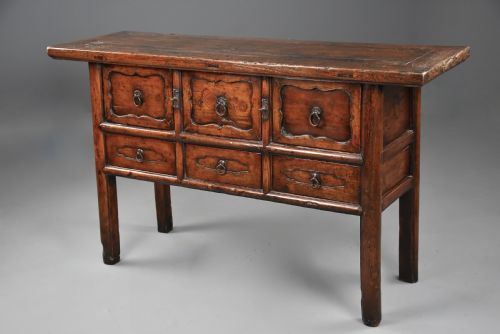
Provincial expressions appear frequently alongside formal designs, showing how regional workshops adapted standard forms. Elm and various hardwoods form the structural backbone of these pieces, often paired with red or black lacquer coatings and metal hardware.
Assessing Quality and Character
The distinction between standard utility items and finer examples rests on the depth of the carving, the preservation of the original lacquer surface, and the subtlety of the timber grain. Elm pieces show varying degrees of surface figure, with certain varieties prized for their distinct patterns and warm patination.
Proportion and decorative restraint set apart the more accomplished workshop pieces from utilitarian provincial items. The integration of metal mounts, whether brass or iron, contributes to the overall visual balance of the facade.
Qing Dynasty Sideboard Retail Price Guide 2026
Typical asking prices for qing dynasty sideboard among the pieces listed under this phrase on Sellingantiques today, from the lower quarter to the upper quarter. They describe what is for sale here now, not the wider market.
Marriage cabinets were built to store a bride's dowry textiles, carrying secret interior compartments designed to hide small personal treasures.
The Qing Dynasty Sideboard Glossary
- Lacquer
- A durable resin finish applied in multiple layers to wood surfaces, often pigmented in red or black. It provides both protection and a smooth, reflective surface.
- Elm
- A resilient native timber widely used in Chinese cabinetmaking for its tough fibres and attractive grain patterns. It forms the primary material for many provincial sideboards and tables.
- Hardwood
- A general term for dense, slow-growing timbers utilised in traditional Chinese furniture construction. These woods permit sharp carving details and high structural strength.
- Chinoiserie
- European-influenced interpretation of Chinese artistic motifs and styles. It appears in decorative furniture produced for export markets.
- Altar table
- A long, narrow form of traditional Chinese table with elevated ends, originally used for ceremonial purposes. These pieces now function as console tables in contemporary interiors.
Qing Dynasty Sideboard: Frequently Asked Questions
How do I use a sideboard in a modern room?
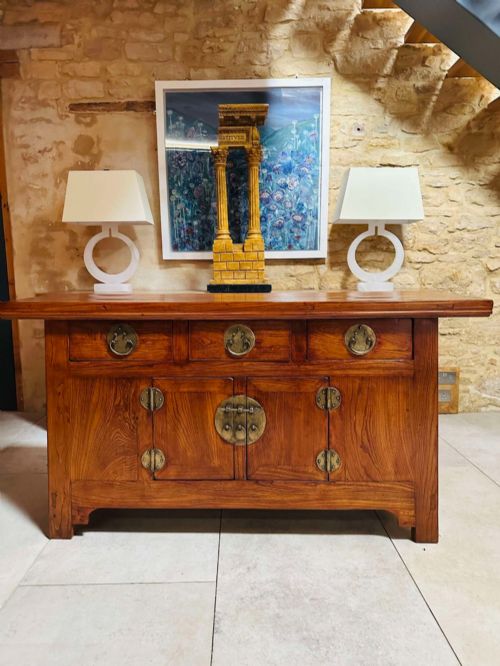
These cabinets provide practical surface space and enclosed storage suited for dining rooms, living areas, or hallways. Their low profiles allow them to function well beneath artwork or mirrors.
Placing one against a wall creates an anchor point for lamps and decorative objects while concealing household items behind cabinet doors.
What is the difference between elm and hardwood pieces?
Elm offers a fibrous, highly figured grain that takes on a warm patina through handling and age. It tends to appear in provincial furniture intended for everyday domestic utility.
Dense hardwoods allow for crisper carved details and heavier construction. They generally represent more formal workshop traditions.
How do I care for lacquer finishes?
Lacquer surfaces require protection from direct sunlight and excessive humidity to prevent drying and cracking. Dusting with a soft, dry cloth maintains the finish without abrasive cleaners.
Applying occasional neutral wax helps preserve the sheen on antique wood and lacquer.
How are nineteenth-century pieces dated?
Datings rely on construction methods, tool marks left by traditional joinery, and the wear patterns on timber and lacquer. Stylistic traits pointing to specific reigns or provincial traditions also aid identification.
Comparison with documented examples from regions such as Shanxi or Fujian helps narrow the period of origin.