



Chinese Entry Table
A chinese entry table anchors a hallway with clean proportion and deep timber grain, offering a practical surface as soon as you step inside.
Chinese Entry Table
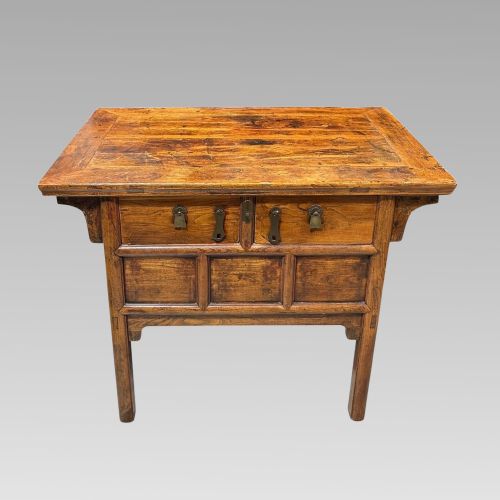
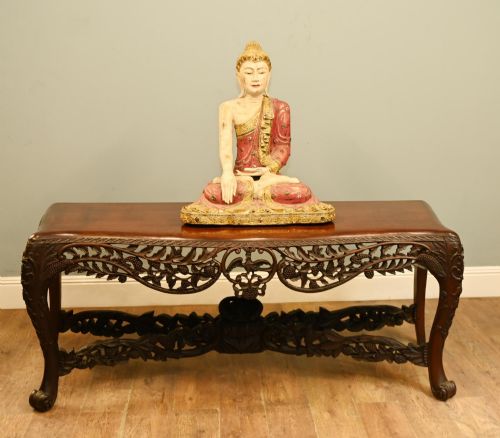
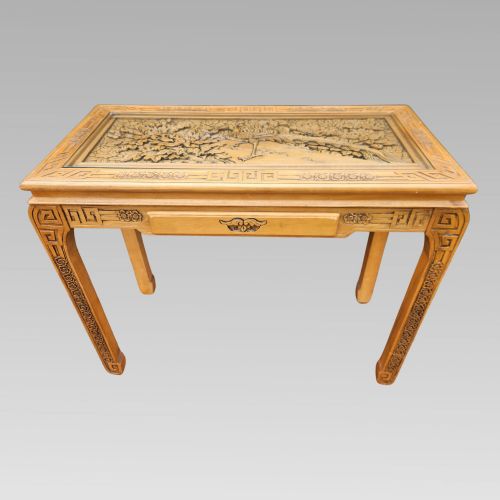
When you search for a chinese entry table, you encounter console tables, altar tables, and side cabinets derived from nineteenth-century forms. These pieces serve narrow spaces near doors, combining surface utility with the sculptural presence of traditional Asian furniture.
The versions most frequently met on this page date from the nineteenth century and the early twentieth century, spanning Qing Dynasty designs and provincial styles. They appear in formats ranging from simple elm surfaces to carved hardwood altar structures.
Makers shaped these forms for domestic interiors and export markets, utilising regional timber traditions such as elm, camphorwood, and dense hardwoods. Each piece reflects the functional requirements of historic halls adapted for contemporary placement.
Materials and Construction
Carpenters constructed these tables using native timbers including elm, camphorwood, and heavy hardwoods, often finished with red lacquer or clear polish. The joinery relied on traditional framing methods that allowed timber to expand and contract across seasonal shifts.
Carved decoration appears on aprons and legs, executed in low relief to complement the linear geometry of console and altar formats. Brass hardware occasionally supplements the woodwork on drawer fronts and hinges.
Surfaces received multiple coats of lacquer or wax to protect the underlying wood while accentuating the natural grain patterns and figures developed over decades of growth.
Chinese Entry Table Retail Price Guide 2026
Typical asking prices for chinese entry table among the pieces listed under this phrase on Sellingantiques today, from the lower quarter to the upper quarter. They describe what is for sale here now, not the wider market.
Current listings feature nineteenth-century elm and hardwood console tables alongside red lacquer altar forms.
Distinctions in Quality
Quality rests in the integrity of the timber selection and the precision of the joinery rather than surface ornamentation alone. Denser hardwoods and seasoned elm demonstrate greater stability and resistance to movement over time.
The crispness of carved details on aprons and edge mouldings separates standard provincial workshop output from finer urban production. Proportions remain balanced on superior examples, where legs and tabletops maintain a harmonious relationship.
The Chinese Entry Table Glossary
- Altar table
- A ceremonial table form characterised by upturned flange ends and recessed legs, adapted for domestic interior use.
- Console table
- A wall-mounted or freestanding narrow table designed for placement in hallways, entryways, and narrow reception spaces.
- Qing Dynasty
- The final imperial dynasty of China, spanning the seventeenth to early twentieth centuries and defining the aesthetic of many surviving furnishings.
- Lacquer
- A durable resin finish applied in thin layers to wood surfaces, often pigmented red or black to create a smooth protective coating.
- Elm
- A resilient regional timber valued by Chinese cabinetmakers for its fibrous grain and structural stability in large furniture forms.
Chinese Entry Table: Frequently Asked Questions
What is a Chinese entry table?
A Chinese entry table is a narrow console, altar table, or side cabinet originating from nineteenth-century traditions, designed to sit against a hallway wall.
These pieces provide a flat surface for display while maintaining a shallow footprint suitable for transitional spaces.
Where should I place an altar table?
Altar tables suit entryways, living rooms, and narrow passages where their linear profile and distinctive flanged ends can be appreciated.
Their shallow depth allows them to function as display surfaces without obstructing foot traffic in domestic interiors.
How do I identify Qing Dynasty pieces?
Qing Dynasty furniture is typically identified through construction methods, timber density, and traditional carving styles associated with nineteenth-century workshops.
Examining the underside, joinery, and wear patterns helps establish the period of manufacture relative to later reproductions.
Are these tables made of solid wood?
These tables are constructed from solid regional timbers such as elm, camphorwood, and dense hardwoods rather than manufactured board materials.
Cabinetmakers utilised traditional joinery to accommodate the natural movement of solid timber over decades of use.
How do I care for lacquered wood?
Lacquered surfaces require gentle cleaning with a soft, dry cloth and protection from direct sunlight and extreme humidity fluctuations.
Avoiding harsh chemical cleaners preserves the integrity of the resin finish and the underlying wood.