



Chinese Lacquer Sideboard
A chinese lacquer sideboard brings rich red and black tones, hand-painted details and deep storage into a room.
Chinese Lacquer Sideboard
When you search for a chinese lacquer sideboard, you are looking at substantial storage furniture built across the nineteenth and early twentieth centuries. These pieces function as sideboards, cabinets, cupboards and console tables, originating from regional workshops and provincial centres in China. The versions you meet most often on this page date from the nineteenth century and the decades around nineteen hundred.
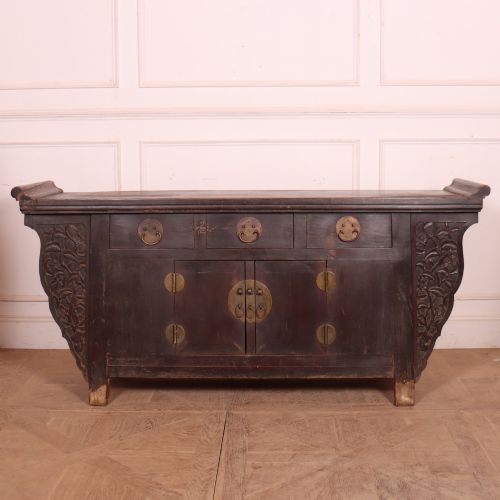
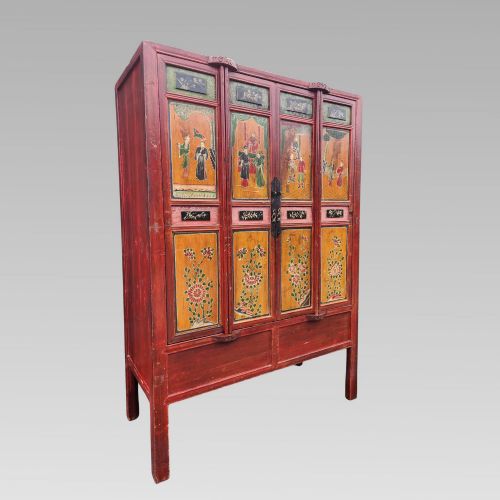
Forms range from low altar tables and console tables to tall storage cupboards and marriage cabinets. Many examples sit on carved stands or incorporate marble tops, while others feature elaborate regional carving. You will find pieces finished in striking red or deep black lacquer, often decorated with birds, flowers or figural scenes.
Makers utilised native timbers such as elm and other hardwoods to form the carcasses before applying layers of lacquer. Regional styles vary from the ornate carvings of the Qing dynasty tradition to simpler provincial interpretations. Each item combines practical storage capacity with a distinct decorative presence that anchors a dining room or hallway.
How they were made
Craftsmen constructed the foundational frames using sturdy timbers including elm and general hardwoods to ensure stability for heavy storage use. Surfaces were then built up with multiple coats of natural lacquer to create a smooth, durable finish. This foundational preparation allowed artisans to apply detailed pigments and decorative schemes directly to the wood.
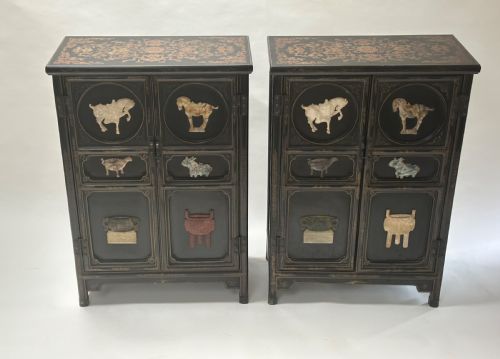
Decoration involved contrasting red and black lacquers, sometimes enhanced with gilding, hardstone or soapstone inlays. Carved elements frequently appeared on structural stands, doors and panels, drawing on regional iconography such as dragons and traditional flora. Skilled hands applied birds and floral motifs to the final surfaces to create the distinctive Chinoiserie appearance.
Chinese Lacquer Sideboard Retail Price Guide 2026
Typical asking prices for chinese lacquer sideboard among the pieces listed under this phrase on Sellingantiques today, from the lower quarter to the upper quarter. They describe what is for sale here now, not the wider market.
The inventory records console tables, altar tables, and storage cupboards spanning Chinoiserie, Qing Dynasty, and provincial Chinese regional styles.
What varies in quality
Quality rests primarily on the depth and preservation of the lacquer surface and the crispness of any carved wood detail. Pieces featuring intricate gilding, hardstone inlays or well-preserved pictorial decoration sit at the upper end of the range. The integration of decorative stands and marble tops also elevates a piece beyond standard utility.
Construction methods and timber selection distinguish finer workshop production from simpler provincial items. Cabinets that retain their original brass hardware, balanced proportions and intact structural joinery demonstrate superior craftsmanship. The richness of the red or black colouration and the subtlety of the painted bird and floral motifs ultimately determine the visual impact.
The Chinese Lacquer Sideboard Glossary
- Lacquer
- A durable resin finish applied in multiple layers to wood surfaces. It provides a glossy, protective coat that accepts pigments and decorative painting.
- Chinoiserie
- European-derived artistic interpretation of Chinese decorative styles. It manifests on furniture through painted motifs of landscapes, figures, birds and flowers.
- Altar table
- A long, narrow console table traditionally used for ceremonial purposes. These pieces feature elongated proportions and often include carved apron details.
- Hardstone
- Dense minerals such as jade or soapstone used for inlay work. Craftsmen inset these materials into lacquer panels to create raised pictorial scenes.
- Qing Dynasty
- The final imperial dynasty of China, spanning from sixteen forty-four to nineteen twelve. Furniture from this period exhibits varied regional carving and lacquer techniques.
Chinese Lacquer Sideboard: Frequently Asked Questions
Where should I put a sideboard?
These pieces suit dining rooms, hallways or living spaces where you need substantial surface area and enclosed storage. Their decorative lacquer finishes make them strong focal points against neutral walls.
Ensure the room humidity remains relatively stable to protect the wooden carcass and the delicate lacquer surface from extreme temperature shifts.
How do I clean lacquer furniture?
Dust the surfaces gently with a soft, dry cloth to prevent scratching the polished lacquer layers. Avoid chemical sprays, abrasive cleaners or excessive moisture.
Maintain a moderate indoor climate away from direct sunlight to preserve the richness of the red and black pigments over time.
Are these pieces from the Qing dynasty?
Many items originate from the nineteenth century and the early twentieth century, spanning the late Qing period and the decades immediately following. Regional workshops produced these cabinets for both domestic use and export. Nineteeth-century pieces often reflect traditional provincial designs, while later examples incorporate specific regional carving styles.
What is the difference between a cabinet and a console table?
Cabinets provide enclosed storage with doors and internal shelving, functioning as cupboards, armoires or sideboards. Console tables are open, narrower framework pieces designed for display against a wall. Some tall cabinets also sit upon separate carved wooden stands, combining display height with heavy storage capacity.