
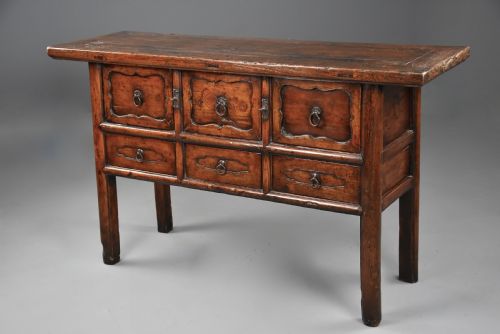


Brown Elm Altar Table
These brown elm altar table examples bring centuries of traditional Chinese craftsmanship into modern interiors.
Brown Elm Altar Table
When you search for a brown elm altar table, you are looking at substantial hardwood furniture originating from various Chinese periods, predominantly constructed during the nineteenth century. These items range from formal altar tables and long console tables to side tables, low tables, and trestle tables.
How they were made
Construction relies heavily on elm and other Asian hardwoods, sometimes utilising specific varieties such as locust wood for distinct grain patterns. Craftsmen built these tables using traditional joinery methods that accommodated the movement of solid timber planks.
Surface treatments frequently display a fine patina developed over decades of use, occasionally enhanced with subtle applications of lacquer. Metal elements such as brass or iron appear on certain pieces to reinforce joints or provide functional hardware.
Some elm varieties hiding in these tables are locally known as locust wood, proving that trees love a good disguise.
What varies in quality
The distinction between ordinary and exceptional pieces lies in the depth of the timber's patina and the crispness of any carved detailing. Tables featuring balanced proportions and well-preserved plank tops command greater attention from collectors.
Structural integrity and the retention of original surfaces separate fine examples from those heavily restored. The visual weight of the grain and the harmonious ageing of the elm define the upper tier of the range.
The Brown Elm Altar Table Glossary
- Altar table
- A long, narrow table traditionally used for ceremonial purposes in Chinese homes and temples, often featuring upturned flanges at the short ends. These surfaces provide a striking linear silhouette suited to modern hallways and living spaces.
- Elm
- A durable hardwood native to Asia, prized for its pronounced grain pattern and resistance to splitting. It serves as the primary structural material across this collection.
- Console table
- A wall-mounted or freestanding narrow table designed to sit against a vertical surface. In historic Chinese contexts, these pieces share forms with traditional altar tables.
- Patina
- The lustrous surface sheen developed on wood through age, handling, and regular polishing. A fine patina indicates long-term care and original finish integrity.
- Trestle table
- A table comprising a horizontal top supported by two or more vertical frame structures. This form offers robust stability without bulky corner legs.
Brown Elm Altar Table: Frequently Asked Questions
What is a brown elm altar table?
A brown elm altar table is a traditional Chinese furnishing originally designed for ceremonial display, characterised by a long, narrow wooden top and often upturned ends.
Today, these tables function effectively as console pieces in hallways, living rooms, or dining spaces, offering significant surface area alongside historical character.
How old are these tables usually?
The pieces listed primarily date from the nineteenth century, spanning various decades up to the early twentieth century.
Earlier examples from the eighteenth century also appear, representing traditional craftsmanship predating modern industrial production methods.
How do I style an altar table?
Altar tables work well placed against flat walls in entrance halls, behind sofas, or as slim sideboards in dining rooms.
Their narrow depth allows them to occupy minimal floor space while providing a substantial visual anchor for lamps, books, or decorative objects.
What materials are used alongside elm?
While elm forms the primary structure of these tables, secondary materials include assorted Asian hardwoods and occasional regional timbers like locust wood.
Metal components such as brass or iron appear on fittings, drawers, and structural brackets to support the heavy plank construction.