



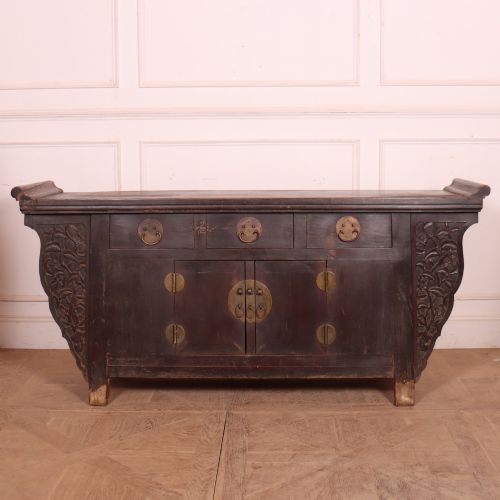
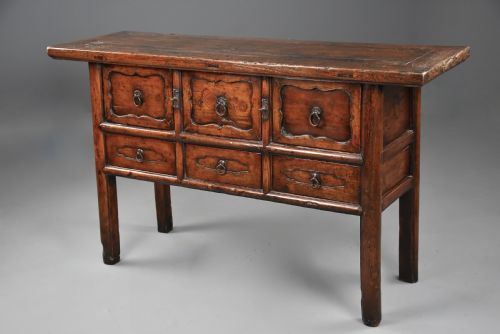


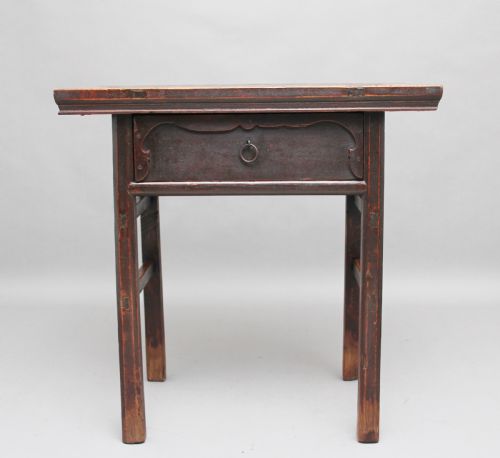


Elm Altar Table
An elm altar table brings substantial timber and quiet architectural presence to a room, functioning as a console or display surface.
Elm Altar Table
An elm altar table is a traditional form rooted in Chinese regional cabinet-making, often associated with provincial workshops and the Qing Dynasty. Buyers looking for an elm altar table seek pieces that combine linear restraint with visible wood grain and patination developed over generations.
The versions most commonly met on this page date from the nineteenth and early twentieth centuries, spanning periods from the eighteenth century to around nineteen twenty. These pieces take various formats, including narrow console proportions, plank-top trestle constructions, low coffee dimensions, and occasional examples fitted with small drawers.
Alongside dedicated altar tables, related forms appear frequently under this description, such as side tables, sideboards, writing desks, and benches sharing the same timber and regional aesthetic. Their origins stretch across specific Chinese provinces like Shanxi, alongside broader regional designations.
Distinctions in quality and finish
Quality rests in the depth of the natural patina, where decades of handling leave the elm surface warm, smooth, and varied in tone. Tables that retain their original structural integrity, crisp carving details, and unblemished plank tops stand apart from examples requiring extensive timber replacement.
Proportion and joinery refinement also separate standard utility items from finer provincial pieces, particularly in the balance of the legs and the subtlety of flanged or recessed altar ends.
Elm Altar Table Retail Price Guide 2026
Typical asking prices for elm altar table among the pieces listed under this phrase on Sellingantiques today, from the lower quarter to the upper quarter. They describe what is for sale here now, not the wider market.
Object forms recorded on this site include console tables, sideboards, trestle tables, writing desks, benches, and low tables.
The Elm Altar Table Glossary
- Patina
- The surface sheen and texture developed through age, use, and cleaning over decades. A good patina gives the elm a soft, tactile quality that cannot be replicated by artificial means.
- Plank-top
- A table surface constructed from solid boards joined together lengthwise. This traditional method allows the wide timber panels to remain stable over time.
- Trestle table
- A form supported by upright side frames or legs connected by a central stretcher. This design provides sturdy support without bulky corner posts.
- Qing Dynasty
- The final imperial dynasty of China, spanning from sixteen forty-four to nineteen eleven. Many provincial elm pieces date from the later years of this period.
- Lacquer
- A durable finish applied in thin layers from the sap of specific trees, sometimes tinted red. It provides both protection and a smooth decorative surface.
Elm Altar Table: Frequently Asked Questions
How do I use an elm altar table at home?
These narrow tables suit hallways, living rooms, and dining spaces as console surfaces for lamps, books, or decorative objects. Their slender depth allows them to sit flat against walls without blocking circulation.
Lower versions function well as coffee tables or display platforms for ceramics and sculptures, introducing warmth and historical texture to modern interiors.
What is the difference between an altar table and a side table?
Altar tables traditionally feature distinct upturned flanges at the short ends of the top board, a detail derived from classical Chinese architecture. They were originally built for ceremonial use in domestic halls or temples.
Standard side tables lack these raised ends and typically follow simpler rectangular profiles suited for general domestic utility rather than formal placement.
How do I care for antique elm timber?
Keep elm furniture away from direct heat sources and extreme humidity fluctuations to prevent the solid wood planks from splitting or warping. Dust regularly with a soft, dry cloth and apply occasional clear wax to nourish the surface.
Avoid commercial silicone polishes, which can build up on the wood and dull the natural patina over time.
How can I tell the age of these tables?
Dating relies on construction marks, tool traces, timber shrinkage, and the depth of wear on the feet and edges. Eighteenth and nineteenth-century examples often show hand-cut joinery and heavy surface patination from continuous use.
Later pieces from the early twentieth century display similar regional traditions but generally exhibit crisper tool marks and less extensive wear.