


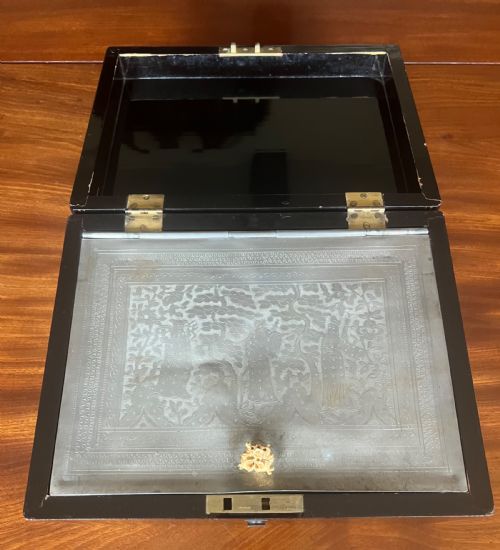


Black Chinoiserie Box
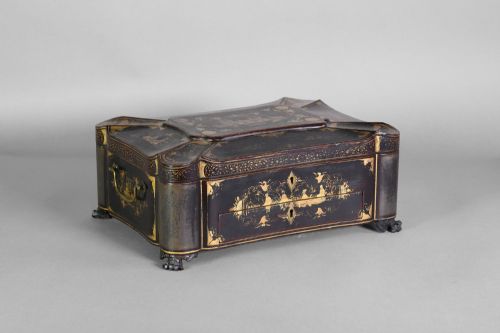
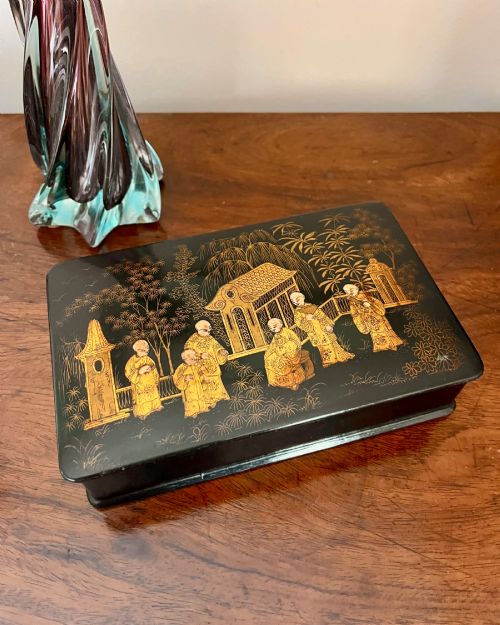
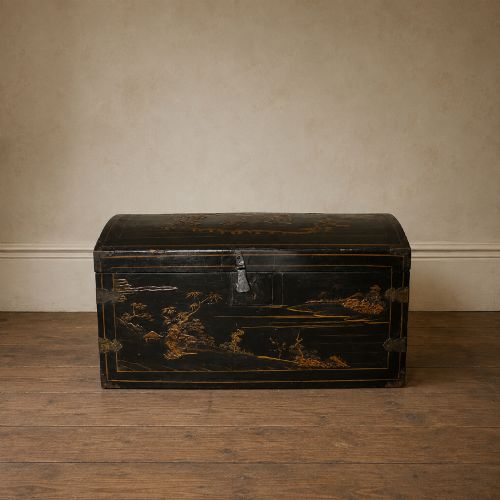
A black chinoiserie box brings rich lacquer, gilt motifs and traditional oriental scenes into a room.
Black Chinoiserie Box
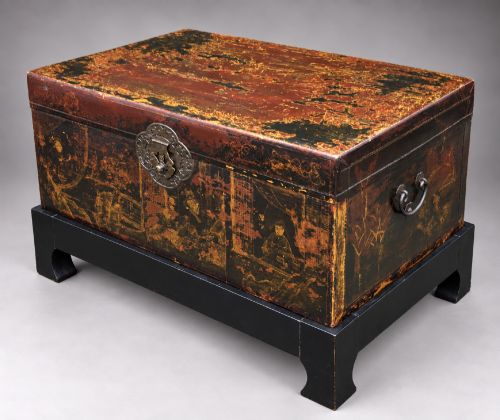
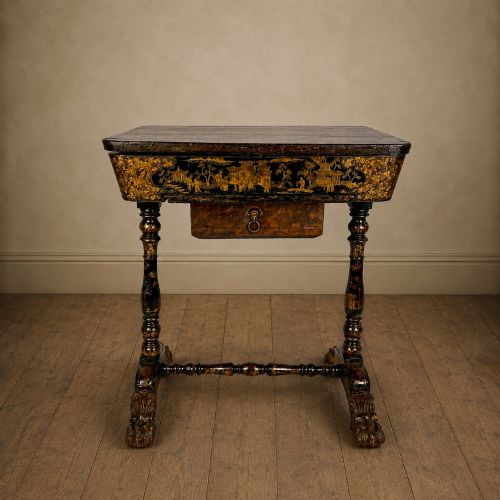
A black chinoiserie box encompasses a variety of decorated storage pieces, from small tea caddies and jewellery boxes to larger blanket chests and work tables. When exploring this selection, buyers encounter items fashioned primarily during the eighteenth and nineteenth centuries, alongside early twentieth-century examples.
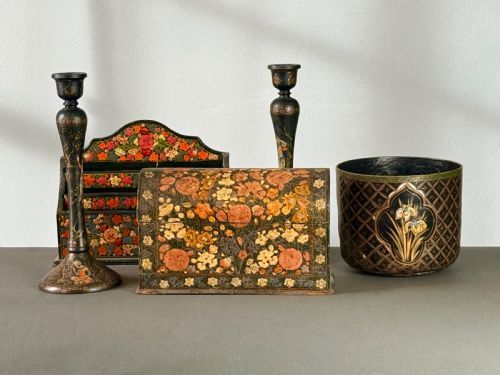
The objects originate from multiple traditions, including Chinese export workshops, English penwork interpretations, and Japanese or Indian production. Tea caddies, chests, and table cabinets dominate the selection, bringing intricate narrative scenes and floral motifs into domestic spaces.
Materials and construction
Pieces are constructed from wood or camphor wood and built into forms such as coffers, desks, and tea caddies. Artisans applied layers of lacquer to the wooden foundation to create a durable, glossy black surface.
Decoration relied heavily on gold leaf, gilt, and pigment to depict traditional Chinese figures, landscapes, and floral patterns. Some English and Regency pieces utilised penwork techniques rather than traditional layered lacquer to achieve detailed monochrome or gilded surface imagery.
Listings feature items spanning the eighteenth, nineteenth, and early twentieth centuries, incorporating wood, lacquer, brass, and gold leaf.
The spectrum of quality
Quality varies according to the precision of the gilt work and the depth of the lacquer surface. Finer examples display meticulous hand-painted details in gold leaf that retain their clarity and adherence across centuries of handling.
Structural integrity of the underlying wood, particularly in larger trunks, chests, and work tables, sets finer cabinetmaking apart from simpler storage items. The finesse of internal fittings, such as small drawers in tea caddies and cabinets, further distinguishes superior pieces.
The Black Chinoiserie Box Glossary
- Chinoiserie
- European theatrical interpretation of Chinese and East Asian artistic traditions, popular in decorative arts.
- Tea caddy
- A small box or container originally designed to store dry tea leaves securely.
- Penwork
- A decorative technique utilising inked lines and motifs on wood, often finished with varnish.
- Japanning
- European imitation of Asian lacquerwork using varnishes and metallic powders.
- Lacquered wood
- Timber coated with resin or sap that dries to form a hard, durable, glossy finish.
Black Chinoiserie Box: Frequently Asked Questions
What were tea caddies used for?
Tea caddies served to store expensive tea leaves securely in domestic settings. They often featured internal compartments and lids to preserve the aroma.
Keys were frequently provided to lock the contents away from household servants.
What is a work table?
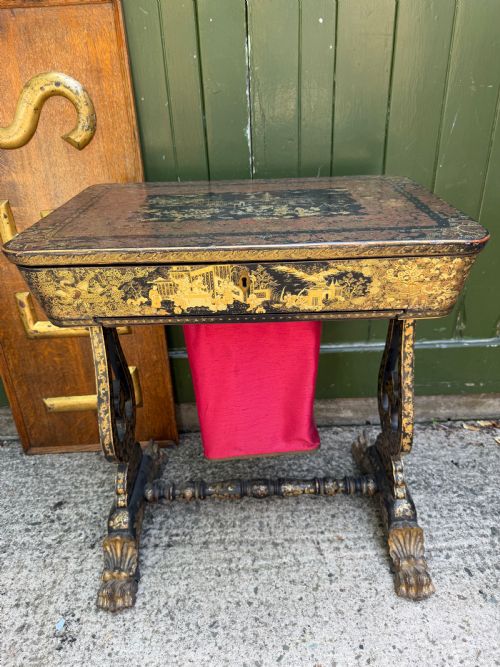
A work table is a piece of furniture equipped with drawers and compartments for sewing and needlework supplies. These tables often double as elegant decorative items in a drawing room.
Many examples feature hanging fabric bags beneath the surface to hold textiles.
How are penwork boxes different?
Penwork boxes utilise fine ink drawings directly onto a prepared wooden surface rather than traditional layered lacquer. This technique became particularly popular in England during the Regency period.
The resulting designs offer intricate monochrome detail enhanced with subtle tinting or gilding.