

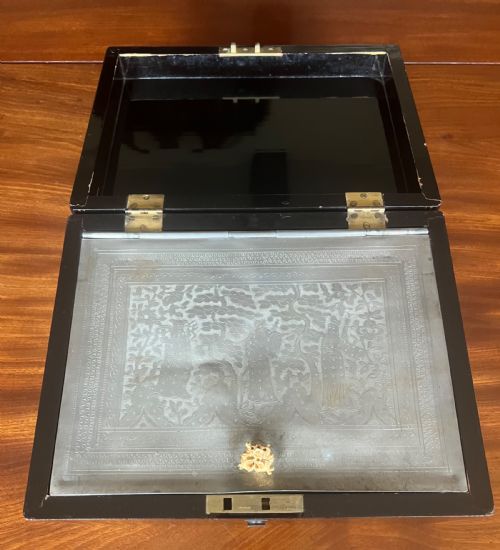


Black Lacquer Tea Box
A black lacquer tea box brings tactile depth and portable heritage into a room, offering compartments once designed to preserve fine dry leaves.
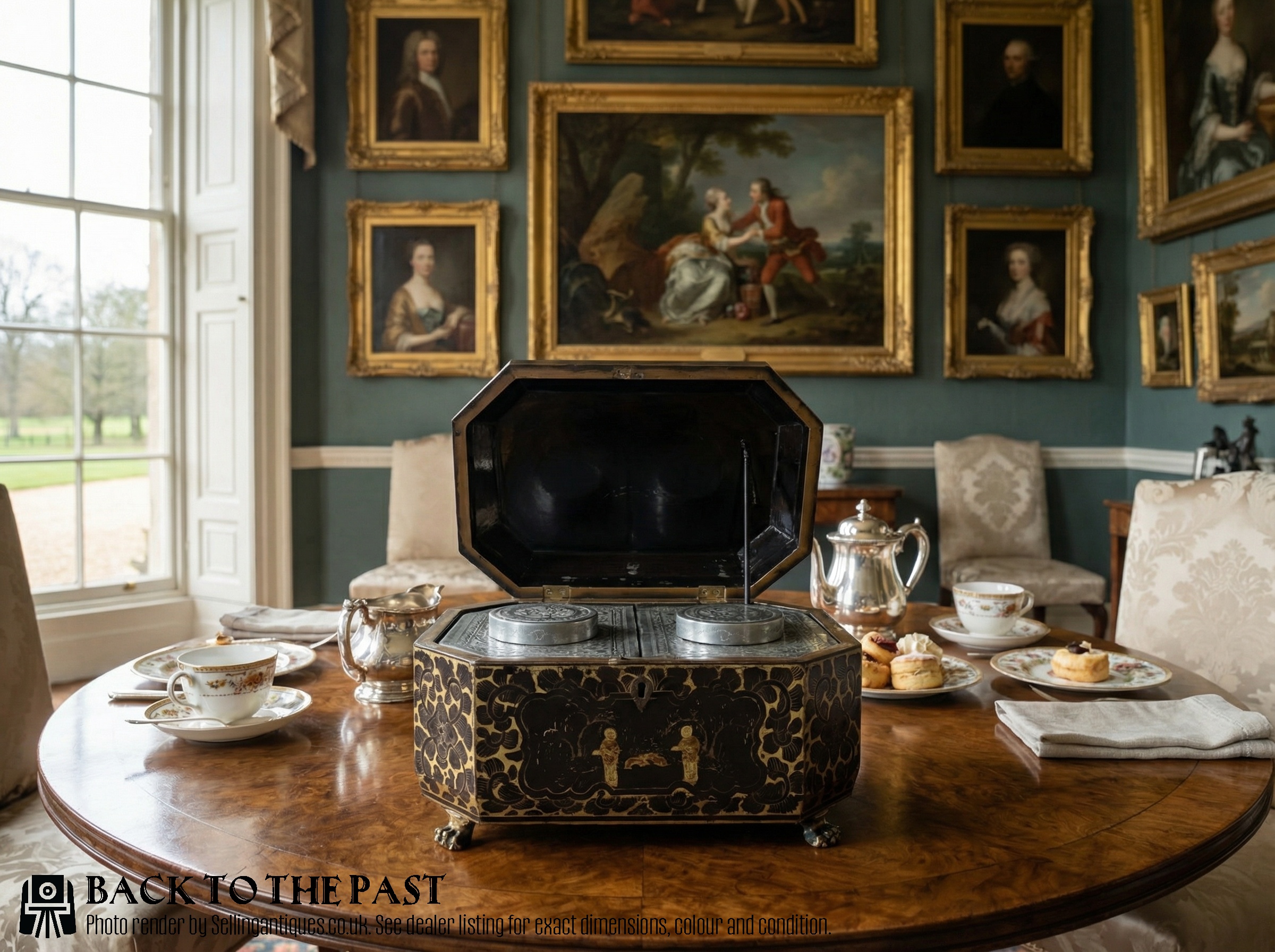
Black Lacquer Tea Box
A black lacquer tea box is a lidded container fashioned for domestic use, predominantly appearing from the Regency and Victorian periods. These pieces serve as functional caddies or decorative boxes designed to hold valuable tea leaves securely.
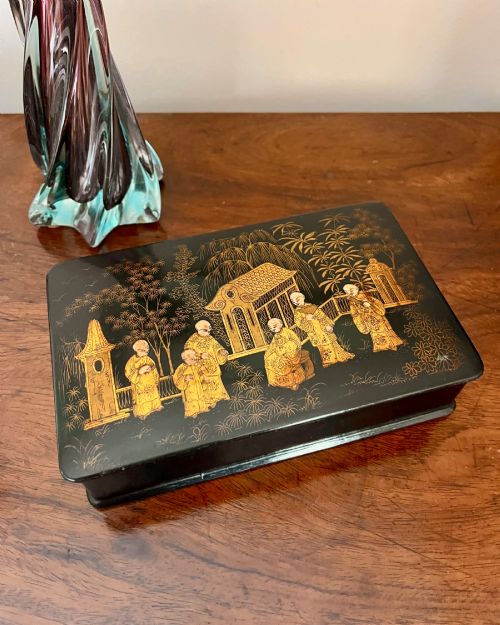
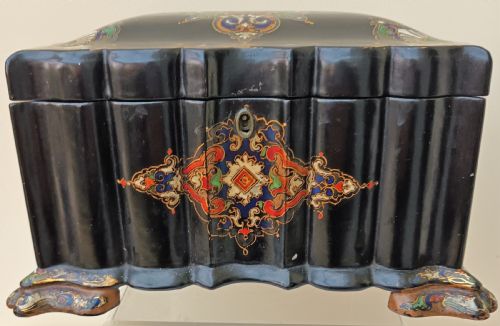
The selections available here range from English penwork examples to Victorian papier-mâché pieces and Chinese export works. Each object reflects historical trade routes and the persistent British taste for Asian-inspired design.
How they were made
Makers built these vessels using wood or pressed papier-mâché as a foundation, applying successive layers of dark lacquer to achieve a smooth finish. Artisans then decorated the surfaces using gold leaf, paint, and intricate penwork techniques.
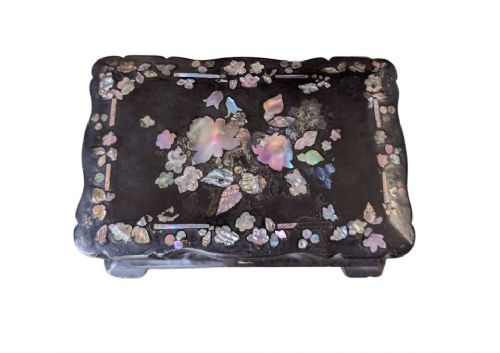
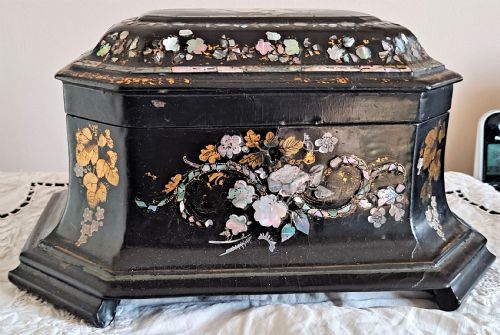
Interiors often incorporate compartments lined with bone or fitted with elements in brass and mother of pearl. These contrasting materials protect the contents while adding hidden decorative detail beneath the primary lid.
What varies in quality
The refinement of the surface decoration largely determines the standing of a piece, distinguishing standard utility items from accomplished artistic works. Sharpness in the penwork and precision in the gold leaf application indicate superior execution by the maker.
The integrity of the internal compartments and the preservation of original materials such as mother of pearl and bone significantly affect the character of the box. Pieces retaining their fitted interior architecture demonstrate higher original craftsmanship.
The Black Lacquer Tea Box Glossary
- Penwork
- A meticulous decorative technique using fine ink lines to simulate intricate carving or oriental motifs on a prepared surface. This method creates detailed pictorial scenes typical of Regency caddies.
- Papier-mâché
- A composite material made from paper pulp or layers of paper mixed with glue, pressed into moulds and hardened. It provided a smooth, stable base for dark lacquer and inlay.
- Chinoiserie
- European artistic style reflecting Chinese motifs and decorative schemes, popular during the Regency and Victorian eras. It frequently appears on lacquer boxes in depictions of figures, pavilions, and landscapes.
- Mother of pearl
- The iridescent inner layer of certain mollusc shells, shaped into thin plaques and embedded into lacquer surfaces. It catches the light to provide tonal contrast against dark grounds.
Black Lacquer Tea Box: Frequently Asked Questions
What is a black lacquer tea box used for?
These boxes were originally manufactured to store loose tea leaves safely away from light and moisture in formal drawing rooms.
Today, they function well as decorative objects on side tables or as secure containers for small keepsakes and jewellery.
How do I date a Regency tea box?
Regency pieces often display characteristic penwork decoration, specific classical proportions, and distinct internal compartment layouts associated with the early nineteenth century.
Examining the materials used for internal fittings and the style of the exterior motifs helps narrow down the period of manufacture.
What is the difference between papier-mâché and wood caddies?
Papier-mâché caddies utilise moulded paper pulp combined with binders, offering a smooth and resilient substrate for painted finishes and mother of pearl inlay.
Wooden caddies rely on timber construction, sometimes combined with penwork or lacquer, providing a different weight and structural feel.
How should I clean a lacquer box?
Dust the exterior gently with a soft, dry cloth to prevent scratching the delicate lacquer surface or disturbing any gold leaf.
Avoid using liquid cleaners, polishes, or damp cloths, as moisture can damage historical finishes and exposed internal wood.