


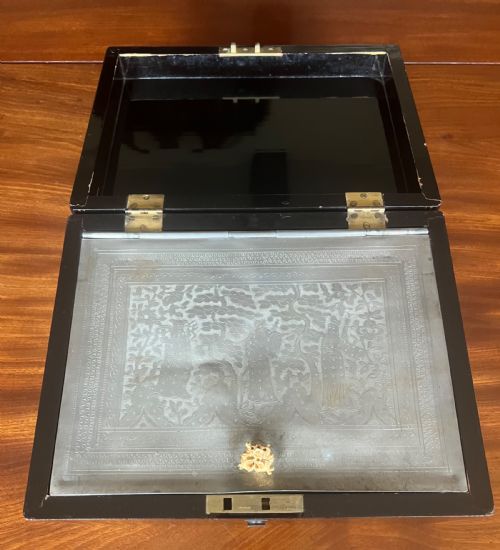


Lacquered Wooden Tea Caddy
These lacquered wooden tea caddy examples offer genuine period utility, combining fine craftsmanship with historic charm for the discerning collector.
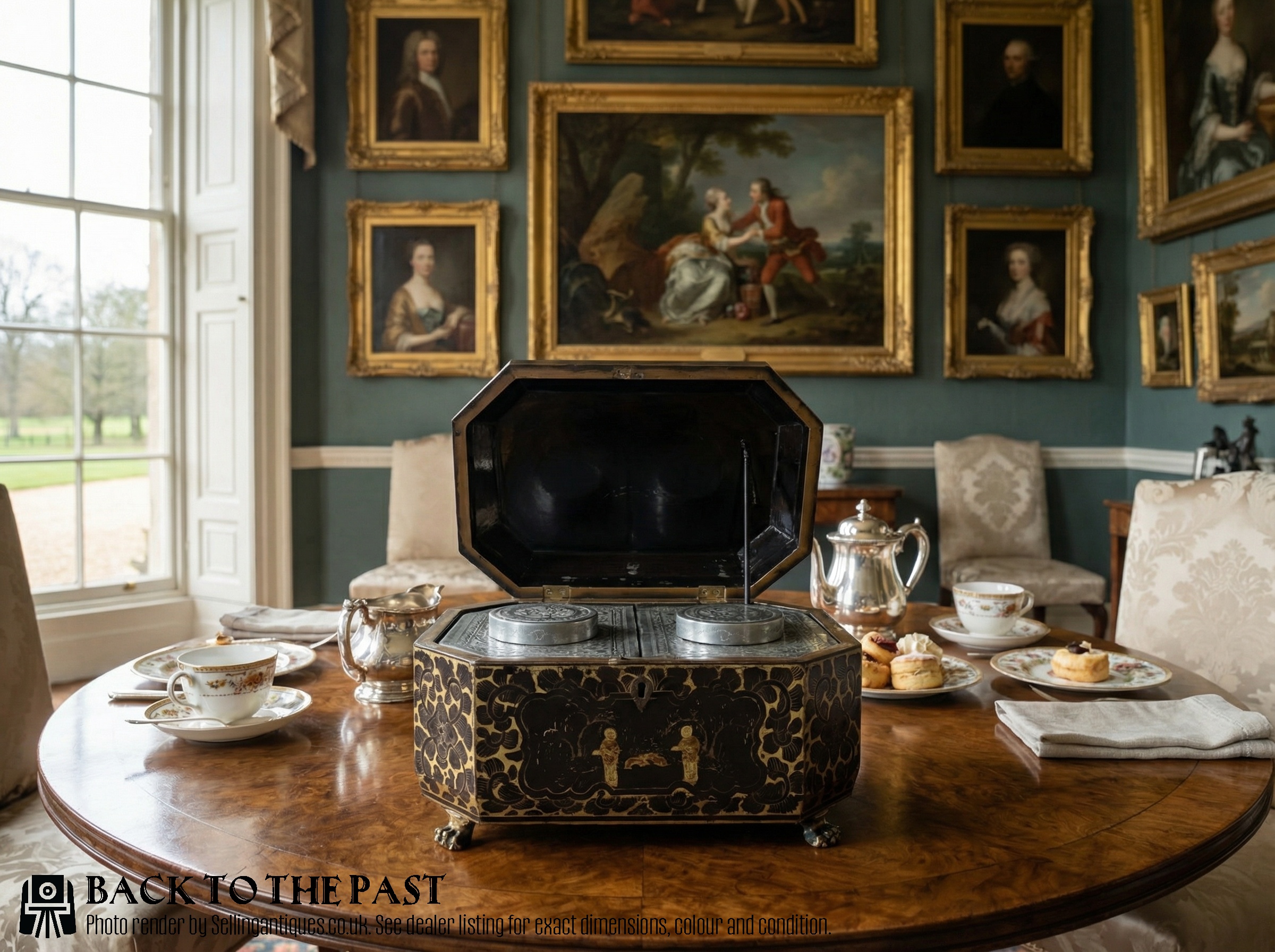
Lacquered Wooden Tea Caddy
A lacquered wooden tea caddy serves as a historic container designed to keep expensive loose leaf tea fresh in domestic interiors. Buyers searching for a lacquered wooden tea caddy will encounter pieces originating from Georgian, Regency, and nineteenth century periods.
The selections on this page predominantly feature Chinese export items alongside English interpretations in chinoiserie and penwork styles. These decorative boxes take the form of single or double compartment tea caddies constructed from wood and finished with paint, gold leaf, and lacquer.
How they were made
Craftsmen built these vessels from wood, applying layers of lacquer, paint, and gold leaf to create decorated surfaces. Many examples utilise intricate penwork techniques alongside traditional joinery to form lidded compartments.
Makers integrated small functional elements such as metal and brass hinges or bone details to complete the interior arrangement of the boxes.
Lacquered Wooden Tea Caddy Retail Price Guide 2026
Typical asking prices for lacquered wooden tea caddy among the pieces listed under this phrase on Sellingantiques today, from the lower quarter to the upper quarter. They describe what is for sale here now, not the wider market.
Listings feature items from the Regency, Georgian, and nineteenth century periods, utilising wood, lacquer, gold leaf, brass, metal, bone, pewter, and paint.
What varies in quality
Quality in a lacquered wooden tea caddy rests upon the execution of the surface decoration, whether through painted chinoiserie scenes or detailed penwork. Finer examples display crisp detail in the gold leaf and meticulous application of lacquer across the wooden substrate.
The integrity of the structural joinery and the survival of original internal components, such as compartment lids or fitted interiors, further distinguish superior specimens from simpler boxes.
The Lacquered Wooden Tea Caddy Glossary
- Chinoiserie
- European decorative style reflecting Chinese artistic motifs and landscapes. This aesthetic appears frequently on painted and lacquered boxes from the Georgian and Regency periods.
- Penwork
- Decorative technique using ink applied with a pen to create fine monochrome designs resembling engravings on wood. This meticulous surface work defines several Regency items.
- Tea caddy
- Small chest or box designed to store tea leaves securely. The term derives from cattee, a unit of weight used in the tea trade.
- Regency
- British design period spanning the early nineteenth century, characterised by classical elegance and exotic influences. Pieces from this era often incorporate elaborate surface ornamentation.
Lacquered Wooden Tea Caddy: Frequently Asked Questions
What is a lacquered wooden tea caddy?
A lacquered wooden tea caddy is a covered box historically used for storing loose leaf tea safely away from moisture and light.
These containers range from Chinese export pieces to English penwork and chinoiserie boxes made during the Georgian and Regency eras.
How were tea caddies used in the past?
Tea was an expensive commodity in the eighteenth and nineteenth centuries, requiring secure storage under lock and key by the head of the household.
Servants typically brought the tea caddy to the parlour or dining room for the host to prepare the brew before guests.
How do I identify a Regency tea caddy?
Regency pieces often display specific decorative characteristics such as penwork, brass fittings, and classical proportions dating from roughly eighteen hundred to eighteen thirty.
Many examples from this timeframe also exhibit chinoiserie motifs inspired by East Asian art popularised during the period.
What materials are used in these boxes?
The primary structure consists of wood finished with surface treatments like paint, lacquer, and gold leaf.
Interior fittings and external accents frequently incorporate materials such as brass, metal, and bone.