






Black Lacquered Wooden Box
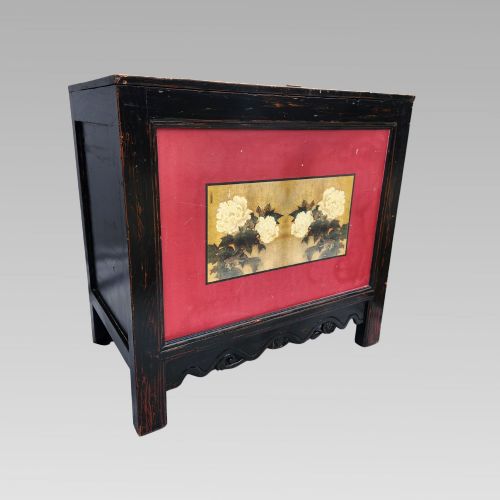
These black lacquered wooden box pieces bring deep dark finishes and intricate detail into a room, offering both history and storage.
Black Lacquered Wooden Box
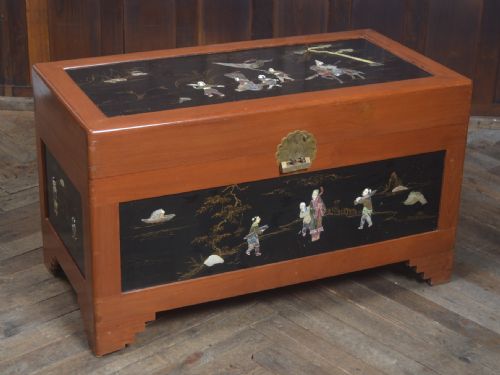
A black lacquered wooden box takes many forms across different origins, from Chinese export chests and Japanese table cabinets to English Regency penwork tea caddies. When searching for a black lacquered wooden box, a buyer encounters everything from small jewellery boxes and sewing baskets to large blanket boxes and storage chests.
The pieces on this page span the eighteenth, nineteenth, and early twentieth centuries, reflecting diverse styles such as Chinoiserie, Regency, and traditional Chinese craftsmanship. Tea caddies and decorative boxes emerge frequently among the listings, alongside substantial trunks and coffers.
Origin plays a defining role in character, with English penwork items appearing alongside pieces from China, Japan, and India. Each object serves a practical purpose while displaying distinct regional artistic traditions through surface decoration.
How they were made
Makers utilised timber foundations, applying layers of dark lacquer to create a smooth, deep surface. Wood provides the structural core for these boxes, whether using camphor wood for large storage chests or lighter timber for intricate tea caddies.
Surface ornamentation often involves gold leaf, ink, and penwork detailing to build up Chinoiserie scenes or geometric patterns. Metal elements such as brass appear on hinges, handles, and escutcheons, while bone and mother of pearl sometimes provide contrasting inlay.
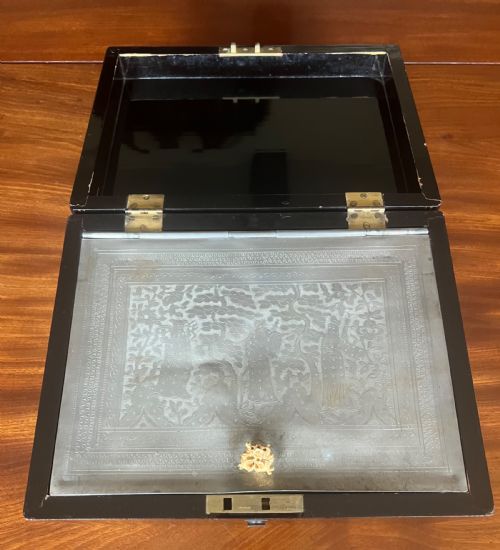
A nineteenth-century chessboard cleverly hides a backgammon interior beneath its playing surface.
What varies in quality
The refinement of the surface finish dictates much of the distinction between examples. Superior pieces display deep, even lacquer work that has retained its lustre and integrity over centuries.
Artistic execution in the painted or penwork decoration separates standard items from exceptional ones. Finely rendered Chinoiserie motifs, crisp penwork lines, and well-preserved gold leaf detailing indicate superior craftsmanship and higher status.
The Black Lacquered Wooden Box Glossary
- Chinoiserie
- European interpretations of Chinese and East Asian artistic styles, popular in decoration and lacquer work. It typically depicts imagined landscapes, figures, and pavilions.
- Tea Caddy
- A container designed for storing tea leaves, often featuring internal compartments and fitted with a lock. Regency examples frequently showcase elaborate penwork or lacquer.
- Coffer
- A chest or trunk used for storage, usually constructed with a hinged lid. Eighteenth and nineteenth-century examples often employ traditional joinery and lacquered finishes.
- Ebonised
- Wood treated to mimic the dark, dense appearance of ebony. This finish appears on early twentieth-century boxes and trays.
Black Lacquered Wooden Box: Frequently Asked Questions
How were tea caddies used?
Tea caddies served to store valuable tea leaves safely under lock and key in the Georgian and Regency home. Tea was an expensive commodity, so the caddy remained in the parlour under the host's direct control.
Inside, compartments separated different varieties of tea, often accompanied by a small mixing bowl. The fitted construction protected the dry leaves from moisture and light.
What is Regency penwork?
Regency penwork is a surface decoration technique where artisans applied black ink by hand onto a prepared wooden ground. This created detailed monochrome designs that imitated costly japanning or engraving.
Craftsmen often finished these boxes with protective varnishes to guard the delicate ink lines against daily wear. The resulting pieces combined geometric borders with pictorial scenes.
How do I date a black lacquer box?
Dating relies on examining the construction methods, hardware, and decorative style of the piece. Regency and Georgian boxes show specific cabinet-making traits and penwork motifs distinct from later Edwardian or George V items.
Materials also offer clues, as nineteenth-century Chinese export pieces frequently utilise camphor wood alongside traditional lacquer. Comparing the hinges and interior linings helps narrow the period of manufacture.
Where should I place a lacquer box?
These boxes suit placement on sideboards, mantelpieces, or desks where their dark finishes and gold details catch the light. Smaller boxes work well as decorative storage for jewellery or small keepsakes.
Larger coffers and blanket boxes function effectively at the foot of a bed or as standalone statement storage in a hallway. Keeping them away from direct sunlight protects the lacquer and gold leaf from fading.