



Chinese Export Lacquerware
Chinese export lacquerware pieces are durable wooden items finished with layered resin and gold leaf, offering collectors striking decorative utility.
Chinese Export Lacquerware
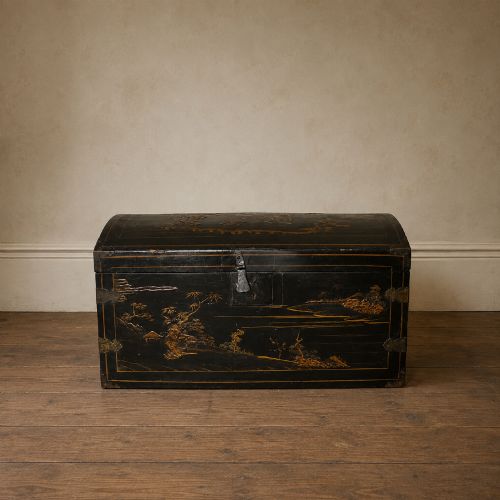
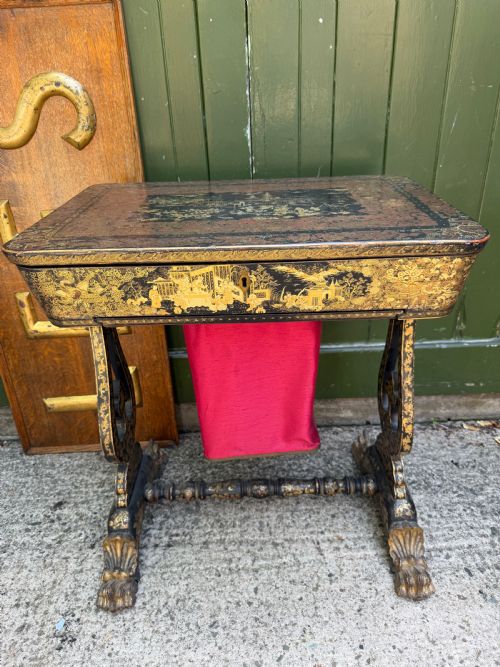
When you search for chinese export lacquerware, you encounter a distinct group of decorative and functional objects produced for Western markets during the nineteenth and early twentieth centuries. These pieces encompass practical household items such as trunks, tea caddies, sewing tables, and cabinets.
The objects on this page predominantly date from the nineteenth century and the Victorian era, alongside examples from the early twentieth century. Forms range from monumental temple vases and wall panels to intricate table cabinets and travelling jewellery boxes.
Makers styled these works using traditional Chinese Export and Chinoiserie aesthetics, sometimes reflecting the Qing Dynasty era. Buyers frequently find items featuring black lacquer finishes enriched with detailed pictorial scenes and gilded decoration.
How chinese export lacquerware was made
Makers constructed the foundation of these items using wood, occasionally incorporating metal, brass, and iron hardware for structural support and hinges. Artisans then applied successive coats of lacquer to the wooden base to create a durable, glossy surface.
Decorators embellished the finished lacquer surfaces using gold leaf and gilt painting techniques. This process produced the characteristic contrasting metallic designs seen across trunks, cabinets, and fans.
Chinese Export Lacquerware Retail Price Guide 2026
Typical asking prices for chinese export lacquerware among the pieces listed under this phrase on Sellingantiques today, from the lower quarter to the upper quarter. They describe what is for sale here now, not the wider market.
Listings feature items predominantly from the 19th century and Victorian period, utilising wood, lacquer, and gold leaf.
What varies in quality in chinese export lacquerware
The sophistication of the gilded decoration separates standard items from superior examples. Finer pieces display intricate, multi-layered figurative scenes with precise detailing, whereas simpler items rely on repetitive geometric borders.
The structural integrity of the underlying wooden carcass and the preservation of the lacquer coating dictate the overall standard of a piece. Well-maintained surfaces retain their deep black tone and intact metallic highlights without extensive losses to the resin.
The Chinese Export Lacquerware Glossary
- Lacquer
- A durable natural resin applied in multiple layers to wooden objects to create a smooth, protective finish. This technique underpins the entire category of these items.
- Chinoiserie
- European artistic styles that reflect Chinese decorative motifs and artistic traditions. Makers utilised this aesthetic to appeal to Western tastes during the nineteenth century.
- Tea Caddy
- A small storage container originally designed to hold loose tea leaves. These boxes often feature internal compartments and secure lids.
- Gilt Decoration
- Application of gold leaf or powdered gold onto a surface for ornamentation. This method creates the bright metallic highlights visible against dark lacquer backgrounds.
Chinese Export Lacquerware: Frequently Asked Questions
What is chinese export lacquerware?
These items are wooden household goods and decorative objects coated in protective resin and decorated for international markets.
They include practical furnishings like sewing tables and chests alongside smaller items such as tea caddies and hand fans.
How were these objects used?
Owners utilised them for storage, organisation, and display within nineteenth-century domestic interiors. Trunks held garments, tea caddies preserved dry leaves, and cabinets secured valuables.
Larger items like floor vases and panels served purely decorative functions to display craftsmanship and wealth.
How do I date a piece?
Dating relies on stylistic indicators, construction methods, and materials associated with the nineteenth century and Victorian periods. Most listed examples originate from this broader era up to the early twentieth century.
Examining the hardware, such as brass or iron fittings, also helps establish the approximate age of the object.
How do I care for lacquerware?
Maintenance requires keeping pieces away from direct sunlight and extreme humidity fluctuations to protect the wooden substrate and resin coating. Gentle dusting with a dry cloth prevents surface accumulation.
Harsh chemical cleaners should be avoided to preserve the integrity of the original gold leaf and gilt decoration.