
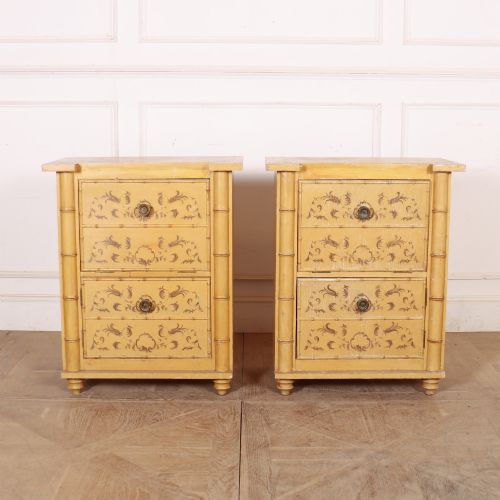


Chinoiserie Table Cabinet
These chinoiserie table cabinets bring painted lacquer and gilt ornament to a room, offering compact storage with distinct oriental motifs.
Chinoiserie Table Cabinet
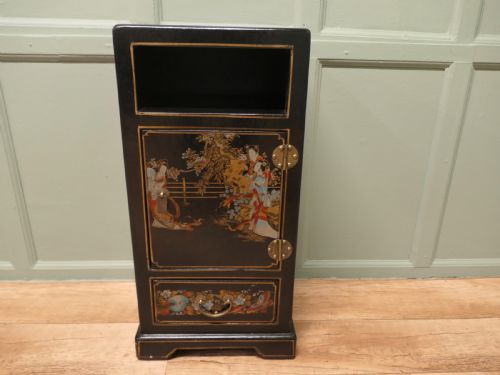
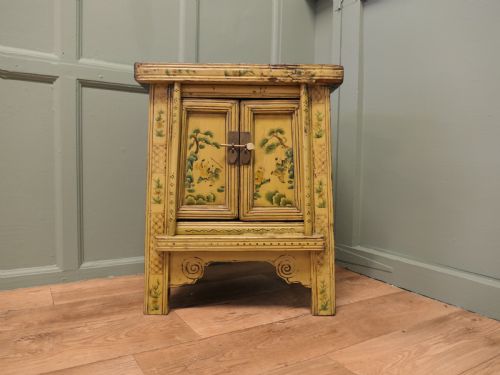
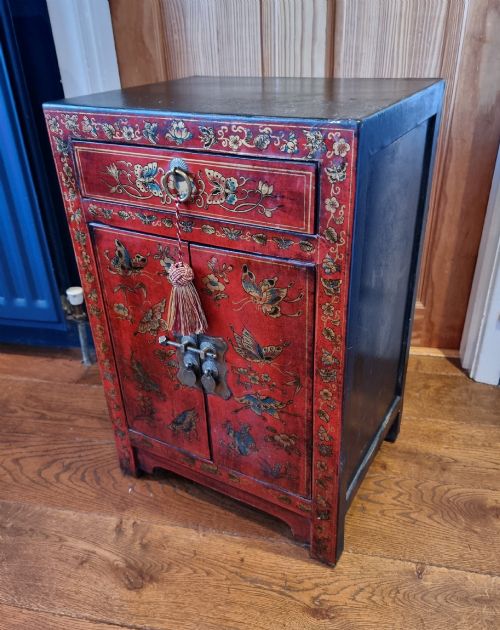
A chinoiserie table cabinet is a compact storage piece decorated with painted scenes, figures, or floral motifs on a lacquered or japanned surface. When you search for this phrase, you encounter forms ranging from nineteenth-century workboxes and Chinese export table cabinets to early twentieth-century side cupboards and painted stands.
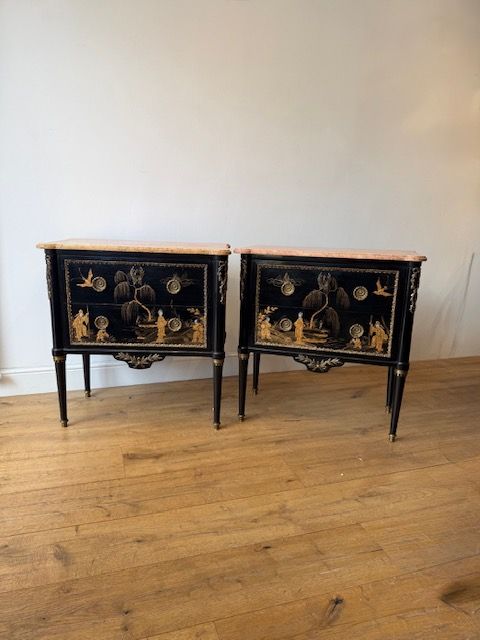
The pieces appearing on this page span the nineteenth century, the Regency period, and the early twentieth century, including the decades up to nineteen thirty. Alongside table cabinets, the selection encompasses related forms such as side cabinets, bedside tables, commodes, sewing tables, and small side tables.
Origins and influences stretch across several distinct decorative traditions, with items recorded under chinoiserie, Louis XVI chinoiserie, Aesthetic Movement, Japonisme, Chinese Export, and general Chinese or Oriental styles. You will find red, cream, yellow, and black lacquer surfaces alongside tiger bamboo and faux bamboo structures.
Materials and Technique
Construction relies upon wood and hardwood frames, occasionally utilising tiger bamboo or turned faux bamboo for structural uprights and supports. These foundational carcasses receive layers of lacquer or japanned paintwork to build the smooth coloured ground.
Decoration is applied through paint, gilt highlights, and penwork, rendering traditional figures, landscapes, and floral patterns across the exterior surfaces. Brass hardware, including hinges, escutcheons, and carrying handles, completes the construction of the smaller tabletop and bedside pieces.
A tiger bamboo sewing table stands ready to store forgotten thimbles.
Judging Quality
Quality reveals itself in the crispness of the gilt detailing and the depth of the painted lacquer scenes, where finer examples display intricate brushwork and carefully layered backgrounds. The stability of the underlying wood carcass and the neatness of the joinery distinguish superior pieces from simpler utilitarian items.
The retention of original brass mounts, hinges, and internal fittings contributes significantly to the integrity of a cabinet. The smoothness of the lacquer finish and the preservation of the delicate painted motifs determine the overall visual presence of the piece.
Gabriel Viardot
The Chinoiserie Table Cabinet Glossary
- Chinoiserie
- European decorative style reflecting Chinese artistic influences. This aesthetic employs painted figures, pagodas, and landscapes on furniture and decorative objects.
- Japanned
- European imitation of East Asian lacquerwork. The technique involves applying layers of varnish and paint, often heat-cured, to produce a glossy dark or coloured surface.
- Penwork
- Decorative technique using fine ink lines on a prepared surface. This method creates detailed monochrome or tinted linear designs, frequently seen on Regency pieces.
- Japonisme
- Late nineteenth-century interest in Japanese art and design. The movement influenced European makers to incorporate asymmetric arrangements and bamboo elements into furniture.
- Chinese Export
- Goods manufactured in China specifically for Western markets. These items combined traditional domestic craftsmanship with European furniture forms and functional requirements.
Chinoiserie Table Cabinet: Frequently Asked Questions
What is a chinoiserie table cabinet?
A chinoiserie table cabinet is a small, portable or tabletop storage unit decorated with painted oriental motifs on a lacquered or japanned surface. These pieces were designed to sit upon desks, tables, or specialised stands.
They provide enclosed space for letters, collections, or valuables while serving as decorative objects in a room through their gilt and painted ornament.
How were these cabinets used?
Historically, these cabinets served as refined receptacles for small precious items, writing materials, sewing accessories, or specialised collections. Their portable nature allowed them to be moved between rooms as needed.
Today, they function primarily as decorative accent pieces that introduce colour, texture, and historical character to tabletops, sideboards, or bedside surfaces.
How do I identify a nineteenth-century piece?
Nineteenth-century pieces often display traditional construction methods, hand-mixed lacquers, and hand-painted gilt decoration that shows subtle irregularities. Materials such as solid hardwoods, early brass hardware, and hand-cut fixings support this dating.
Comparing the style of the painted figures and the formulation of the lacquer ground against established period examples helps confirm the age of the cabinet.
What is the difference between lacquer and japanning?
True Asian lacquer utilises the processed sap of the toxicodendron vernicifluum tree, applied in multiple thin layers to create a durable, polished finish. Japanning is the European technique that simulates this finish using varnishes, paints, and heat-curing on a wooden base.
Both methods produce smooth, glossy surfaces suitable for the application of gilt chinoiserie decoration, though their underlying chemical composition and geographical origins differ.
How do I care for a lacquered cabinet?
Lacquered and japanned surfaces require gentle maintenance to preserve the delicate painted and gilt details. Dusting should be performed regularly with a soft, dry cloth without the use of harsh chemical polishes.
Keeping the cabinet away from direct sunlight and maintaining stable room humidity prevents the wood underneath from expanding and the lacquer from cracking.