


Oriental Tabletop Cabinet
An oriental tabletop cabinet brings intricate compartmentalised storage to a surface, offering a compact display space for small treasures.
Oriental Tabletop Cabinet
An oriental tabletop cabinet is a small scale storage piece designed for a desk, table or chest, incorporating multiple drawers, doors and shelves within a portable frame. These miniature furnishings serve as decorative specimen cases or tidy boxes for precious belongings.
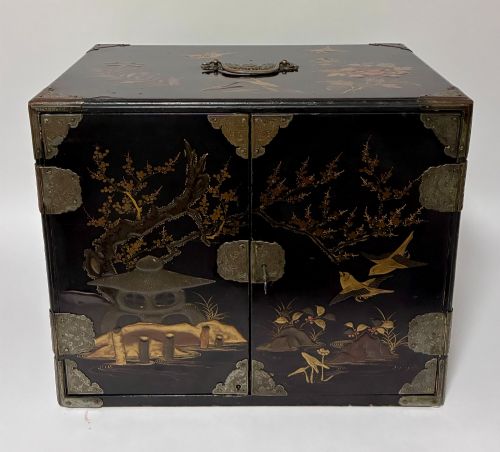
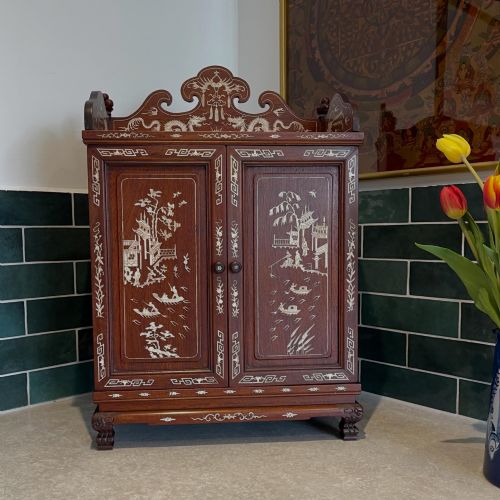
The selections available range from Japanese black lacquered examples to Chinese rosewood and elm tabletop chests, spanning the nineteenth century through the early twentieth century. Buyers encounter forms such as the kodansu, miniature cupboards and display stands influenced by periods including the Meiji and Qing dynasties.
How they were made
Maker workshops utilised traditional cabinet woods including rosewood, elm, bamboo and hardwood, constructing sturdy frames scaled down for tabletop use. These wooden structures often received meticulous applications of lacquer in black tones, finished with gold leaf or gilded decoration.
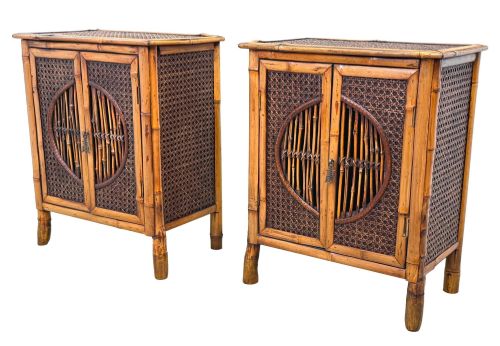
Metal ornamentation played a central role in the construction, incorporating brass hinges, lock plates and bronze animal decoration. Artisans combined these metallic highlights with cane elements and intricate joinery to complete the compact units.
Some miniature cupboards come equipped with bronze animal decorations guarding tiny internal compartments.
What varies in quality
Quality reveals itself in the precision of the decorative surface work, where hand applied gold leaf and fine lacquer retain their depth and clarity across the panels. The integration of metal mounts, such as bronze animal figures and brass hardware, separates standard production from more ambitious artistic execution.
The choice of material and structural complexity also dictate distinction, with dense hardwoods like rosewood and hongmu carrying greater natural presence than lighter cane or bamboo constructions. The refinement of miniature drawers and internal compartments shows the level of care invested by the maker.
The Oriental Tabletop Cabinet Glossary
- Kodansu
- A traditional Japanese small cabinet or chest with multiple drawers and compartments, designed for tabletop use. These pieces often feature fine lacquerwork and delicate metal fittings.
- Lacquer
- A durable resin finish applied in multiple layers to wood surfaces, yielding a smooth, hard coating. It serves as a base for gilded and painted decoration.
- Hongmu
- A dense, dark traditional Chinese hardwood prized for furniture and cabinet making. It provides a heavy, durable structure with a rich natural grain.
- Specimen case
- A specialised box or cabinet intended for the orderly storage and display of small collected items. They feature fitted interiors suited to delicate objects.
Oriental Tabletop Cabinet: Frequently Asked Questions
What is an oriental tabletop cabinet used for?
These compact pieces serve to store and display small treasures, precious documents, or collected specimens on top of a desk or chest. Their internal drawers and compartments keep delicate items organised.
They also function purely as decorative objects, bringing intricate lacquerwork, metal ornamentation, and traditional wood grains into a room setting.
How do I date an antique tabletop cabinet?
Dating relies on examining the construction materials, joinery techniques, and stylistic markers such as period influences from the Meiji or Qing eras. Reference to nineteenth or early twentieth century manufacturing methods helps place the piece in time.
Surface decoration like gold leaf application and bronze hardware also provide clues regarding the specific decade or artistic movement of origin.
Where should I place a tabletop cabinet?
These cabinets suit placement on sturdy flat surfaces such as sideboards, desks, chests of drawers, or dedicated display tables where their details remain visible. Because of their modest scale, they fit easily into smaller interior spaces.
Direct sunlight and extreme humidity should be avoided to protect sensitive materials like wood, lacquer, and gold leaf finish.
What styles of tabletop cabinets exist?
The available styles encompass Chinese export designs, Japanese Meiji period black lacquer pieces, and aesthetic movement interpretations. Forms range from miniature cupboards and display stands to traditional kodansu chests.
Materials shift between bamboo and cane, elm, rosewood, and heavy hardwoods adorned with bronze animal decorations and brass fittings.