




Black Gold Table Cabinet
A black gold table cabinet brings surface art and storage together, anchored by lacquer, ebonised wood, and gold leaf.
Black Gold Table Cabinet
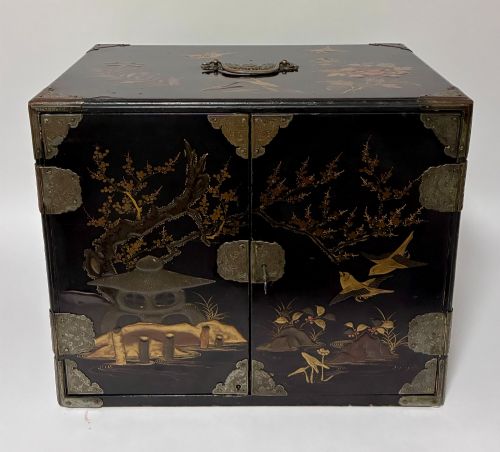
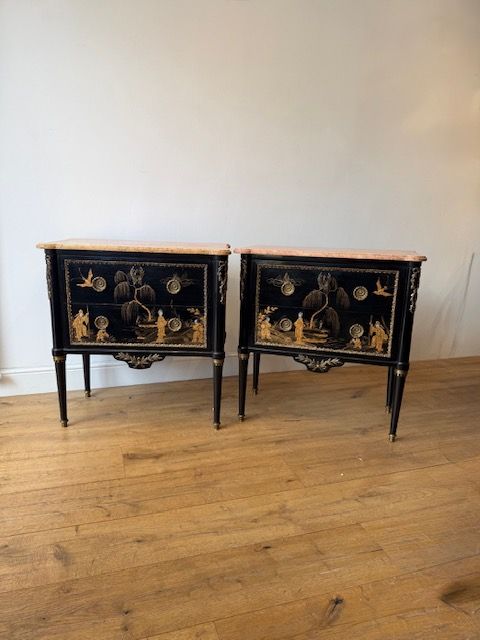
A black gold table cabinet combines functional tabletop storage with intricate decorative finishes, predominantly featuring Japanese and Chinese lacquered wood alongside English penwork examples. You encounter forms such as compact table cabinets, kodansu, and shodana, often enriched with gilded decoration and contrasting brass fittings.
The selection ranges from nineteenth-century Regency penwork to early twentieth-century Meiji and Taisho period creations. These works draw heavily on Chinoiserie and Japanese craftsmanship, uniting dark finishes with reflective metallic details on a small scale.
How they were made
Wood serves as the primary substrate, frequently enhanced by layers of black lacquer or ebonisation to create a deep, dark ground. Artisans then applied gold leaf and meticulous penwork decoration to build up pictorial and geometric motifs across the exterior surfaces.
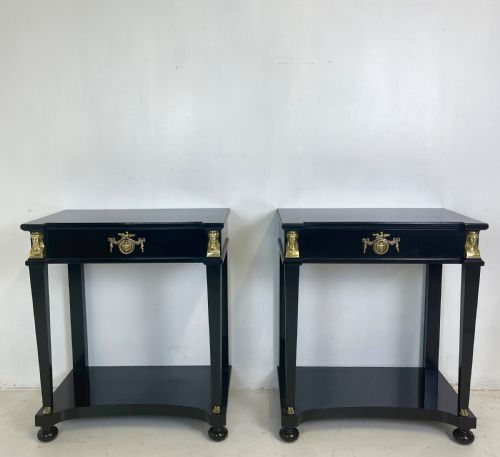
Many examples incorporate brass hardware, glass panels, and occasionally marble tops to complement the lacquered wooden frames. These materials demand precise joinery and surface preparation to ensure the delicate gilded layers adhere firmly to the dark ground.
Miniature drawers inside these cabinets often conceal secret compartments meant for hiding the most prized personal letters.
What varies in quality
The finesse of the gilded decoration and the depth of the lacquer finish dictate the standing of an individual piece. Superior examples display crisp, intricate penwork or layered lacquer work that remains sharp and expressive across every panel.
Integration of hardware and secondary materials also marks the division between standard and superior pieces. Quality shows in the alignment of brass mounts, the stability of the wooden structure, and the preservation of delicate surface details.
The Black Gold Table Cabinet Glossary
- Lacquer
- A durable finish applied in multiple layers to wooden surfaces, creating a smooth and glossy protective coating. It forms the dark background characteristic of many Asian and European decorative cabinets.
- Penwork
- A decorative technique utilising ink or paint applied with a fine pen to create intricate patterns and illustrations on wood. This method often mimics more expensive inlay or lacquer work through precise hand-drawn detail.
- Kodansu
- A traditional small Japanese box or cabinet featuring multiple internal drawers for storing valuables or documents. These portable pieces frequently showcase detailed lacquer and gold ornamentation.
- Chinoiserie
- The European interpretation and imitation of Chinese and East Asian artistic traditions, popular in furniture and decorative arts. It employs motifs such as pagodas, landscapes, and figures rendered in gold on dark grounds.
- Ebonised Wood
- Timber treated with chemical stains, paints, or dyes to imitate the dark, dense appearance of ebony. This finish provides a uniform black surface that highlights contrasting gilt decoration.
Black Gold Table Cabinet: Frequently Asked Questions
What is a table cabinet used for?
These compact cabinets served historically for storing small valuables, letters, or collection items on top of larger furniture. Their internal drawers and compartments kept delicate objects organised and secure.
Today, they function as striking decorative focal points on desks, side tables, or mantels while still offering practical storage for small keepsakes.
How do I care for a lacquered cabinet?
Maintain lacquer and gilded surfaces by keeping them away from direct sunlight and fluctuating humidity, which can damage delicate finishes. Dust gently with a dry, soft cloth without applying harsh chemical cleaners.
Protect the wood and gold leaf by using non-abrasive maintenance methods suitable for antique decorative surfaces.
What distinguishes Japanese lacquer from Chinoiserie pieces?
Japanese examples often originate from specific periods like the Meiji or Taisho eras, utilising traditional lacquer techniques and native aesthetic motifs. They typically focus on natural imagery, birds, and landscapes rendered in gold on black.
Chinoiserie pieces are European interpretations, often employing penwork or lacquered finishes to evoke Asian design through Western stylistic lenses.
Are these cabinets meant to sit on the floor?
Table cabinets are built to rest upon tables, desks, or specialised stands rather than directly on the floor. Their scale is designed for elevated placement so the detailed ornamentation can be easily viewed at eye level.
Some configurations, such as cabinets on stands, integrate a matching base to lift the primary storage compartment off the ground.