





Chinese Carved Box
When you handle a Chinese carved box, you hold centuries of refined joinery and deep-relief carving shaped from fragrant woods and mineral lacquers.
Chinese Carved Box
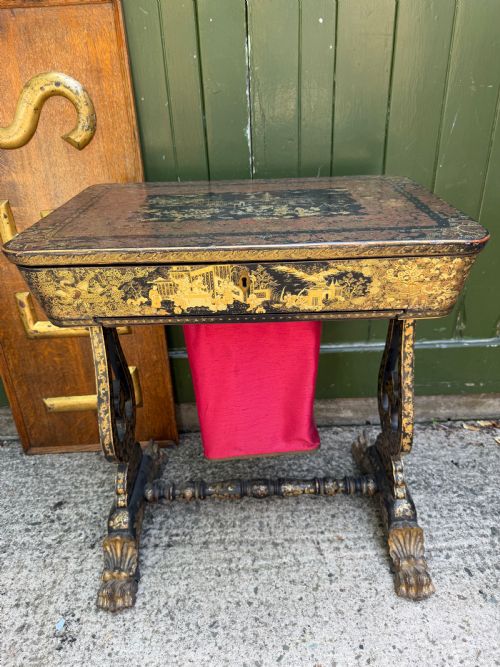
A Chinese carved box encompasses everything from small tabletop trinket caskets and tea caddies to substantial camphor wood storage trunks, blanket boxes, and wedding chests. These pieces emerge from periods spanning the Qing Dynasty through the nineteenth century and into the early twentieth century, reflecting varied regional workshops and export traditions.
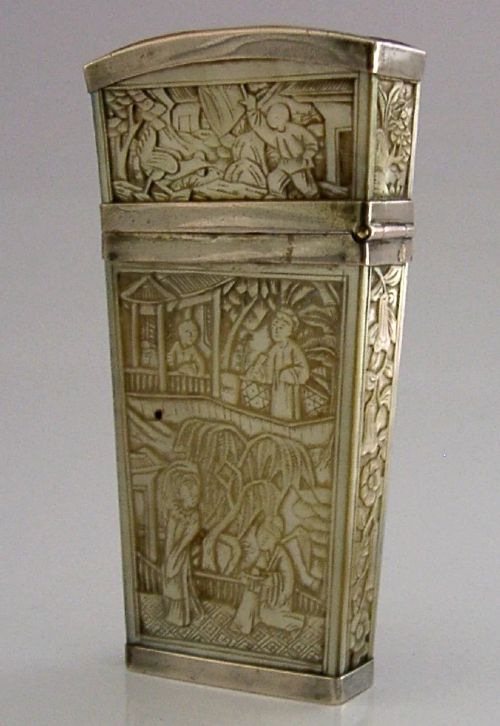
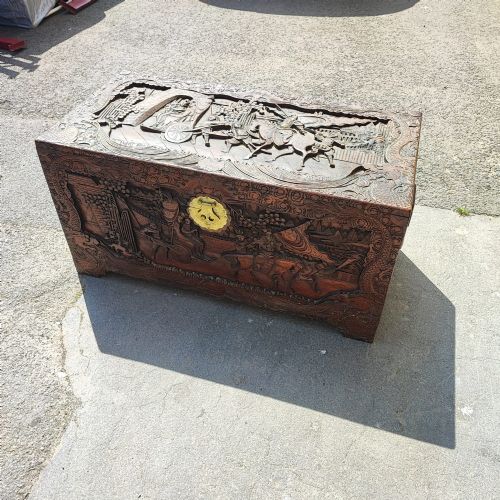
The version you are most likely to meet on this page is the large carved camphor wood chest or blanket box dating from the nineteenth century or the nineteen-twenties, frequently featuring deep floral or figural motifs. Smaller desk accessories, lacquer boxes, and silver cases appear alongside these larger storage pieces with notable regularity.
Makers and artisans utilised traditional forms such as rectangular coffers, lidded caddies, and tiered wedding boxes to serve practical domestic storage needs. Their survival in varied domestic interiors demonstrates both utilitarian resilience and enduring decorative appeal.
Materials and Construction Techniques
Construction relies heavily on aromatic camphor wood and dense hardwoods selected for stability and grain, alongside specialised materials like cinnabar lacquer, silver, brass, and mother of pearl inlay. Artisans shaped these mediums using traditional joinery methods that allowed timber to adapt to seasonal humidity changes without splitting.
Carving techniques varied widely according to the medium, employing deep relief work in camphor wood, meticulous layering and carving of red lacquer over a core, and delicate metalwork or piercing on silver export pieces. Surfaces were frequently polished, gilt, or left natural to highlight the tactile quality of the material.
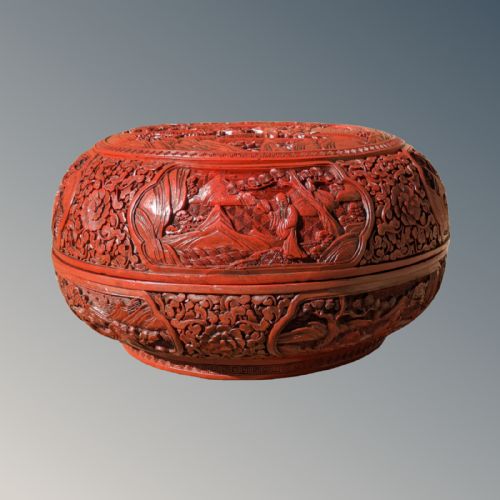
Listings feature nineteenth-century camphor wood chests alongside delicate cinnabar lacquer trinket boxes and export silver cases.
Assessing Quality and Execution
Quality rests in the depth, crispness, and control of the carving across the surface, distinguishing fluid, deeply undercut motifs from shallow or mechanical stamping. Superior examples display thoughtful composition where the natural grain or lacquer layers complement rather than compete with the sculptural detail.
The integrity of the construction - evident in the precise fit of lids, the quality of hinges or corner mounts, and the preservation of original interior linings or lacquer finishes - separates exceptional survivors from heavily restored or utilitarian pieces.
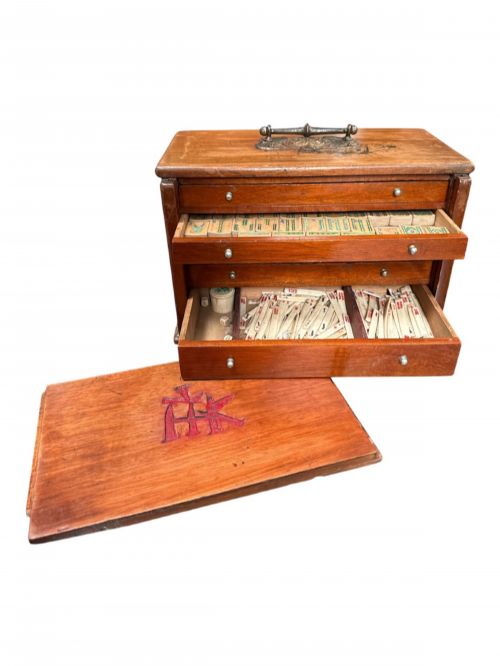
Wang Hing & Co
The Chinese Carved Box Glossary
- Cinnabar lacquer
- A technique involving numerous brushed layers of red lacquer applied to a core before being deeply carved with intricate scenes or patterns. This material requires immense patience, as each layer must cure fully before the next is added.
- Camphor wood
- An aromatic timber prized for furniture and storage trunks due to its natural insect-repellent properties and distinct scent. Its stable grain makes it exceptionally well suited for deep relief carving.
- Chinese Export
- Objects manufactured in China specifically for Western markets, often blending traditional domestic forms with motifs designed to appeal to European and American tastes. These pieces frequently incorporate silver, lacquer, or specialised hardware.
- Qing Dynasty
- The final imperial dynasty of China, spanning from sixteen forty-four to nineteen twelve, which produced a vast range of the carved boxes and chests found in collections today. Artistry during this period ranged from imperial workshop commissions to regional commercial production.
- Tea caddy
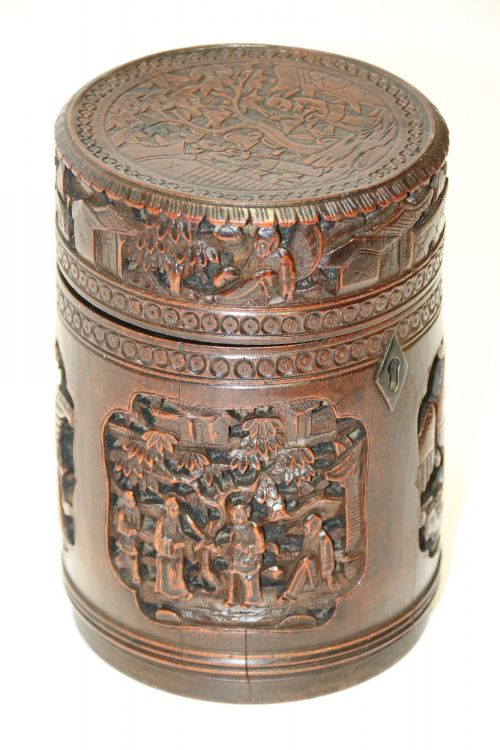
- A small container originally designed to store precious loose tea leaves securely, often fitted with internal lids or compartments. Examples in this tradition include carved bamboo and specialised wooden cases.
Chinese Carved Box: Frequently Asked Questions
What were Chinese camphor wood chests used for?
These large chests served primarily to protect garments, textiles, and valuable documents from dampness and insects during storage and transport. The natural oils within the camphor timber provided an effective deterrent against moths.
Over time, families also utilised them as luggage containers for long journeys or as permanent furniture pieces in domestic halls and bedrooms.
How do I care for a lacquered box?
Lacquered surfaces require stable environmental conditions away from direct sunlight, extreme heat, and sudden humidity fluctuations to prevent cracking. Dusting should be done gently with a soft, dry cloth without chemical polishes.
Proper placement ensures the protective sap layers remain stable and maintain their natural lustre over decades of display.
What is the difference between cinnabar and standard lacquer?
Cinnabar lacquer involves building up dozens of distinct coats of pigmented red lacquer to create a thick substrate that can be deeply carved into relief patterns. Standard lacquer may involve fewer layers, different colour pigments, or painted rather than sculpted decoration.
The resulting cinnabar surface has a dense, stone-like weight and a tactile depth unique to this specialised craft.
Are nineteenth-century chests safe for daily use?
Nineteenth-century storage chests remain structurally robust enough for everyday use as blanket boxes, coffee tables, or general storage furniture. Their solid wood construction and traditional joinery are built to withstand regular handling.
Owners should simply take care not to overload interior hinges and to protect exterior carved surfaces from heavy impact.