
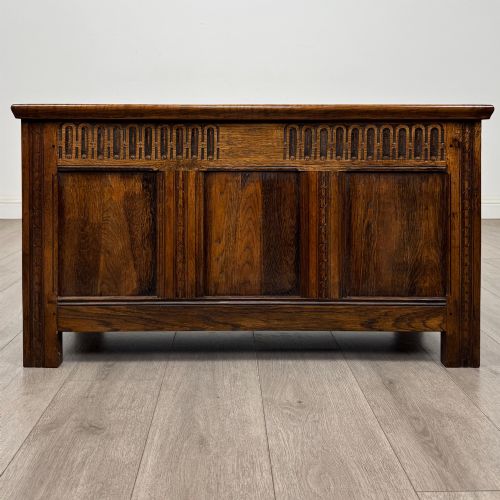

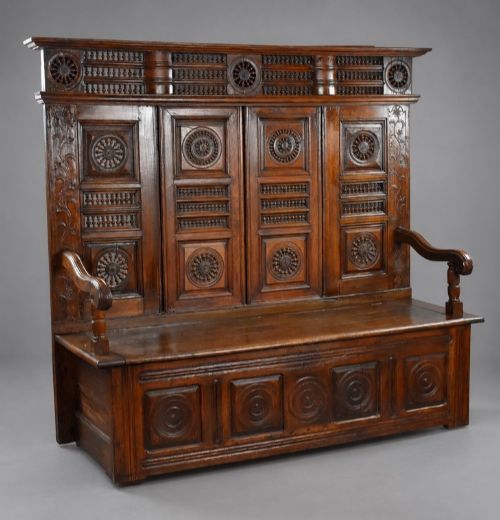
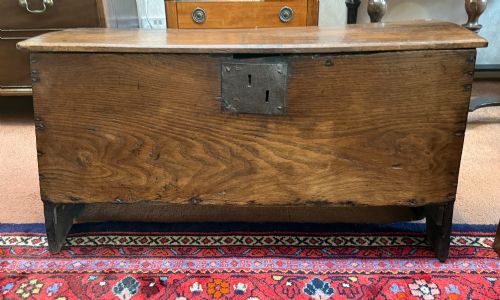
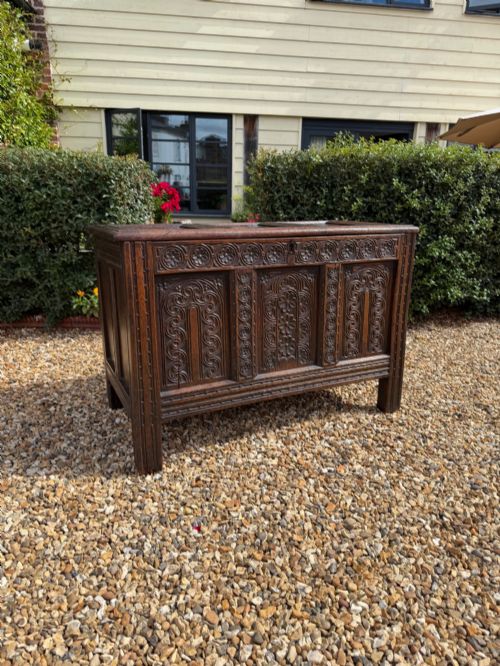
Jacobean Storage Coffer
A jacobean storage coffer is a heavy timber chest built to hold domestic valuables, offering sturdy utility and deep period character.
Jacobean Storage Coffer
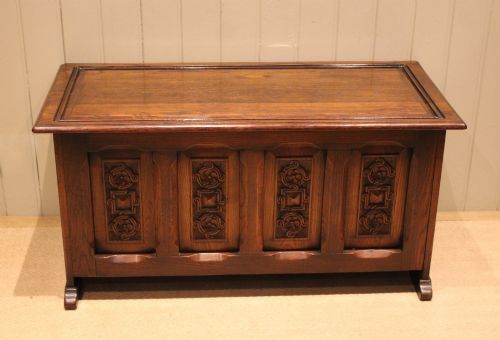
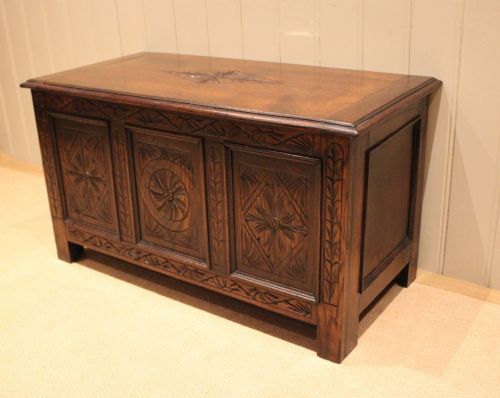
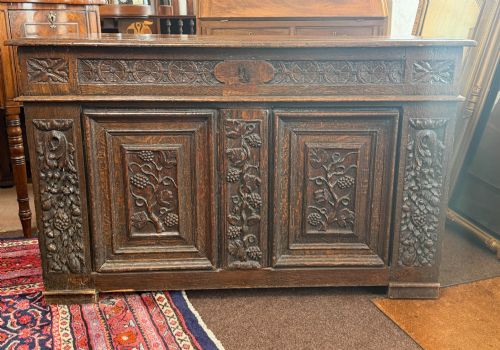
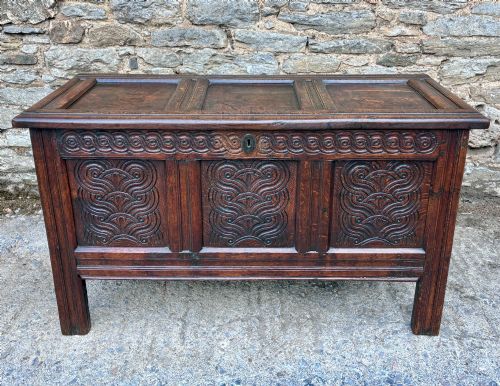
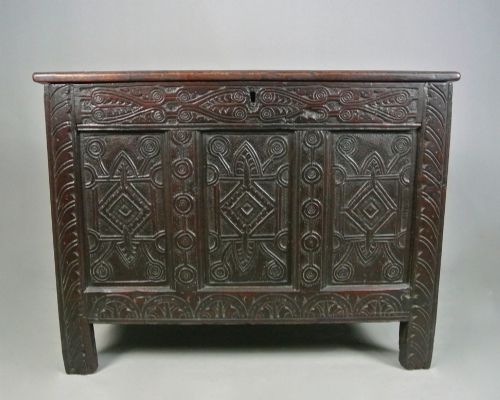
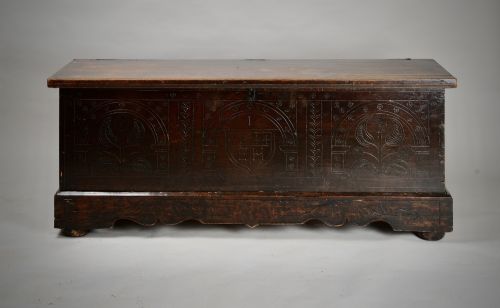
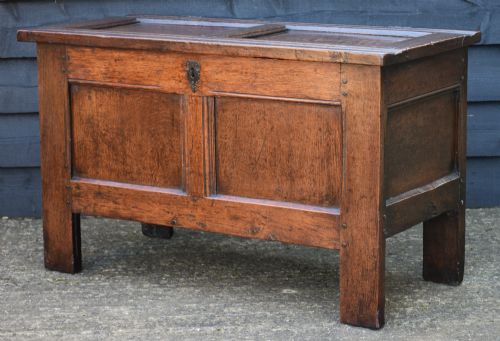
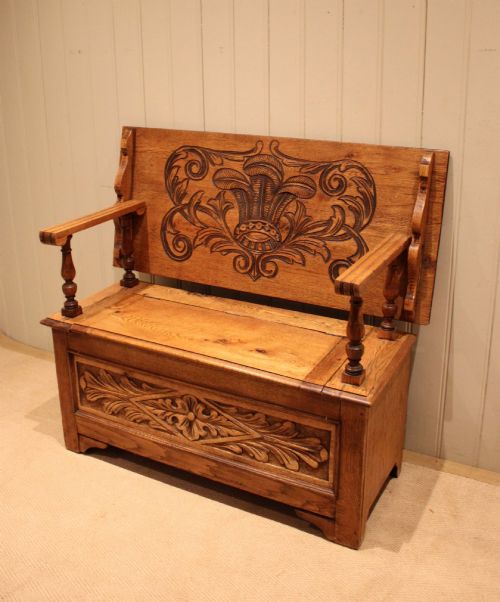
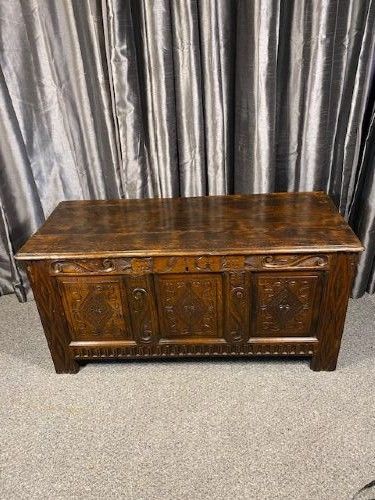
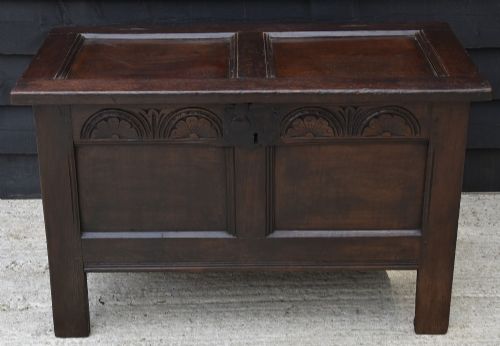
When searching for a jacobean storage coffer, buyers look at heavy wooden chests designed for holding household goods, linens and valuables in early domestic spaces. The pieces appearing here span genuine seventeenth-century examples alongside later revival pieces from the twentieth century.
The primary forms found in this selection are solid oak coffers, blanket chests, mule chests and carved storage boxes. Many display panelled construction, hinged lids and traditional joinery typical of early English country houses and rustic interiors.
Materials and construction
Makers built these pieces predominantly from solid oak, utilising heavy timber boards held together with traditional frame and panel construction. Iron and brass hardware, including hinges and locks, provide structural reinforcement and functional operation.
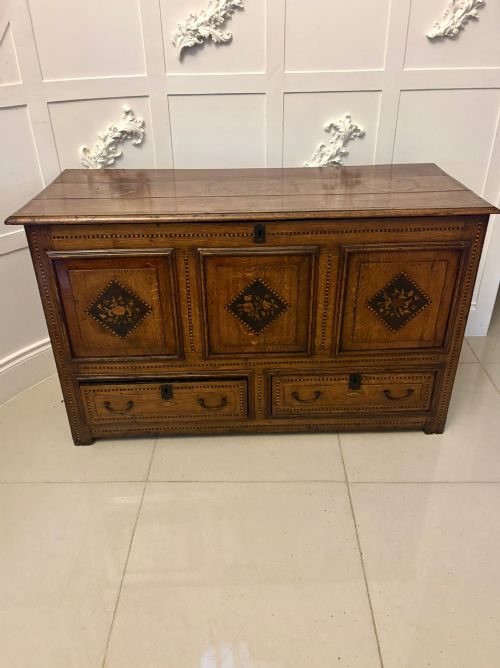
Surface ornamentation on these chests frequently involves hand carving, alongside occasional marquetry inlay utilising mixed woods and ebonised wood details. These decorative methods give the timber rich texture and geometric patterns characteristic of the style.
Object forms on this page include blanket chests, mule chests, settle benches, bible boxes and close stools alongside standard storage coffers.
Differences in quality
The distinction between standard examples and the finest pieces rests on the crispness of the hand carving and the integrity of the original timber frame. Superior coffers exhibit deep, well-defined relief work on the panels and retain their authentic joined structure.
Another measure of distinction is the presence of period marquetry inlay and the survival of original iron or brass fittings. Pieces showing careful selection of figured oak grain sit distinctly apart from simpler, plain-timber variations.
The Jacobean Storage Coffer Glossary
- Coffer
- A heavy wooden chest with a hinged lid, traditionally used for storing valuables, documents or textiles. It forms the primary category of storage furniture in early domestic interiors.
- Mule chest
- A storage chest featuring one or more drawers built beneath the main compartment. This form bridges the traditional coffer and the chest of drawers.
- Marquetry inlay
- A decorative technique applying fitted pieces of wood veneer to a solid timber surface to create pictorial or geometric patterns. It appears on select refined chests.
- Joined oak
- Furniture constructed using mortise and tenon joints secured with wooden pegs rather than metal nails. This method defines traditional seventeenth-century cabinet making.
- Bible box
- A small desk-like box with a sloped or flat lid, designed to hold sacred texts and writing materials. These compact pieces share construction methods with larger coffers.
Jacobean Storage Coffer: Frequently Asked Questions
What is a jacobean storage coffer used for?
These robust chests serve as practical storage for blankets, linens and household items while functioning as decorative furniture.
Historically, they held valuable documents and textiles securely within domestic chambers.
How do I date a seventeenth-century coffer?
Dating relies upon examining the construction methods, tool marks, joinery and timber characteristics visible across the piece.
Original seventeenth-century examples display pegged mortise and tenon joints, whereas revival pieces often show later machine-cut elements.
Are all these coffers from the seventeenth century?
The selection includes both genuine seventeenth-century antiques and later revival pieces produced during the Edwardian and twentieth-century periods.
Revival furniture mirrors the heavy carved oak aesthetic of the earlier era while employing contemporary workshop techniques.
What is the difference between a coffer and a mule chest?
A standard coffer consists of a single deep storage compartment accessed solely through the top lid.
A mule chest incorporates one or more functional drawers positioned beneath the main compartment for easier access to stored items.