


Nineteenth Century Coffer
A nineteenth century coffer is a robust storage piece built for travel or domestic service, offering enduring timber construction and period character.

Nineteenth Century Coffer
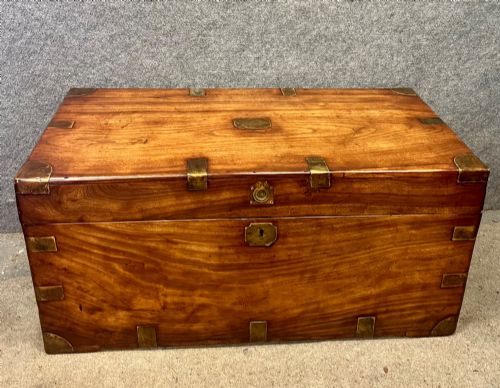
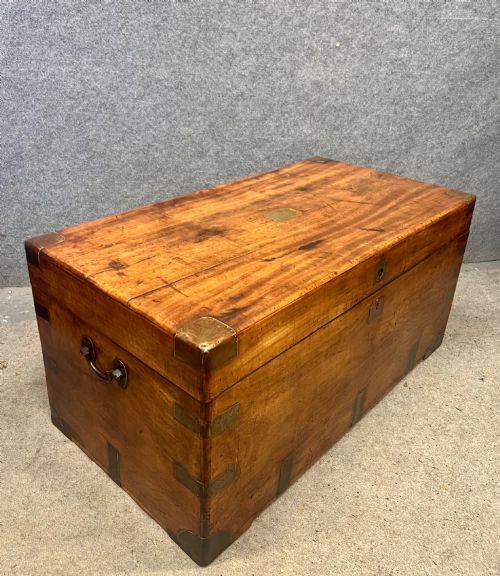
A nineteenth century coffer encompasses sturdy blanket boxes, campaign chests, travel trunks and domestic storage boxes produced across the Georgian, Regency and Victorian eras. These items served practical purposes in military deployment, long-distance maritime trade and country house organisation.
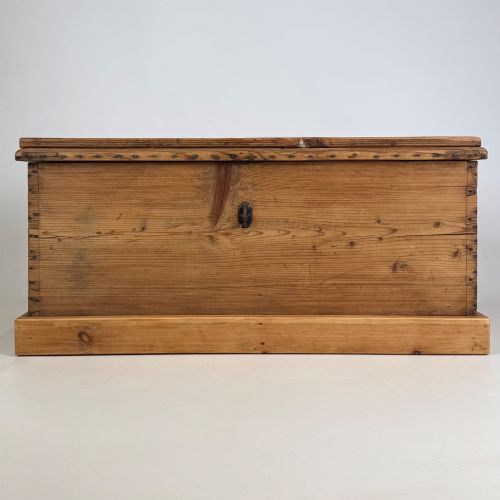
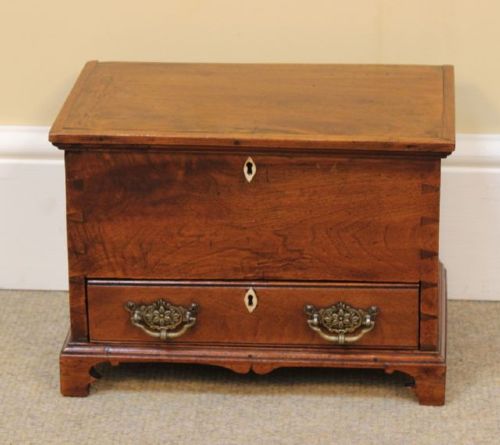
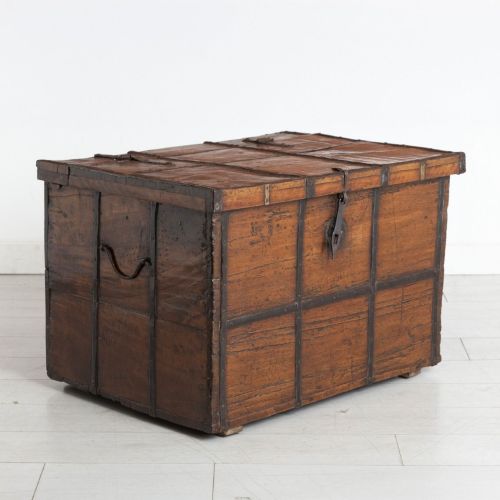
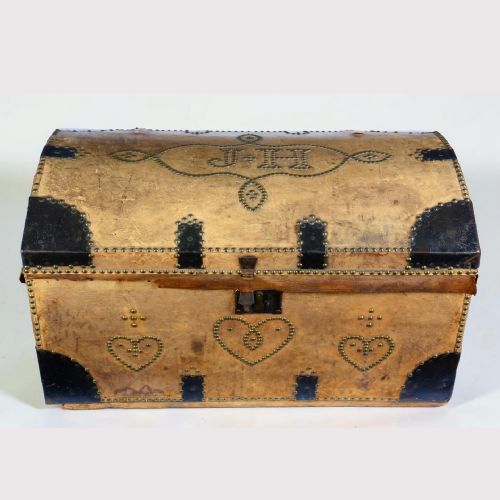
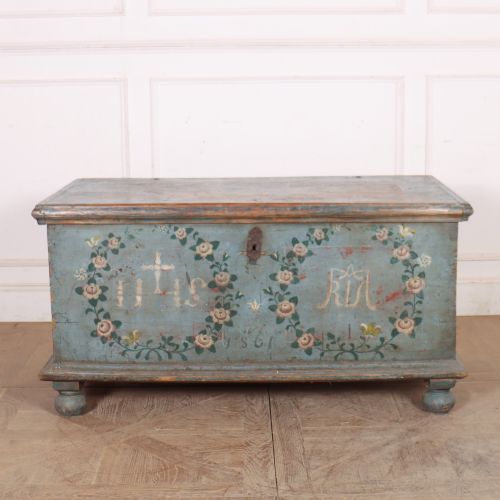
The varieties most commonly met include camphorwood campaign trunks, pine blanket boxes with painted finishes, and mahogany or oak storage boxes. Many examples exhibit utilitarian iron mountings or decorative brass studwork designed to withstand heavy transit.
How they were made
Makers utilised dense timbers such as mahogany, camphorwood, oak and pine, frequently pairing them with structural iron straps and brass reinforcement corners. Leather and hide coverings also appear alongside painted or lacquered surface treatments.
Joinery methods focused on durability, employing dovetailed box construction and heavy brass bound edges to protect against the rigours of travel.
One seaman's chest proudly carries the hand-painted title Emblem of Liberty.
What varies in quality
The grade of timber and the complexity of the hardware set apart finer examples, such as flame mahogany or solid camphorwood fitted with original recessed brass handles and secure locks. Simpler painted pine or scumbled boxes relied on utility rather than cabinetmaker refinement.
Intact original surfaces, whether grained paint, hide coverings or polished hardwood grain, distinguish superior survivals from pieces that have undergone heavy later restoration.
Arthur Wannop·Seabrook of St Pauls
The Nineteenth Century Coffer Glossary
- Campaign trunk
- A sectional or reinforced chest designed for military officers on active service, featuring recessed handles and protective metal corners. These items needed to withstand frequent movement across colonial territories.
- Camphorwood
- An aromatic timber frequently utilised in nineteenth-century chests and trunks for its natural insect-repellent properties. It is often found in pieces originating from maritime trade routes.
- Scumbled
- A decorative paint technique applied to create a mottled or simulated wood grain effect over a base colour. This finish is commonly observed on nineteenth-century country house pine boxes.
Nineteenth Century Coffer: Frequently Asked Questions
What is a campaign coffer?
A campaign coffer is a portable storage chest constructed for military officers on the move.
These pieces typically incorporate brass hardware, carrying handles and durable timbers like camphorwood.
Why use camphorwood?
Camphorwood was selected for travel chests due to its natural pest-resistant qualities.
The aromatic timber protected textiles and uniforms during long sea voyages.
How to date a coffer?
Dating relies on timber choice, construction methods, and hardware styles found on the piece.
Georgian and Regency examples often feature distinct brass mounts and mahogany or hide finishes, while Victorian pieces introduce varied painted surfaces.
Where were they used?
These boxes served in military camps, aboard merchant ships and within domestic country houses.
They stored blankets, silver, uniforms and personal valuables securely.