

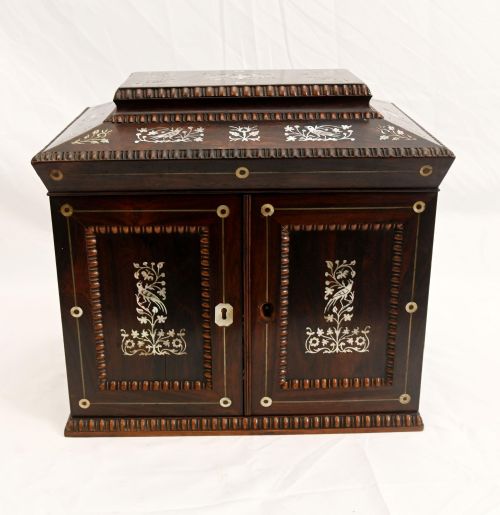


Mother of Pearl Chest
A mother of pearl chest brings together gleaming iridescence and timber, offering a tactile place to store letters, tea or jewellery.
Mother of Pearl Chest
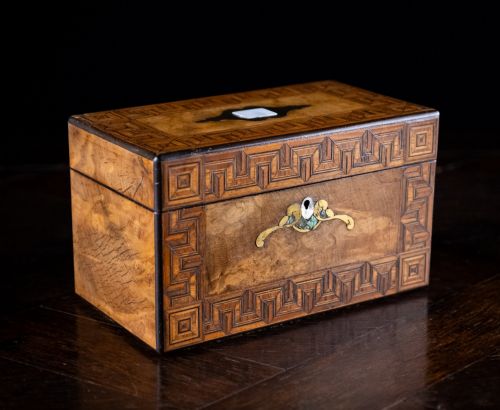
A mother of pearl chest covers a range of lidded boxes, caddies, and small drawer units designed for valuables or dry goods. When you search for a mother of pearl chest, you will find pieces from the nineteenth and early twentieth centuries, spanning English, Middle Eastern, and Asian origins.
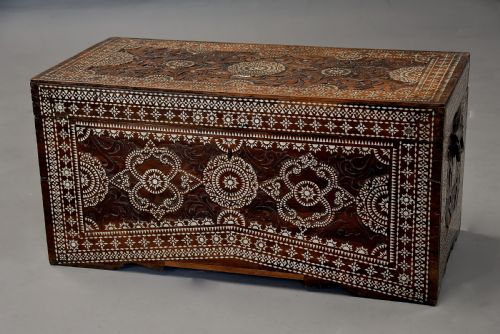
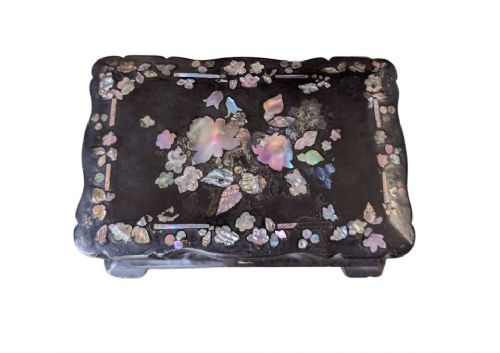
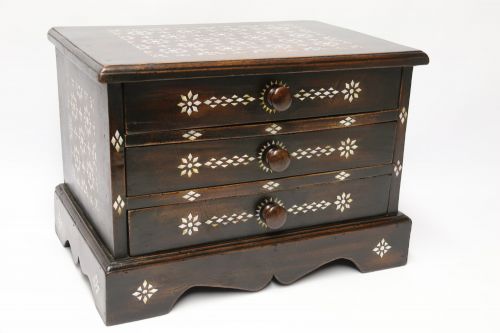
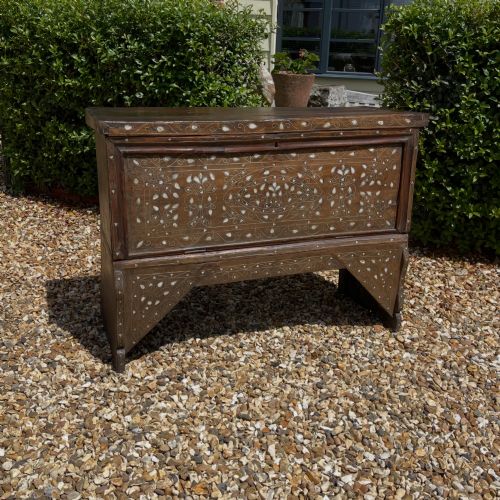
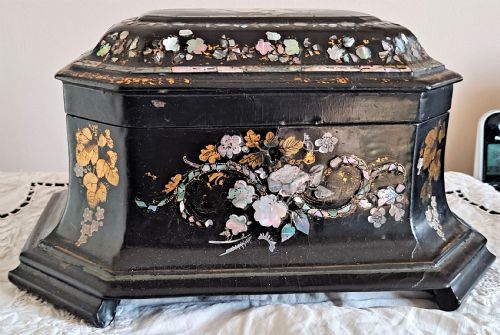
The form shifts from small tabletop jewellery boxes and tea caddies to larger trunks and miniature chests of drawers. English Victorian examples often utilise rosewood or papier-mâché as a dark ground for inlaid shell, whilst Syrian, Ottoman, and Anglo-Indian pieces employ dense hardwoods.
Many items function as receptacles for tea, correspondence, or trinkets, built with internal compartments or multi-ring storage. Collectors encounter everything from sarcophagus-shaped caddies to floor-standing coffers and table cabinets.
Materials and construction
Craftsmen built the carcasses from timbers such as rosewood, walnut, mahogany, and various exotic hardwoods, occasionally employing papier-mâché or lacquer. Mother of pearl, and occasionally abalone, was sliced into thin plates and shaped into geometric patterns, foliage, or figurative motifs.
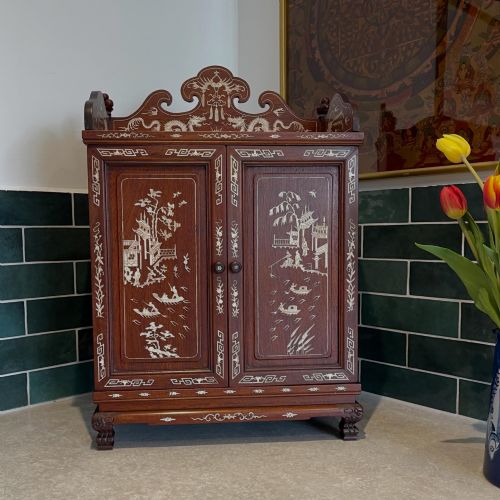
Inlaid pieces required precise channel cutting into the wooden substrate to seat the shell flush with the surface, often supplemented by brass wire or silver stringing. Middle Eastern and Anglo-Indian workshops frequently combined intricate mosaic work with dense hardwood bodies to create highly decorative chests.
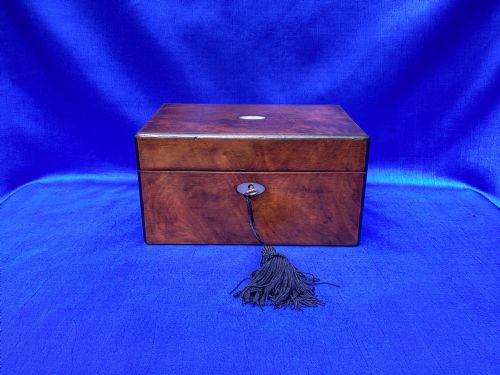
Object forms span tea caddies, sewing boxes, jewellery chests, table cabinets, and Middle Eastern trunks.
Judging the range
Quality rests upon the precision of the inlay work and the selection of the primary timber. Tighter joints, dense grain matching in woods like rosewood or burr walnut, and complex pictorial or geometric shell patterns separate standard pieces from finer works.
The condition of the interior fitments, original brass locks, and working key mechanisms indicate the level of care taken by the original maker. Finer items retain intact mother of pearl without shrinkage cracks in the surrounding wood.
The Mother of Pearl Chest Glossary
- Mother-of-pearl
- The hard, iridescent internal layer of certain mollusc shells. It was cut and polished to create luminous inlay work on wooden chests.
- Papier-mâché
- A composite material made from paper pulp or layers of paper bound with glue, pressed and dried. Victorian makers used it as a dark, smooth base for pearl inlay.
- Tea caddy
- A small box or chest fitted for storing tea leaves. They often feature internal lidded compartments and mother of pearl decoration.
- Sarcophagus
- A coffin-shaped box profile with a domed lid popular during the Regency and Victorian periods. These chests often stood on bun feet.
- Stringing
- Thin lines of contrasting wood, brass, or silver inlaid into the surface of a chest to create borders.
Mother of Pearl Chest: Frequently Asked Questions
What were mother of pearl chests used for?
These chests served various domestic purposes, primarily holding valuable commodities like tea, jewellery, and letters. Tea caddies protected expensive dry leaves from moisture and light, while tabletop cabinets stored personal trinkets.
Larger trunks and coffers held textiles, dowry items, or general keepsakes. Their decorative nature meant they sat on tables and sideboards in public rooms rather than remaining hidden away.
How do I date a mother of pearl chest?
Dating relies on combining stylistic clues with timber choices and construction methods. Regency and early Victorian pieces often feature rosewood or coromandel with delicate floral pearl inlay, whilst later Victorian items frequently utilise burr walnut or papier-mâché.
Twentieth-century pieces from Middle Eastern or Asian workshops tend to display denser, all-over geometric mosaic work on hardwood bodies. Examining the interior hardware and paper linings also helps narrow down the production era.
Are all these chests made in England?
English workshops produced a large share of the rosewood and papier-mâché tea caddies and jewellery boxes seen from the nineteenth century. However, the global reach of trade brought many pieces from other regions.
The listings include significant numbers of Syrian, Ottoman, Anglo-Indian, and Chinese chests. Each region utilised distinct native hardwoods and geometric or cultural decorative motifs.
How should I care for an inlaid chest?
Keep the chest away from direct sunlight and dramatic humidity changes to prevent the wood from warping and the pearl inlay from loosening. Dust gently with a dry, soft cloth without applying modern chemical polishes.
If the timber appears dry, a light application of appropriate conservation wax helps maintain the finish. Handle the lids and internal compartments with care to preserve original hinges and stops.