



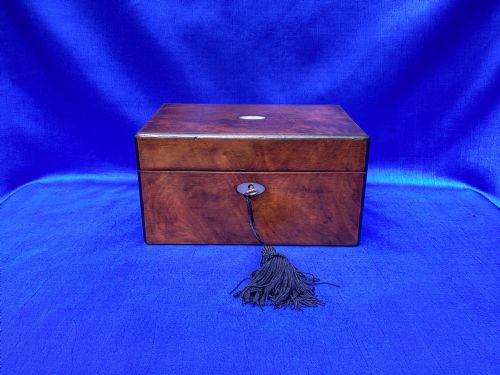


Vintage Mother of Pearl Box
A vintage mother of pearl box brings iridescent depth to a room, offering a tactile receptacle for letters, trinkets or correspondence.
Vintage Mother of Pearl Box
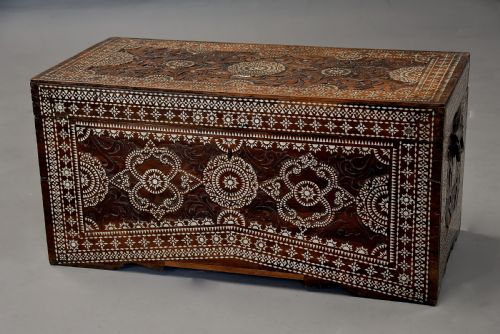
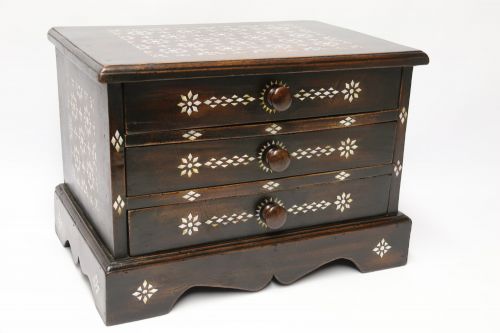
The selection frequently includes rosewood, walnut and coromandel foundations embellished with shimmering shell panels. Pieces originating from Victorian England sit alongside Middle Eastern, Anglo-Indian and Oriental trunks, reflecting diverse regional woodworking traditions.
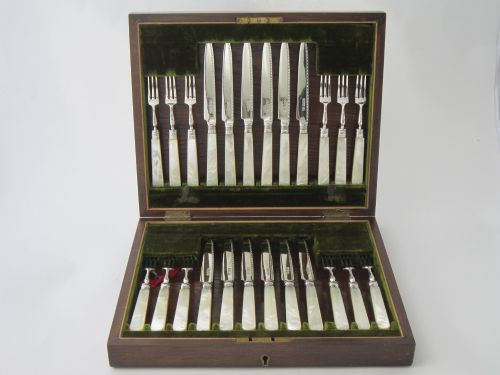
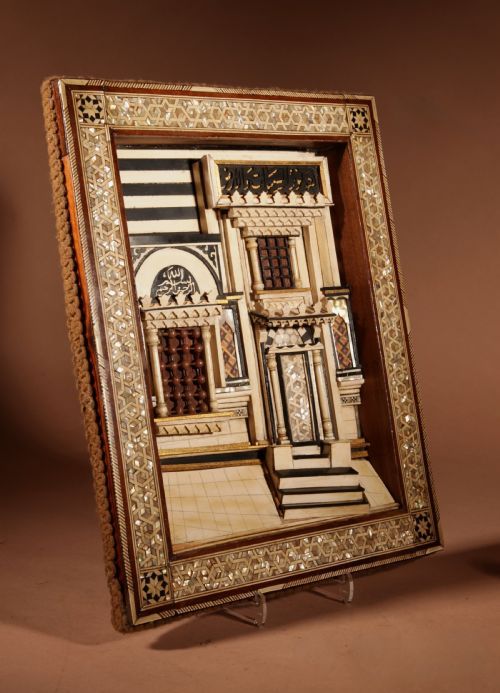
Buyers encounter everything from fitted travel compendiums with velvet interiors to architectural dioramas and games boards. Each object serves a distinct domestic purpose while displaying the distinct lustre of marine shell.
Materials and Construction
Artisans built foundational carcases from dense timbers such as rosewood, walnut, coromandel, mahogany and oak. These wooden frames were then shaped into writing slopes, caddies and vanity cases using traditional joinery methods.
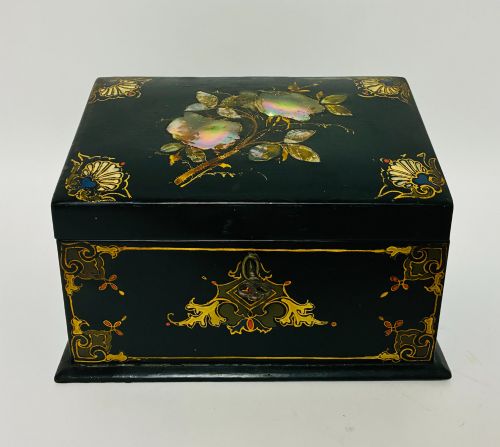
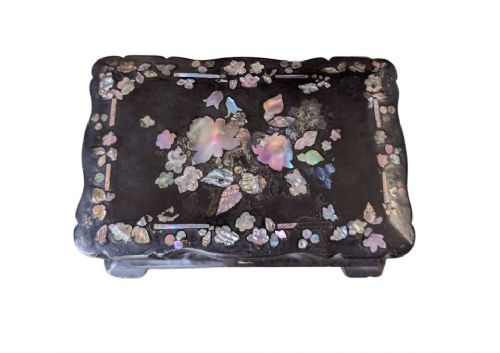
Thin plates of mother of pearl were sawn, shaped and set into geometric or floral recesses carved directly into the timber. Craftsmen combined these shimmering shell sections with brass stringing, pewter inlay and lacquer finishes.
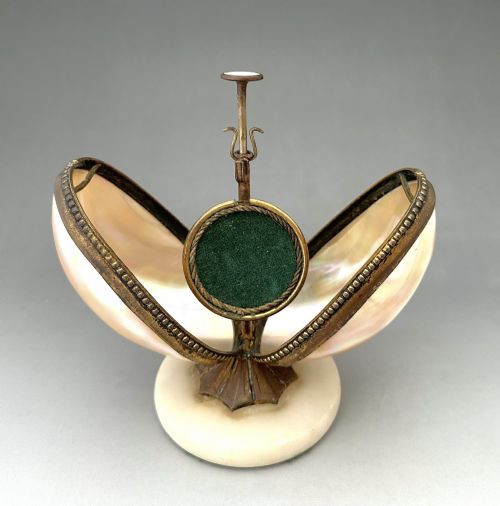
Interiors were frequently lined with velvet, silk or leather, accompanied by fitted compartments, glass inkwells and silver-plated or sterling silver fittings.
Listings feature Victorian and Edwardian examples utilising rosewood, coromandel, brass, velvet and lacquer.
Judging Quality
Quality rests upon the precision of the inlay work and the structural integrity of the timber carcase. Superior examples display tight joins where the iridescent shell sits completely flush with the surrounding wood, free from clumsy filler or raised edges.
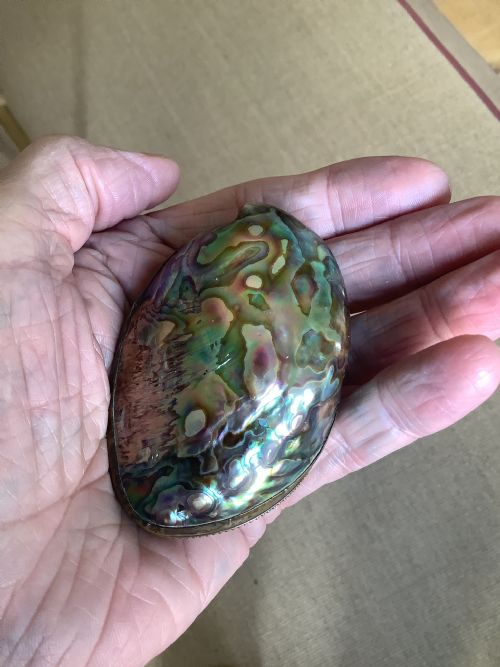
The selection and grading of the mother of pearl itself dictates visual depth, with finer specimens exhibiting a rich play of greens, pinks and blues. Elaborate engraved detailing across the shell surface and fully intact internal fittings further separate standard containers from exceptional pieces.
George Austin Dublin·Lund of London
The Vintage Mother of Pearl Box Glossary
- Mother-of-Pearl
- The strong, iridescent inner layer of certain mollusc shells used extensively for decorative inlay. It reflects light in shifting tones of silver, pink and green.
- Writing Slope
- A portable desk featuring a hinged, sloping lid that opens to reveal a writing surface, pen trays and inkwell compartments. These boxes often house secret drawers beneath the stationary partitions.
- Tea Caddy
- A container designed to store dry tea leaves securely before brewing. Victorian versions frequently include internal crystal mixing bowls and foil-lined compartments with fitted lids.
- Coromandel
- A dense, heavily figured timber imported from Asia with dark brown colouring and striking black streaks. It provides a luxurious dark foundation for contrasting shell inlay.
- Papier Mâché
- A composite material made from paper pulp or layers of paper bound with glue, then moulded and lacquered. It serves as a smooth black canvas for brightly polished shell decoration.
Vintage Mother of Pearl Box: Frequently Asked Questions
How do I date a mother of pearl box?
Dating relies upon examining the underlying wood species, internal paper linings, brass hardware styles and overall construction techniques. Victorian pieces often utilise rosewood or papier mâché, while Edwardian or later examples may feature different internal fittings and hinge types.
Secondary clues include engraved maker signatures, retailer stamps on velvet panels, and the complexity of the internal secret drawers or stationery dividers.
What were these boxes originally used for?
These containers served specific domestic functions in the Victorian and Edwardian household, from holding correspondence and loose jewellery to storing precious tea leaves. Writing slopes provided a portable desk for penning letters while travelling or sitting in the parlour.
Smaller trinket and pill boxes kept personal keepsakes safe on dressing tables, whereas larger vanity cases housed grooming implements and perfume bottles for long journeys.
How should I clean mother of pearl?
Maintenance requires a soft, dry cloth to remove dust from the shell surface and wooden carcase without introducing excess moisture. Avoid harsh chemical cleaners, abrasive polishes or soaking, as these agents damage fragile organic shell layers and loosen old adhesives.
Wooden sections benefit occasionally from a light application of appropriate furniture wax, taking care to keep waxes away from the inlaid shell edges.
Are the internal fittings usually original?
Original interiors feature matching silk or velvet linings, fitted timber partitions, and correctly sized glass inkwells or accessories that match the age of the carcase. Subtle signs of wear on the fabric and matching patination across internal metal components help confirm originality.
Replacements are sometimes present where heavy use caused degradation of the original textiles over the span of a century or more.