
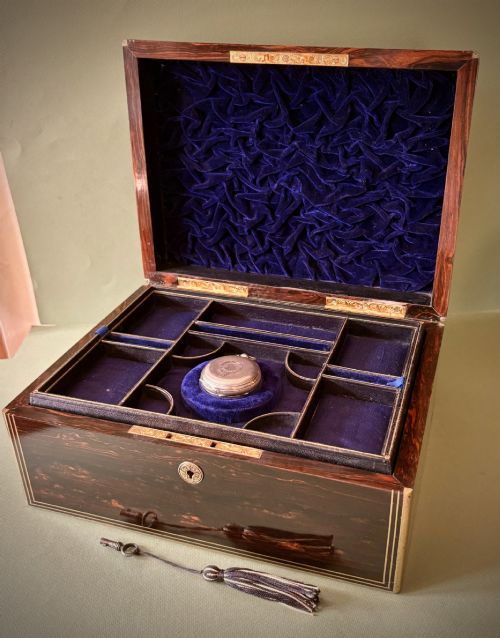
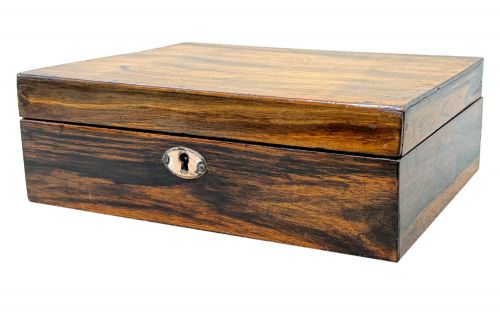


Coromandel Jewellery Box
A coromandel jewellery box is a dense, highly figured container designed for safekeeping valuables, prized by collectors for its rich timber and tactile weight.
Coromandel Jewellery Box
Forms vary from compact keepsake receptacles to large travelling dressing cases, vanity boxes, and combined scent bottle caskets. Many retain fitted interiors lined in velvet, designed to organise rings, necklaces, and personal trinkets securely during travel or upon a dressing table.
The construction frequently incorporates robust rectangular shapes, dome tops, and compartmentalised trays. Pieces originate predominantly from English makers and retailers, reflecting the high status such luxury goods held during the mid-Victorian era.
What varies in quality
The grade of a coromandel jewellery box rests upon the depth and wildness of the timber grain, alongside the precision of brass mountings and brass banding. Pieces featuring intact, fully fitted interiors with original velvet, hallmarked silver, or cut crystal bottles sit at the upper end of the tier.
Execution of decorative details, such as hand-painted porcelain plaques, intricate inlay work, and robust locking mechanisms with working keys, distinguishes standard workboxes from grander commission pieces produced by noted retailers.
Coromandel Jewellery Box Retail Price Guide 2026
Typical asking prices for coromandel jewellery box among the pieces listed under this phrase on Sellingantiques today, from the lower quarter to the upper quarter. They describe what is for sale here now, not the wider market.
Some Victorian travellers entrusted their morning routine entirely to these boxes, carrying bespoke crystal bottles for lavender water.
H Mitchell·Asprey·John Bagshaw
The Coromandel Jewellery Box Glossary
- Coromandel
- A dense, heavy exotic hardwood valued for its dark brown colour and striking black grain. It was imported from southeast Asia and utilised extensively for luxury Victorian boxes.
- Parquetry
- A geometric mosaic of wood veneer arranged in decorative patterns on the exterior surface. This technique demonstrates the high skill of the nineteenth-century cabinet maker.
- Dressing Box
- A portable container fitted with compartments for cosmetics, brushes, and jewellery, often featuring folding mirror sections and secret drawers.
- Escutcheon
- A flat plate surrounding a keyhole, commonly cast in brass to protect the surrounding coromandel wood from wear.
- Tantalus
- A locking beverage or scent bottle holder that displays the contents while preventing unauthorised access without a key.
Coromandel Jewellery Box: Frequently Asked Questions
How do I date a coromandel box?
Dating relies on architectural styles, brass hardware types, and construction methods. Regency examples from the 1830s differ noticeably from heavier Victorian brass-banded items of the 1860s and 1870s.
Makers' marks on locks, working keys, and fitted silver or ceramic components also help narrow the manufacturing period.
Were these boxes used for travel?
Many larger examples served as travelling vanity cases or dressing boxes for wealthy Victorians on the move. They incorporated secure locks and sturdy brass handles to withstand journeys.
Smaller boxes remained stationary on dressing tables or desks as safe repositories for daily jewellery.
How do I care for coromandel wood?
Coromandel requires stable humidity and protection from direct sunlight to prevent the timber and its underlying veneers from drying out or splitting. Gentle dusting with a dry, soft cloth maintains the natural lustre of the polished surface without the need for heavy waxes.