

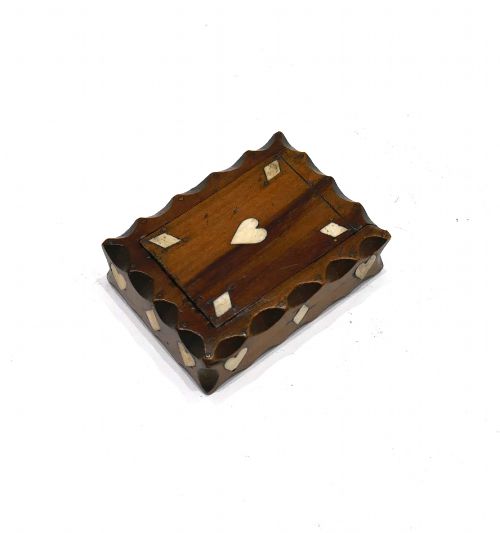


Bone Inlay Trinket Box
A bone inlay trinket box brings tactile texture and historic craftsmanship to a tabletop.
Bone Inlay Trinket Box
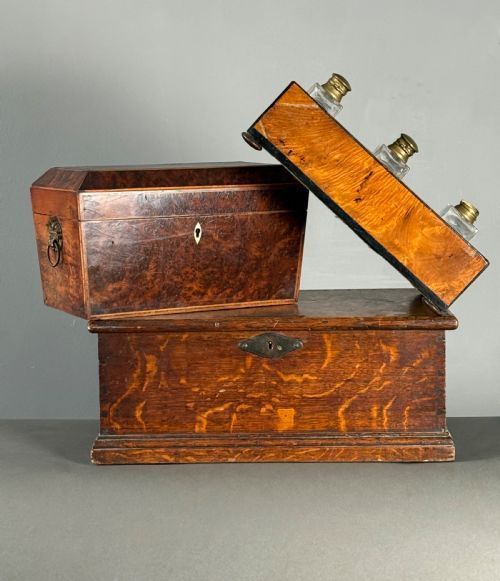
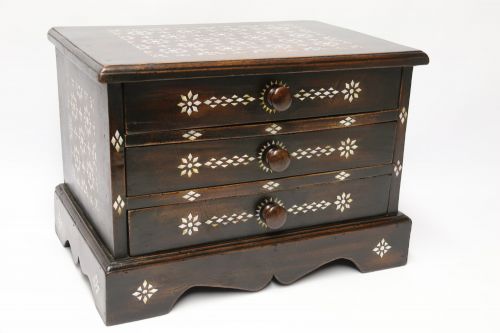
Most specimens encountered on this page originate from Anglo-Indian workshops or nineteenth-century English treen traditions. Collectors will find forms ranging from sarcophagus shapes to oblong snuff boxes and miniature collector chests.
Makers utilised diverse regional timbers and traditional decorative schemes to create these vessels. The resulting objects function as both practical storage and miniature decorative works.
Materials and construction methods
Craftsmen built the carcases of these boxes using hardwoods, fruitwoods, ebony, and walnut, providing a sturdy foundation for surface ornamentation. Bone pieces were carefully shaped and pressed into the wood to form geometric patterns, floral motifs, or figurative diamond and heart shapes.
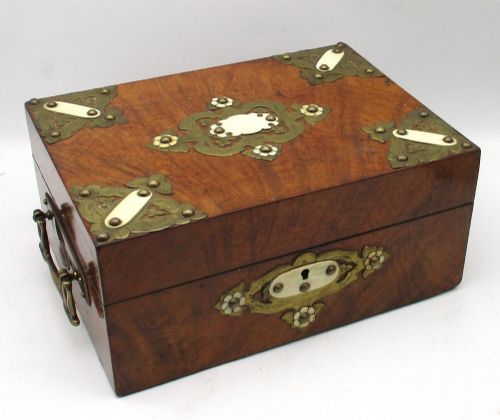
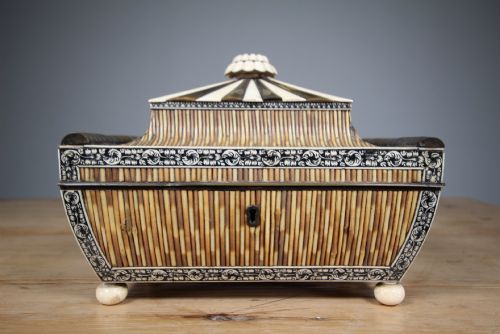
Specialised techniques such as Sadeli mosaic work involved assembling intricate micro-mosaics of bone and metal wire into geometric bands. Other examples incorporate porcupine quill alongside bone veneers, secured with brass fittings or metal hinges.
Bone Inlay Trinket Box Retail Price Guide 2026
Typical asking prices for bone inlay trinket box among the pieces listed under this phrase on Sellingantiques today, from the lower quarter to the upper quarter. They describe what is for sale here now, not the wider market.
Evaluating the craftsmanship
Quality in a bone inlay trinket box rests upon the precision of the surface work and the complexity of the geometric or mosaic patterns. Tighter joints between individual bone fragments and timber indicate a higher standard of workshop production.
The choice of secondary materials, such as ebony carcases or detailed brass hardware, separates simpler folk art pieces from elaborate colonial export items. The preservation of intricate porcupine quill work and delicate bone veneers also dictates the overall standard of a surviving specimen.
The Bone Inlay Trinket Box Glossary
- Sadeli Work
- A specialised micro-mosaic technique originating in India, using intricate patterns of bone, metal, and coloured resins set into geometric bands. This method creates a complex, glittering surface effect on boxes and chests.
- Treen
- Small handmade wooden objects for domestic use, spanning items like snuff boxes and small containers. These pieces often display folk art decorative techniques including bone inlay.
- Porcupine Quill
- Quills utilised as decorative veneers on nineteenth-century boxes, typically arranged in geometric panels alongside bone and ebony banding. This technique is frequently associated with Ceylonese and Anglo-Indian export pieces.
- Sarcophagus
- A box shape featuring a domed or sloping lid resting on a rectangular base, popular during the Regency period. Such forms provide ample surface area for elaborate veneer and inlay work.
- Veneer
- A thin layer of bone or decorative hardwood applied to a secondary timber carcase to create patterned exterior surfaces. This technique allows for complex ornamentation across small containers.
Bone Inlay Trinket Box: Frequently Asked Questions
What were bone inlay trinket boxes used for?
These small containers served to hold valuable personal items, rings, correspondence, or tobacco products like snuff. Their decorative nature meant they were kept on desks, dressing tables, and display cabinets.
Over time, their primary function shifted from daily utility items to decorative collector pieces appreciated for their intricate surface work and historical materials.
How do I distinguish Anglo-Indian boxes from Victorian examples?
Anglo-Indian boxes often feature Sadeli mosaic work, porcupine quill, and exotic hardwoods like ebony or local tropical timbers. Victorian folk art pieces typically utilise native fruitwoods inlaid with simple bone motifs such as hearts and diamonds.
Examining the underlying timber and the complexity of the geometric patterns helps identify the regional origin and period of production.
Are these boxes fragile for daily use?
While sturdy enough for careful handling, the delicate bone veneers, quill work, and micro-mosaic bands require gentle treatment. Placing them away from direct heat and excessive moisture preserves the wooden carcases and adhesive elements.
Modern owners generally use them for storing lightweight items like jewellery rather than heavy daily objects.
What materials are commonly found alongside bone?
Makers combined bone with ebony, fruitwood, walnut, and porcupine quill to create contrasting visual patterns. Brass hinges, escutcheons, and metal wire work frequently appear as structural or decorative components.
The variety of materials reflects both domestic English folk traditions and international colonial trade networks of the nineteenth and twentieth centuries.