

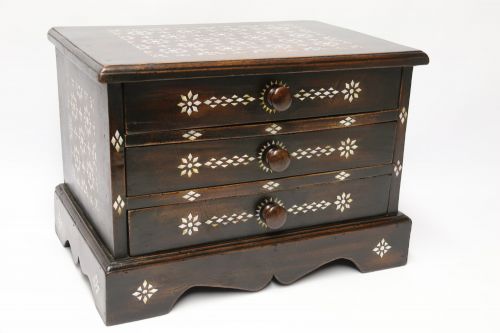
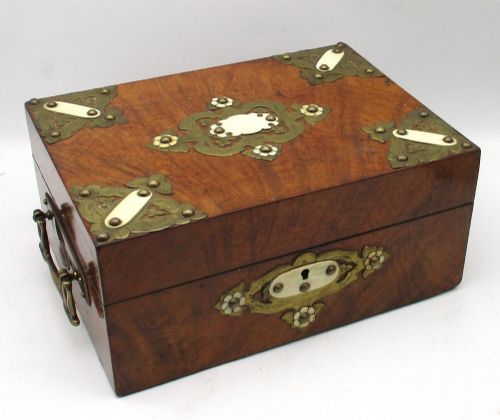


Bone Inlaid Jewellery Box
These bone inlaid jewellery box examples combine intricate surface work with practical storage, offering a tangible piece of global craftsmanship for your dressing table.
Bone Inlaid Jewellery Box
When you search for a bone inlaid jewellery box, you encounter a variety of tabletop containers, caskets, and collector chests designed for personal valuables. These pieces span the nineteenth century into the mid-twentieth century, capturing distinct regional traditions and decorative revivals.
You are most likely to meet Anglo-Indian specimens featuring intricate mosaic or quill work, alongside Victorian walnut and rosewood caskets. Alongside these, Dutch Colonial hardwood boxes and Ottoman chests appear, showing the widespread reach of inlaid decorative arts.
How they were made
Workers applied thin specimen bone veneers to timber foundations such as hardwood, walnut, and ebony using traditional adhesives. Geometric patterns and mosaic designs required meticulous hand-cutting of bone and horn elements.
Makers integrated brass hardware and metal hinges to secure the lids and compartments of these caskets. The contrasting tones of bone against dark woods like ebony and rosewood formed complex pictorial and abstract surfaces.
Bone Inlaid Jewellery Box Retail Price Guide 2026
Typical asking prices for bone inlaid jewellery box among the pieces listed under this phrase on Sellingantiques today, from the lower quarter to the upper quarter. They describe what is for sale here now, not the wider market.
Porcupine quills double as decorative spikes on select nineteenth-century caskets, proving nature provides its own stationery.
What varies in quality
The precision of the surface mosaic distinguishes finer examples from simpler containers. Tighter joints between individual bone tesserae and more complex geometric arrangements indicate superior workshop output.
The choice of secondary timbers also marks distinction, with dense hardwoods like ebony and rosewood elevating the status of the piece. Preservation of the fragile bone veneer without significant loss or replacement determines the integrity of the object.
The Bone Inlaid Jewellery Box Glossary
- Sadeli
- A specific form of micro-mosaic work originating in India, utilising geometric patterns of bone, horn, and metal. This technique creates complex star and diamond motifs across the surface of the box.
- Veneer
- A thin layer of bone or exotic wood applied to a base timber foundation. This method allows makers to create decorative surfaces without relying entirely on solid costly materials.
- Sarcophagus
- A box shape featuring a domed or sloping lid reminiscent of ancient stone coffins. Victorian makers frequently used this profile for sewing and jewellery caskets.
- Tessera
- An individual small piece of bone, horn, or wood used in mosaic inlay. Artisans shaped these tiny units to form repetitive geometric borders and panels.
Bone Inlaid Jewellery Box: Frequently Asked Questions
What is a bone inlaid jewellery box?
These are decorative containers surfaced with hand-cut bone veneers, designed to hold precious items and trinkets. They often feature intricate geometric patterns developed by regional artisans.
Such pieces reflect global trade routes and nineteenth-century taste for exotic ornamentation on practical household objects.
How do I care for a bone inlaid box?
Keep the box away from direct sunlight and steady heat sources to prevent the bone veneer from drying and lifting. Stable indoor humidity protects the natural materials and the timber foundation.
Dust the surface gently with a dry, soft cloth and avoid modern chemical polishes that can damage historic adhesives.
How can I tell the origin of these boxes?
Regional styles offer the clearest indication of where a box was made, such as Anglo-Indian Sadeli work or Dutch Colonial hardwood construction. Motif types, timber choices, and internal compartment layouts also point to specific workshops and periods.
Examining the construction methods underneath reveals whether the piece follows European cabinet-making traditions or South Asian techniques.
Were these boxes used for jewellery?
Many served as specialised repositories for rings, necklaces, and small personal valuables, while others functioned as sewing boxes or collector chests. Fitted interiors often included small compartments and lift-out trays.
Over time, owners adapted these decorative containers to store whatever personal treasures they possessed.