






Antique Indian Inlaid Box
An antique indian inlaid box brings centuries of intricate craftsmanship into a room, offering both practical storage and exceptional decorative detail.
Antique Indian Inlaid Box
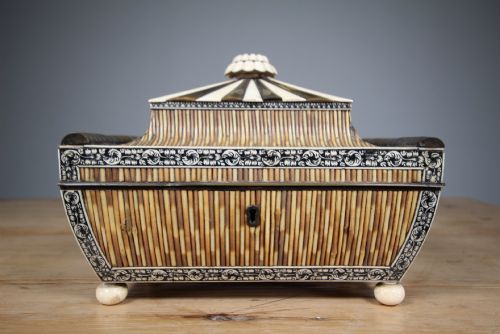
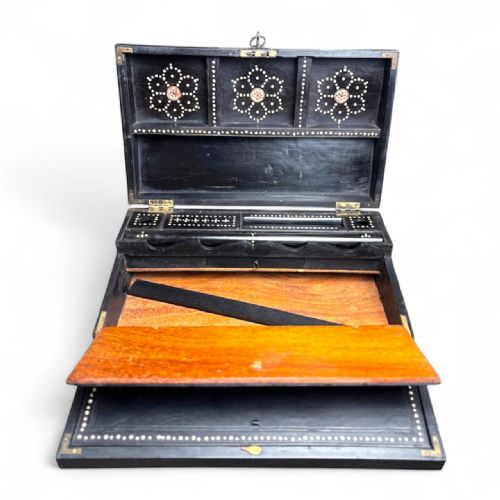
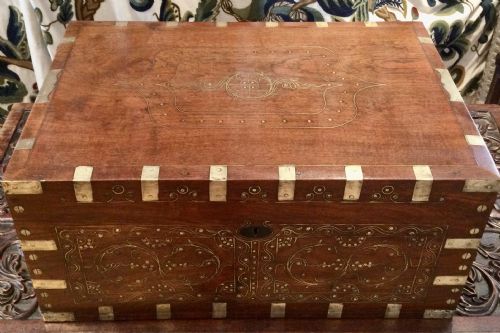
The Anglo-Indian and colonial styles dominate this selection, reflecting an intersection of British domestic requirements with traditional South Asian woodworking traditions. Common forms include sarcophagus-shaped quill boxes, fitted work tables, and correspondence chests designed for travel or desktop use.
Materials and Construction Techniques
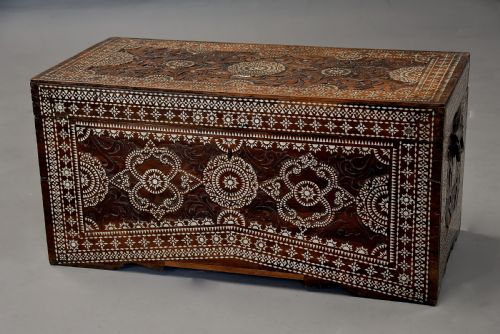
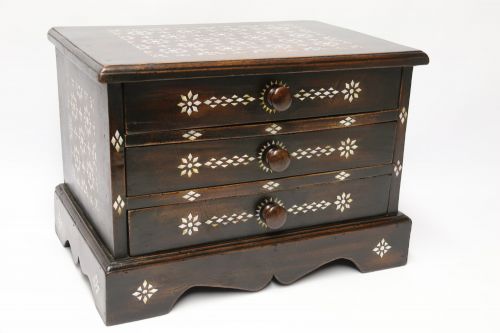
Artisans built these boxes using dense timbers such as teak, satinwood, ebony, padouk, and rosewood, which provided a durable foundation for complex surface decoration. These structural woods were then embellished with contrasting organic materials, including bone, ivory, horn, porcupine quill, and mother of pearl.
Specialised techniques such as Sadeli mosaic work involved assembling minute geometric tiles of bone and horn into intricate patterns, while other pieces utilised delicate wire inlay or brass studding to secure and accent the woodwork.
Porcupine quills were carefully harvested to adorn nineteenth-century Ceylonese boxes, transforming humble quills into intricate geometric masterpieces.
Assessing Craftsmanship and Condition
The distinction between standard examples and the finest pieces lies in the precision and complexity of the inlay work. Boxes featuring dense Sadeli micro-mosaic or finely engraved bone and ivory motifs demonstrate a higher degree of artisan skill than those with simpler geometric banding.
Integrity of the structural timber and the retention of delicate quill or inlay elements largely determine the overall standard of a box. Pieces retaining original fitted interior compartments, working locks, and minimal losses to the surface decoration command greater attention.
The Antique Indian Inlaid Box Glossary
- Sadeli mosaic
- A micro-mosaic technique native to South India and Sri Lanka, utilising intricate geometric arrangements of bone, horn, and metal. Artisans sliced these composite rods into thin veneers to cover boxes and work tables.
- Vizagapatam work
- Decorative items produced in the port city of Vizagapatam, typically featuring elaborate ivory or bone engraving combined with sandalwood or rosewood structures.
- Porcupine quill
- Quills utilised as decorative surface elements, most commonly seen in Ceylonese work boxes from the nineteenth century. They are arranged in geometric patterns against dark contrasting wood.
- Writing slope
- A portable desktop box with a hinged, slanted writing surface that lifts to reveal storage space for paper, pens, and inkwells.
- Damchiya
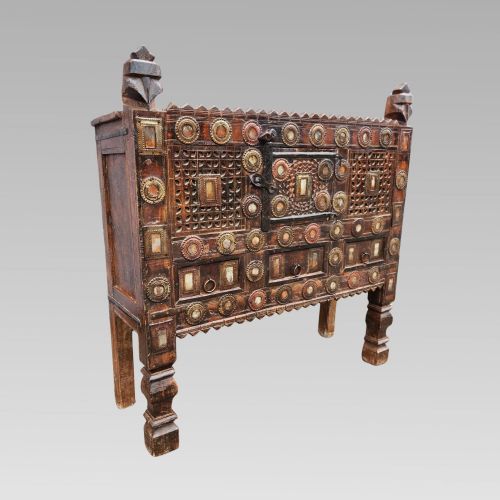
- A traditional Indian dowry chest or storage cabinet, often characterised by heavy carving, painted finishes, or brass and mirror embellishments.
Antique Indian Inlaid Box: Frequently Asked Questions
What is an antique indian inlaid box used for?
These boxes historically served specific domestic functions such as holding writing instruments, correspondence, jewellery, or sewing equipment. Their fitted compartments accommodated the meticulous organisation of personal valuables.
Today, they function as decorative desktop accessories or secure storage containers for small personal items, adding texture and historical interest to modern interiors.
How do I care for inlaid wood surfaces?
Maintain these pieces by keeping them away from direct sunlight and sudden temperature shifts, which can cause delicate organic inlays like bone or ivory to contract and loosen. Dust gently with a dry, soft cloth rather than using liquid polishes.
Applying occasional microcrystalline wax to the hardwood exterior helps nourish the timber without harming fragile inlay materials or adhesives.
What distinguishes Anglo-Indian pieces?
Anglo-Indian pieces combine traditional South Asian decorative techniques with European furniture forms tailored for colonial administrators and British households. These items frequently merge local timbers with familiar silhouettes like campaign chests or sloped desks.
The resulting objects display a distinct synthesis of design, incorporating local motifs like porcupine quill work or Sadeli mosaic into standard Victorian shapes.
How can I tell the period of a box?
Dating relies on examining the construction methods, secondary woods, and hardware styles consistent with the nineteenth and early twentieth centuries. Brass campaign handles, dove-tailed joints, and specific decorative idioms point toward distinct decades.
Comparing the specific inlay materials, such as the prevalence of porcupine quill or intricate ivory engraving, helps place the object within the broader nineteenth-century timeline.